



A familiar rhythm, with a surprising twist
Some of the most exciting worlds in astronomy are not the giant, flashy ones. They are the planets that feel almost familiar at first glance—and then turn out to be wonderfully different. HD 137010 b is one of those. It appears to be only about 6% larger than Earth, and its estimated year is about 355 days, which is astonishingly close to our own calendar.[ref:1][ref:3]
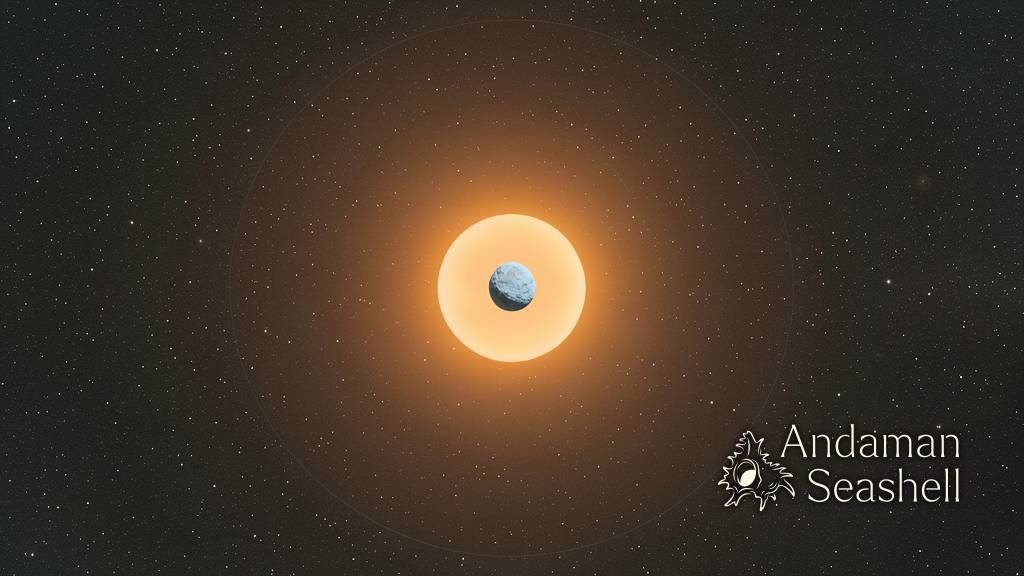
That resemblance is exactly what makes the new candidate so fun to imagine. This possible planet circles a K-dwarf star about 146 light-years away, bright enough that astronomers already see it as a valuable target for future follow-up. But unlike Earth, HD 137010 b probably receives only about 29% of the sunlight our planet gets, placing it near the chilly outer edge of its star’s habitable zone.[ref:2][ref:4]
Why astronomers are excited
The word “candidate” matters here: HD 137010 b still needs more observations. Even so, researchers are paying close attention because the combination of facts is unusually attractive. According to the paper by Alexander Venner and colleagues, the planet candidate has a radius of 1.06 Earth radii, an estimated orbital distance of about 0.88 astronomical units, and an orbital period of 355 days, with a wide uncertainty range because only one transit has been seen so far.[ref:3][ref:4]
Its star is no Sun-copy either. HD 137010 is a K3.5 V star with a temperature of about 4,770 kelvin and a radius of roughly 0.71 times the Sun’s. That cooler, smaller star means an Earth-like orbit does not automatically mean Earth-like warmth. The NASA Exoplanet Archive lists the planet’s estimated equilibrium temperature at about 205 kelvin, which is roughly minus 68 degrees Celsius.[ref:4] In other words: this may be a world with an Earth-style year and an entirely different idea of winter.
The tiny signal that stood out
Part of the charm of this story is how delicate the evidence is. The paper reports a single transit event about 10 hours long, seen during K2 Campaign 15 in 2017. During that crossing, the star dimmed by only 225 parts per million—a tiny dip that Eos compared to the effect of a moth passing in front of a lighthouse.[ref:3][ref:5]
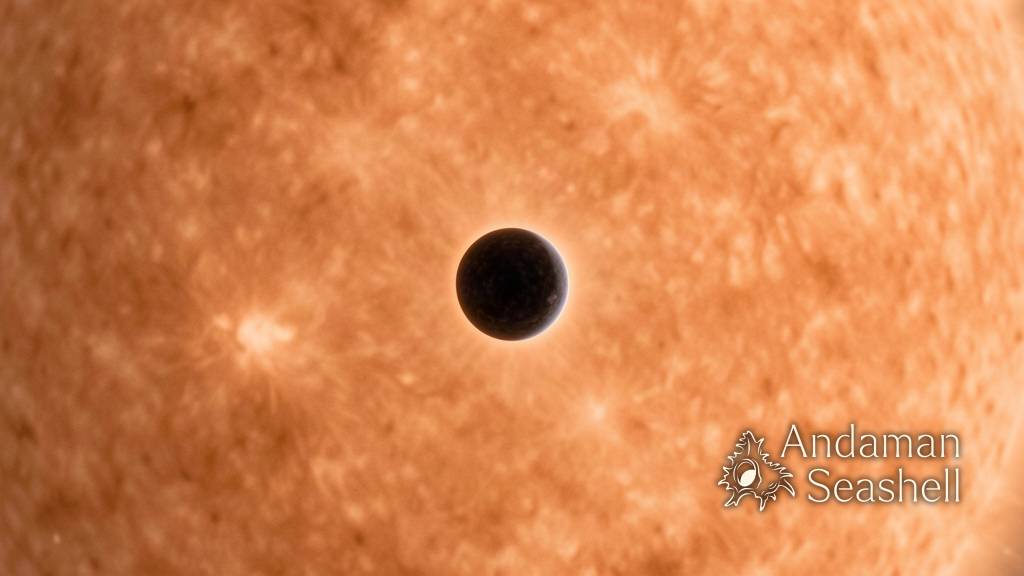
That is also why this discovery says something lovely about how science works. Professional pipelines often look for repeating dips, because most planet searches rely on spotting multiple orbits. But this signal had only one recorded crossing, so it was easy to miss. Venner, who had joined the Planet Hunters citizen-science effort as a student, later revisited the old Kepler/K2 data and helped bring the signal back into focus. Several Planet Hunters volunteers are co-authors on the work as well.[ref:1][ref:2]
A bright star makes the future interesting
Among the more than 6,000 exoplanets now known, many are large, hot, or orbit faint stars that are difficult to study closely.[ref:2] HD 137010 b stands out because its host star is relatively bright—about magnitude 10.1 in visible light—and only 44.8 parsecs away, or about 146 light-years.[ref:3][ref:4] That makes it a more practical future target than many small habitable-zone worlds found around dimmer stars.
Researchers also note that the planet may not be quite as frozen as the headline suggests. The Science report says the team calculated about a 40% chance that the orbit could actually be somewhat closer in, which would place the world more securely inside the habitable zone.[ref:2] And even if the surface is cold, the atmosphere could change the story dramatically. A thick atmosphere could warm the planet far beyond what its simple equilibrium temperature suggests.[ref:1][ref:5]
Why this little world feels big
What makes HD 137010 b memorable is not just that it is distant. It is that it gives astronomers a rare combination: Earth-like size, an almost Earth-length year, a Sun-like but cooler star, and a system bright enough to keep investigating.[ref:3][ref:4] It is still a maybe, but it is a beautiful kind of maybe.

For now, HD 137010 b is less a finished portrait than a promising sketch. But it is already a lovely reminder that the universe does not only make extremes. Sometimes it makes a world that rhymes with Earth—then changes just one line, and suddenly the whole poem feels new.
References
- NASA Science — Discovery Alert: An Ice-Cold Earth?
- Science — Earth-size planet spotted with yearlong orbit
- Venner et al. 2026 — A Cool Earth-sized Planet Candidate Transiting a Tenth Magnitude K-dwarf From K2
- NASA Exoplanet Archive — HD 137010 Overview
- Eos — This Potential Exoplanet Is Earth Sized but May Be Colder Than Mars


No comments yet. Be the first to share a thought.