



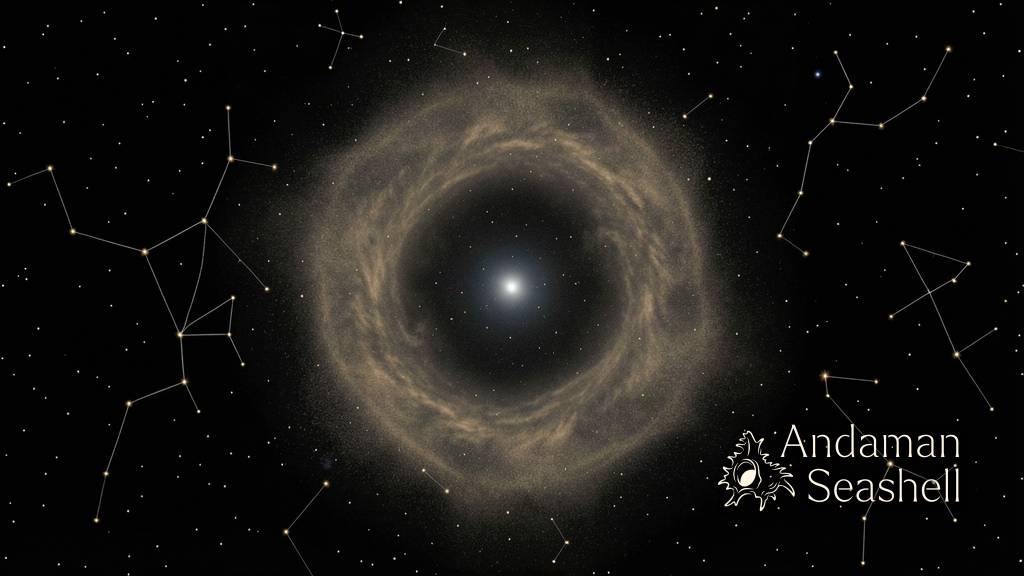
Among the faint stars of Cetus, the Whale, about 250 light-years from Earth, there is a small, intensely hot stellar ember called HS 0209+0832 — a white dwarf, the compact remnant of a star that once lived out its full life. And this week, astronomers announced something wonderful hiding beside it: the first planet ever found that appears to have been born after its star died, condensed from the ashes the dying star cast into space [ref:1].
The discovery, led by Jamie Williams, a doctoral researcher at the University of Warwick and published in the journal Nature Astronomy, is the first suspected "second-generation" planet found orbiting a white dwarf — a world that did not form from the dusty disk of a newborn star, the way Earth did, but from the leftovers of a star's farewell [ref:1]. Williams calls it a phoenix planet: born again, quite literally, from the ashes of its own dying host star [ref:3].
A 25-year-old cold case
The story begins with old data. The white dwarf's atmosphere contains an odd mix of metals — zinc, copper, aluminium, silicon, titanium — but one element stood out: niobium, a rare metal used on Earth in jewellery and medical imaging, present at levels more than 1,000 times those in our Sun [ref:4]. That strange chemistry prompted the team to re-open observations of HS 0209+0832 taken up to 25 years ago by NASA's Hubble Space Telescope, alongside archival data from the FUSE ultraviolet telescope and the planet-hunting TESS satellite [ref:2].
What the reanalysis revealed is a gas giant slightly more massive than Jupiter, whipping around the white dwarf once every 4.4 days, at only about 4 per cent of the distance between Earth and the Sun [ref:3].
How to make a planet out of ashes
Here is the beautiful part. Elements heavier than iron — including niobium — cannot be made by ordinary fusion in a star's core. They are forged in the exotic conditions of a dying star's final stages, through a slow chain of neutron captures called the s-process, and then blown outward [ref:4]. When the star expanded in its death throes, it scattered that metal-rich ash into a disk around its remains. And from that disk of stellar ash, a new planet apparently condensed — the first time astronomers have caught this happening [ref:1].
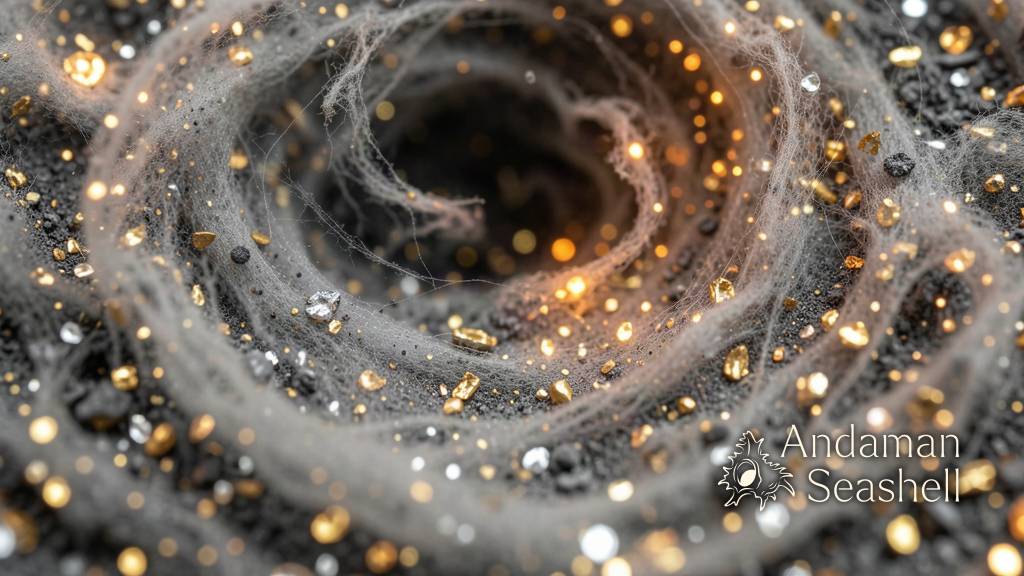
The planet is so close to its star that the white dwarf's fierce ultraviolet light is gently boiling away its outer atmosphere — and some of that vaporised material is falling onto the star itself. That ongoing feast is exactly what paints the niobium fingerprint into the white dwarf's spectrum [ref:3].
Why this matters: the galaxy's second chances
A handful of possible second-generation planets have been found around pulsars, a rare kind of neutron star. But white dwarfs are everywhere: more than 95 per cent of the stars in the Milky Way, including our own Sun, will eventually become one [ref:3]. If a phoenix planet can form here, it can form around countless other dead stars — meaning second-generation worlds may be scattered all across the galaxy.
And here is the most hopeful twist. A white dwarf cools slowly and predictably, staying warm for tens of billions of years. A rocky second-generation planet orbiting at just 2.7 million kilometres could sit in its habitable zone far longer than Earth will enjoy the Sun's comfort — a slow, steady warmth lasting effectively forever on human timescales [ref:4].
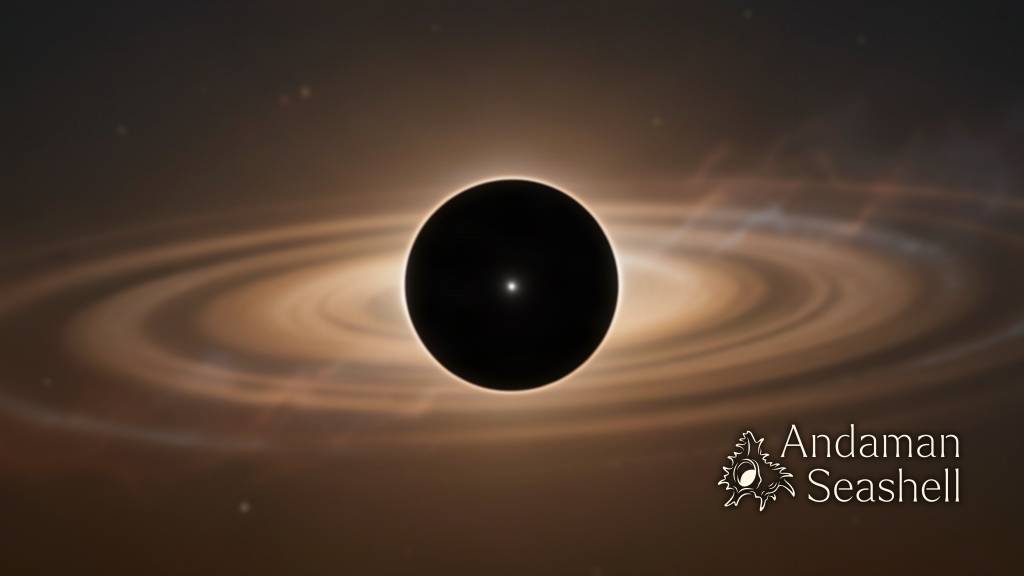
The team now hopes to confirm the phoenix planet with the James Webb Space Telescope, and to survey more hot white dwarfs for niobium signatures — a new detective method for finding worlds that rose from ashes [ref:1]. Endings, it turns out, are sometimes beginnings. Somewhere in the Whale, a star's last breath became a planet's first one.


No comments yet. Be the first to share a thought.