



The next time a 27-year-old file folder looks boring, remember this one. In January 1999, the Hubble Space Telescope photographed an unremarkable pinprick of light about 270 light-years from Earth — and recorded roughly 100 chemical fingerprints inside its glow that nobody could name [ref:1]. For more than a quarter century, that mystery sat quietly in Hubble's archive. Then a doctoral student named Jamie Williams at the University of Warwick opened the old data with a fresh chemical database, and the case cracked wide open: many of those nameless lines belonged to niobium — an element never before reported in any white dwarf ever analysed [ref:1][ref:2].
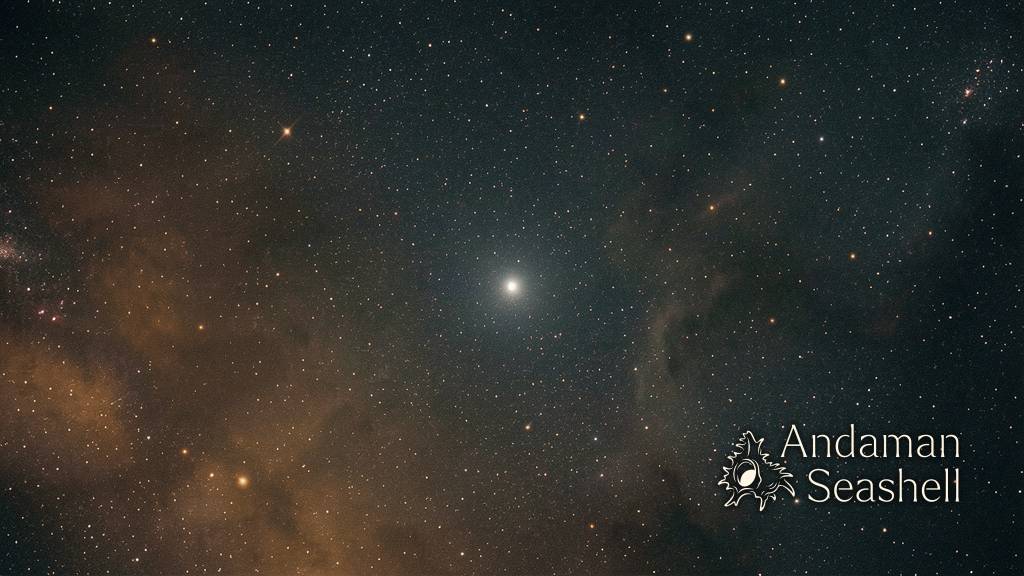
A world made from a star's last breath
Here is why that tiny fingerprint is such big news. HS 0209+0832 is a white dwarf — the leftover core of a star that finished its nuclear fuel and shed its outer layers into space. Earth and everything in our solar system are first-generation planets, built from scraps left over at our Sun's birth. But the niobium at this star points to something astronomers have never confirmed before: a second-generation planet, a world that formed from material the star threw off as it died [ref:1].
Niobium itself is surprisingly friendly. On Earth it ends up in jewellery and medical imaging devices [ref:1]. But cosmic niobium is special. "Niobium and other elements heavier than iron are astronomically special because, unlike many common elements, they are not formed in the cores of stars by thermonuclear fusion," explained Nicholas Stone of the University of Wisconsin–Madison. They can only be made in the exotic conditions inside a dying star — "a signpost of these death throes, and the expulsion of the dying star's innards into space" [ref:1].
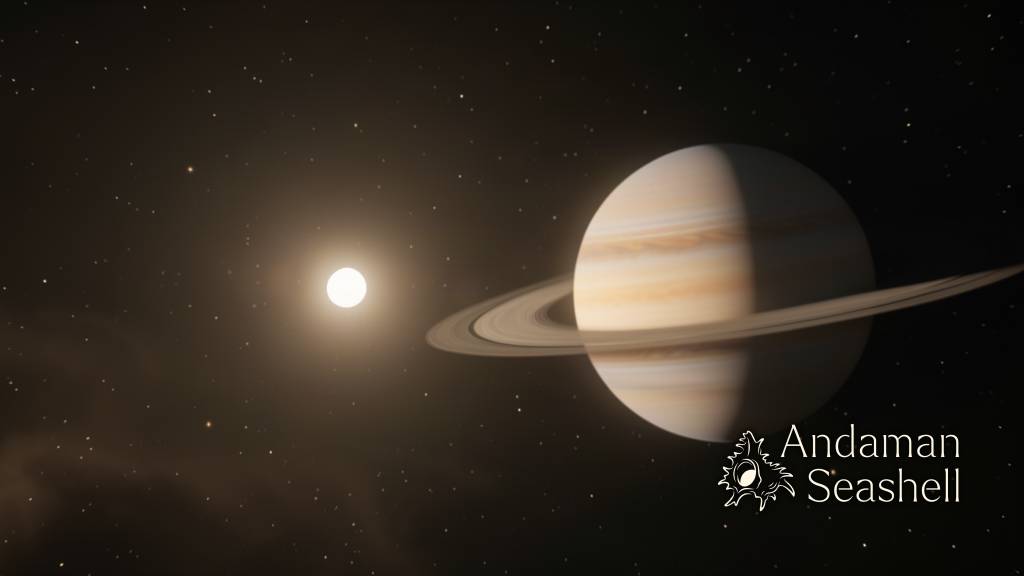
Some of that expelled stardust, the team believes, later gathered itself into a gas giant about the size of Jupiter. The paper, published 5 October 2026 in Nature Astronomy, reports that niobium is over three orders of magnitude — more than a thousand times — more abundant here than in the Sun [ref:3].
The detective work
The numbers behind the discovery are a delight. Hubble's original 1999 spectrum carried about 100 unidentified lines; Williams matched most of them to copper and niobium — five lines of doubly ionised niobium and 57 lines of triply ionised niobium, to be precise [ref:3][ref:4]. The team then checked archival spectra from NASA's retired FUSE ultraviolet telescope covering 33 other metal-polluted white dwarfs, and found niobium in none of them — this star is genuinely one of a kind so far [ref:1][ref:3].
NASA's TESS planet-hunter added the second clue. Its light curve showed a gentle rhythm repeating every 4.399 days, best explained by a scorching day–night cycle on a giant planet orbiting just 3.7 million miles (6 million km) from the star — far closer than Mercury hugs our Sun [ref:3][ref:4].
A planet with a comet tail — and a bright future
That orbit comes at a cost, for now. The young white dwarf is still ferociously hot — about 35,800 kelvin on its surface — and its radiation is boiling the planet's atmosphere away [ref:4]. The escaping gas likely forms a comet-like tail and a glowing disk that rains back down onto the star, which is exactly how Hubble caught the niobium in the first place [ref:1][ref:2].
Yet the astronomers are optimistic about this world's long-term prospects. As the white dwarf cools, its habitable zone becomes remarkably stable. "Eventually the white dwarf will cool and then maintain a consistent temperature, with the planet in its stable habitable zone for millions of years," Williams said [ref:1] — with some researchers suggesting such zones could hold steady for tens of billions of years [ref:2].
Why this matters to every star — including ours
More than 95 percent of all stars in the universe, our Sun included, will eventually become white dwarfs [ref:2]. If second-generation planets are real, then a star's story doesn't end when its fuel does. As Williams put it: "Rather than the white dwarf stage being a kind of epilogue… this research points to the systems we are familiar with only being the first chapter of a potentially much longer tale, with some new characters showing up" [ref:1].
It remains a candidate, not a confirmed planet — the team plans follow-up observations with Hubble, Chandra, and hopefully Webb [ref:2]. But the idea alone is worth carrying outside tonight: look up at any quiet, unremarkable dot of light, and consider that it may be quietly building new worlds from the ashes of the old one.
References
- ESA/Hubble — Suspected second-generation planet solves Hubble cold case (5 Oct 2026)
- NASA Science — Suspected Second-generation Planet Solves NASA Hubble Cold Case
- Williams et al., Nature Astronomy (2026) — Discovery of a second-generation planet candidate accreting onto a white dwarf
- CNN — Astronomers discover possible planet born from a dead star's ashes


No comments yet. Be the first to share a thought.