



Two and a half kilometres beneath the South Pole, in darkness deeper than any moonless night, a flash of blue light sometimes blooms inside a billion tonnes of ancient ice. It lasts less than a heartbeat. On 6 October 2026, the Royal Swedish Academy of Sciences announced that the machine built to catch those flashes — and the quiet physicist who spent three decades dreaming of them — had won the 2026 Nobel Prize in Physics. [ref:1]
The laureate is Francis Halzen, a Belgian-born theorist at the University of Wisconsin–Madison, honoured "for decisive contributions to the IceCube Neutrino Observatory and the discovery of high-energy neutrinos of astrophysical origin" [ref:1]. He is the first physicist to win the prize as a sole laureate since 1992 [ref:6].
A telescope with no lens and no mirror
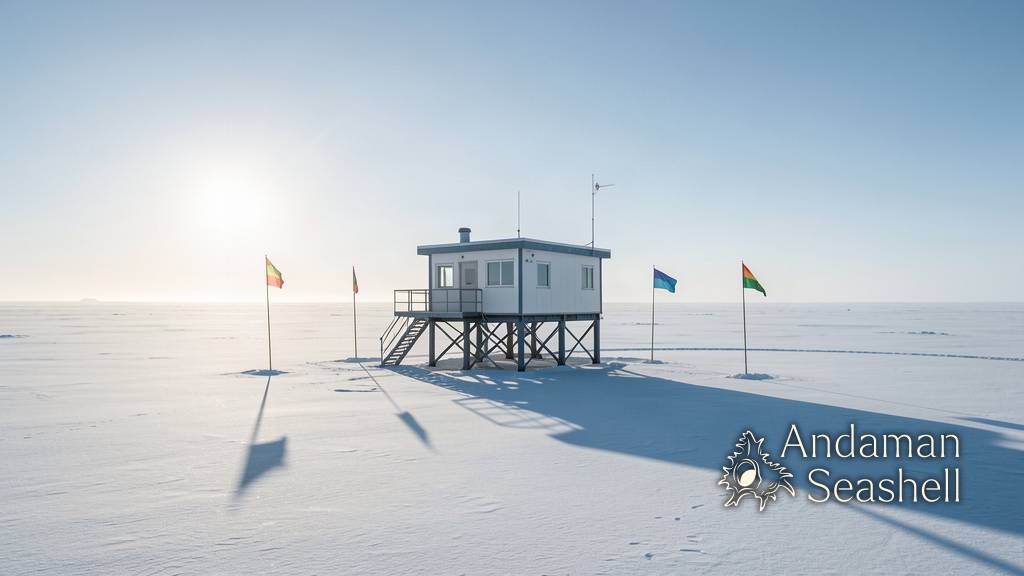
IceCube is the strangest telescope ever built. It has no lens, no mirror, and you cannot see it from the surface — because the whole instrument is frozen inside the Antarctic ice sheet. Its "eyepiece" is a full cubic kilometre of ice: 5,160 spherical glass sensors strung on 86 cables, hanging between 1,450 and 2,450 metres below the snow [ref:5].
Building it took seven Antarctic summers, from 2004 to 2011. Crews melted 60-centimetre-wide holes with a hot-water drill that sank through the ice at about two metres per minute, then lowered each sensor string into the water — which refroze around it, sealing it in place forever [ref:5].
Why catch ghost particles?
Neutrinos are nicknamed ghost particles because they barely interact with anything. They carry no electric charge and almost no mass, so they cross the universe in straight lines without stopping — which is exactly what makes them wonderful cosmic messengers [ref:6]. As the U.S. National Science Foundation, which funds the observatory, puts it: ghost particles exist in enormous quantities but normally pass straight through Earth completely undetected [ref:2].
Here is the number that makes everyone smile: every second, trillions of neutrinos from the Sun pass through your body, entirely unnoticed [ref:3]. Catching even one takes an almost impossibly large detector. Halzen's answer was elegant: don't build one — find one. The ultra-clear ice under the South Pole was already sitting there, waiting.
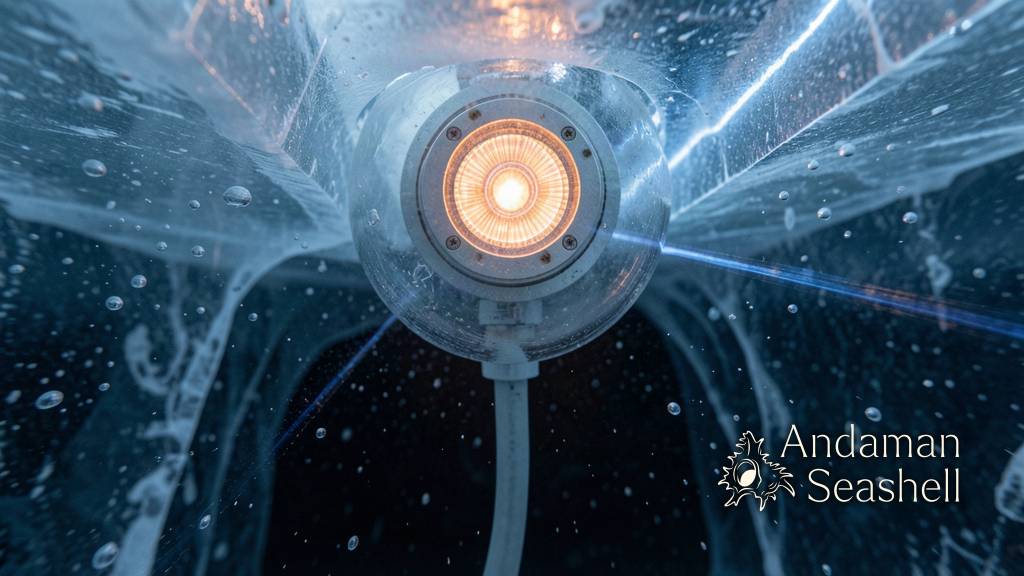
When a cosmic neutrino does collide with the ice, it spawns fast secondary particles that outrun light itself inside the ice and radiate a streak of blue glow called Cherenkov light. The glass sensors catch that glow, and computers turn it into a direction and an energy — one pixel in a brand-new map of the sky [ref:5].
What the ice has seen
The discoveries arrived in a rush. In 2013, two years after completion, the team announced 28 neutrinos from beyond our Solar System — two of them so energetic the scientists nicknamed them Bert and Ernie [ref:3]. In 2018, IceCube traced a neutrino of roughly 300 trillion electronvolts back to its source for the first time: a flaring galaxy powered by a supermassive black hole, 3.7 billion light-years away [ref:3]. And more recently, the observatory traced the disk of our own Milky Way in neutrinos — the first map of our galaxy drawn in ghost particles [ref:4].
The adventure continues
Halzen, ever modest, described the project as "an adventure where success was not guaranteed" [ref:6]. Behind him stand more than 450 researchers from 14 countries [ref:6], and the story is nowhere near over. During the 2025–26 South Pole summer, the team installed the IceCube Upgrade — new sensor hardware that will sharpen the detector's calibration and vision — with the first Upgrade science data expected later this year [ref:4].
The Nobel Committee's chair, Mark Pearce, pointed to what comes next: a global network of neutrino telescopes, in ice and in the oceans, that will let researchers "monitor all of the sky, all of the time" [ref:6].
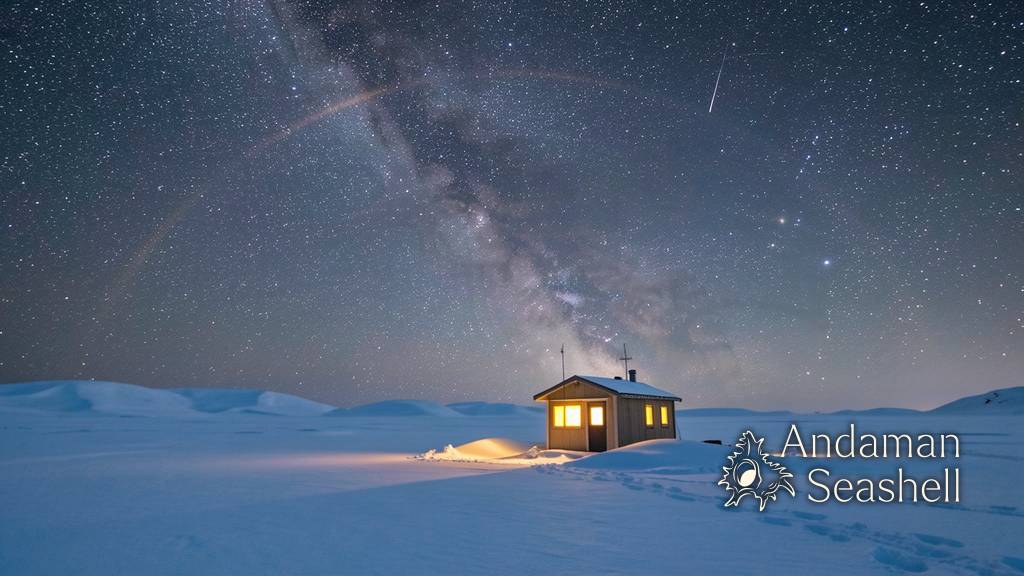
So the next time you look up at a starry sky, remember this: some of the universe's most important news doesn't arrive as light at all. It arrives as a single blue flash, blooming for an instant, deep in the dark ice at the bottom of the world.
References
- Nobel Prize Outreach — Physics 2026 summary
- U.S. National Science Foundation — 2026 Nobel Prize in physics awarded for NSF IceCube neutrino discoveries
- Science — The birth of neutrino astronomy nets Nobel Prize in Physics (6 Oct 2026)
- IceCube / University of Wisconsin–Madison — Francis Halzen wins 2026 Physics Nobel Prize
- IceCube — Detector: South Pole neutrino observatory
- Chemistry World — High-energy neutrino detection captures Nobel prize in physics


No comments yet. Be the first to share a thought.