



Somewhere out in the dark, right now, a planet is being born — and for the first time in history, astronomers have caught it in the act, young enough that it hasn't even finished growing.
Its name is Elias 2-24 b, and on September 16, 2026, a team led by Andrea Bernardi, a doctoral student at Universidad Diego Portales in Chile, confirmed that it is the youngest planet ever detected: less than one million years old [ref:1]. To put that in perspective — our own Earth is about 4.5 billion years old. Next to Elias 2-24 b, every world we know, including ours, is a grandparent.
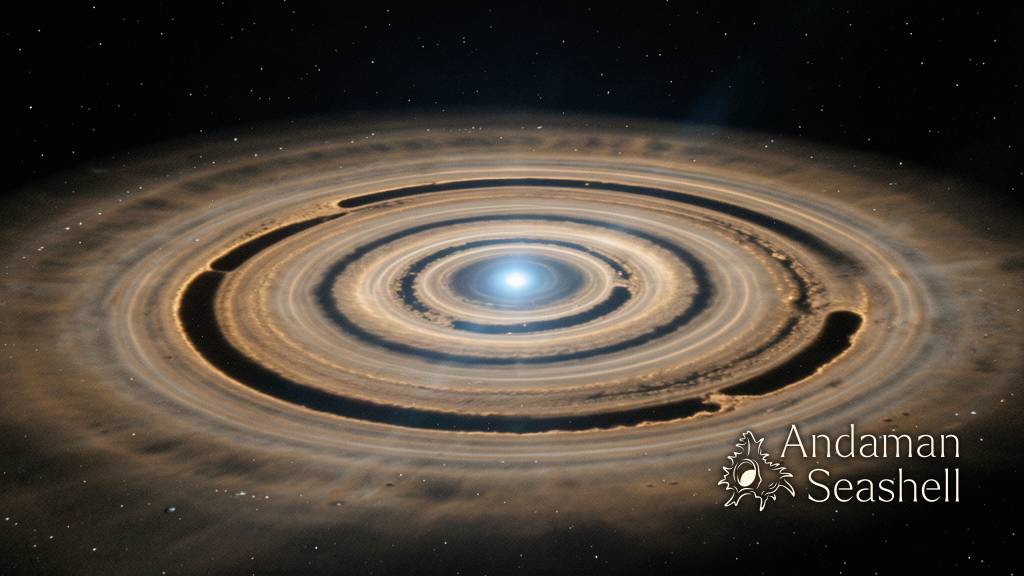
A Jupiter still under construction
Elias 2-24 b orbits a young star about 450 light-years from Earth, and it is roughly as massive as Jupiter [ref:1]. But unlike Jupiter, it hasn't finished moving in. It still floats inside the swirling disk of gas and dust that surrounds its young star, and it is actively gathering material from that disk, building its atmosphere as we watch [ref:2].
Here's the picture astronomers had: young stars wear rings of dust, like the grooves of a vinyl record. ALMA, a giant telescope array in Chile's Atacama Desert, imaged a dark gap in the disk of the star Elias 2-24 about a decade ago. Later, the Very Large Telescope spotted a faint point of light sitting right inside that gap [ref:1]. Was it a planet? Nobody could be sure — until now.
The detective story in the archive
The clincher came from a wonderful place: old data. Bernardi's team went back to the Keck Observatory Archive and re-analyzed observations of the star taken in 2018 and 2020 with Keck's NIRC2 instrument, which uses a device called a coronagraph — a mask that blocks a star's blinding glare so faint objects beside it become visible [ref:1].
By tracking how the faint dot moved over time, the team proved it behaved exactly like a planet orbiting its star — not a glitch, not a background star. "The planets should be found within the gaps, since they are carving them," Bernardi said. "And that's exactly where we found Elias 2-24 b" [ref:3]. Keck Observatory, perched on Maunakea in Hawai'i, operates two of the world's largest telescopes at 10 metres across, and its chief scientist John O'Meara summed it up: astronomical data "can have a remarkably long shelf life" [ref:2].
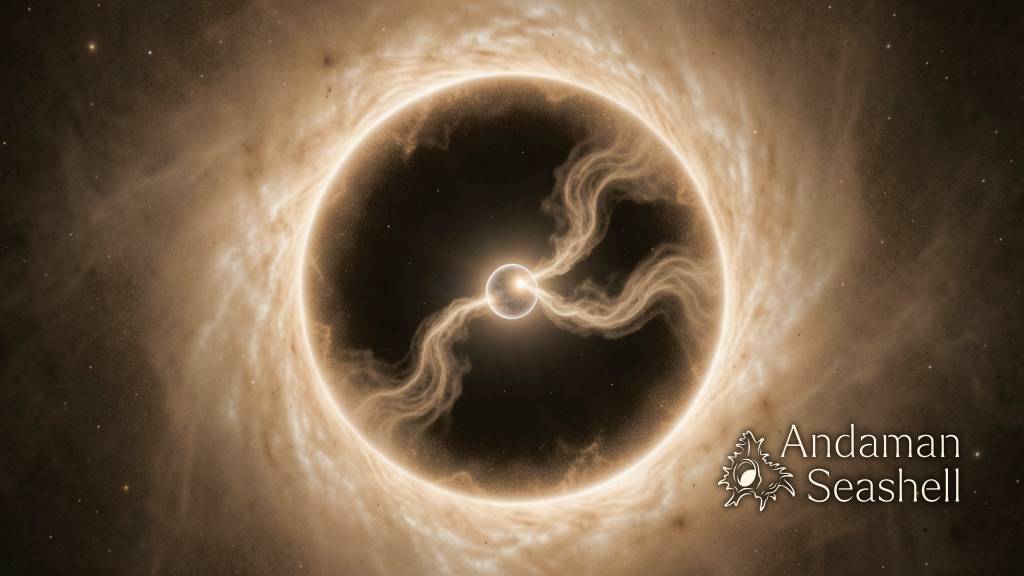
Why this baby breaks the rules — beautifully
The most surprising number is its address. Elias 2-24 b orbits about 55 times farther from its star than Earth sits from the Sun [ref:1]. Current models say a Jupiter-sized world at Jupiter's distance (only about five times the Earth–Sun gap) needs around five million years to form. The previous "youngest planet" record was a four-way tie between planets around the stars PDS 70 and WISPIT 2 — all more than five million years old [ref:1]. Elias 2-24 b smashes that record by being younger than one million.
"Elias 2-24 b shows us that even our best planet-formation models are still missing some important processes," said co-author Lucas Cieza [ref:3]. That's not bad news — that's the fun part. Every surprise like this is a hint about how our own solar system, billions of years ago, did the same trick.
Of the roughly 6,000 confirmed exoplanets, almost all are fully grown and billions of years old [ref:1]. Elias 2-24 b gives scientists a live laboratory: a system where they can watch core accretion — the leading theory of how giant planets form — actually happening.
The next baby boom
And more are coming. NASA's Nancy Grace Roman Space Telescope, which launched on August 30, 2026, carries an even more advanced coronagraph, designed to spot planets hidden in their stars' glare — including tighter orbits where true Jupiter analogs might hide [ref:1]. "This is just the beginning of a new era of discovery," Cieza said [ref:3].
So the next time you look up at the night sky, remember: among those steady points of light are worlds being built right now — young, glowing, and growing. One of them finally introduced itself.


No comments yet. Be the first to share a thought.