



A beam from the ROV SuBastian cut through black Atlantic water and landed on something wonderfully busy: mineral chimneys, pale anemones, orange mussels, crabs, and clouds of blind shrimp gathered around fresh hydrothermal flow. That one scene captured why scientists were so excited in July. During a 35-day expedition on R/V Falkor (too), researchers documented two newly discovered vent fields in the Doldrums Megatransform and Fracture Zone — the first known hydrothermal vent communities found in and around that system [ref:1][ref:2].
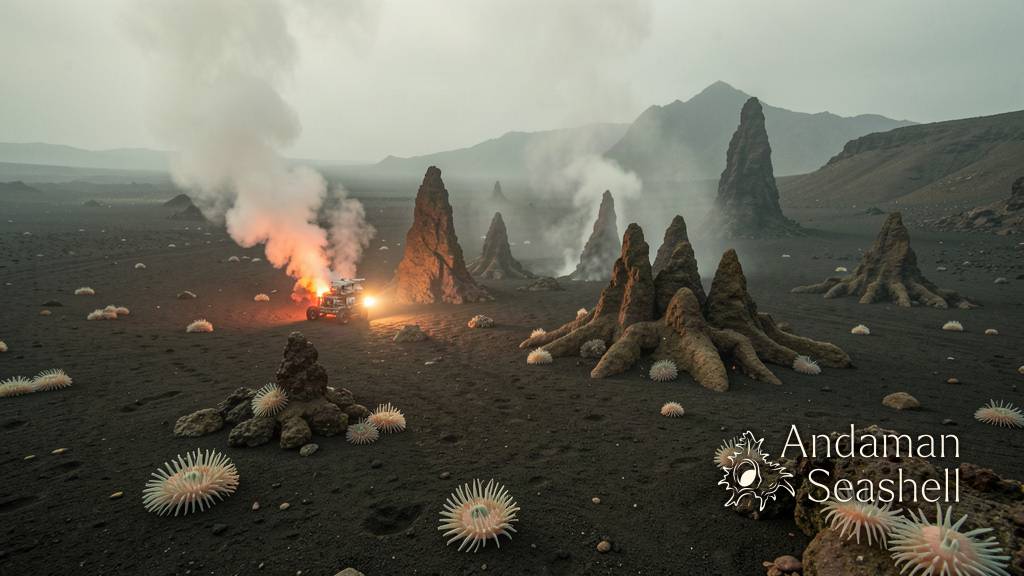
What makes the discovery so inviting to read about is its mix of scale and detail. The Doldrums system spans about 600 kilometres across the Atlantic seafloor and lies just north of the equator, roughly 1,300 kilometres off Brazil’s northeast coast. It also cuts across the Mid-Atlantic Ridge, the planet’s longest mountain chain [ref:1]. In other words, this was not a tiny crack in an already familiar corner of the ocean. It was a huge, poorly studied transform-fault landscape that finally got a close, tool-rich look.
A remote place, suddenly in focus
The expedition did not rely on luck alone. Scientists from the Brazilian Geological Survey shared a water-chemistry anomaly first noticed in 2013, which helped narrow the search area [ref:1][ref:3]. From there, the team mapped the region with shipboard sonar and then sent down Schmidt Ocean Institute’s new autonomous underwater vehicle, The Childlike Empress, to build one-metre-scale seafloor maps and measure changes in water chemistry and clarity [ref:1]. Schmidt said the AUV mapped almost 147 square kilometres at that one-metre resolution during its first science mission, turning a broad geological hunch into precise dive targets [ref:2].
That workflow mattered because hydrothermal vents can be visually spectacular but geographically elusive. High-resolution maps showed shapes and cloudy-water signals that looked promising, so the team deployed SuBastian for direct observation and sampling. The result was fast confirmation of active venting in one of the Atlantic’s least explored areas [ref:1][ref:3].
Why these vents are so unusual
The new vent fields are not just new dots on a map. Researchers describe them as hybrid systems, combining typical volcanic venting with serpentinization — a water-rock chemical reaction that happens when material from Earth’s mantle meets seawater [ref:1][ref:2]. Only a small number of mixed vent fields like this are known worldwide, which is why the Doldrums discovery immediately stood out [ref:2].
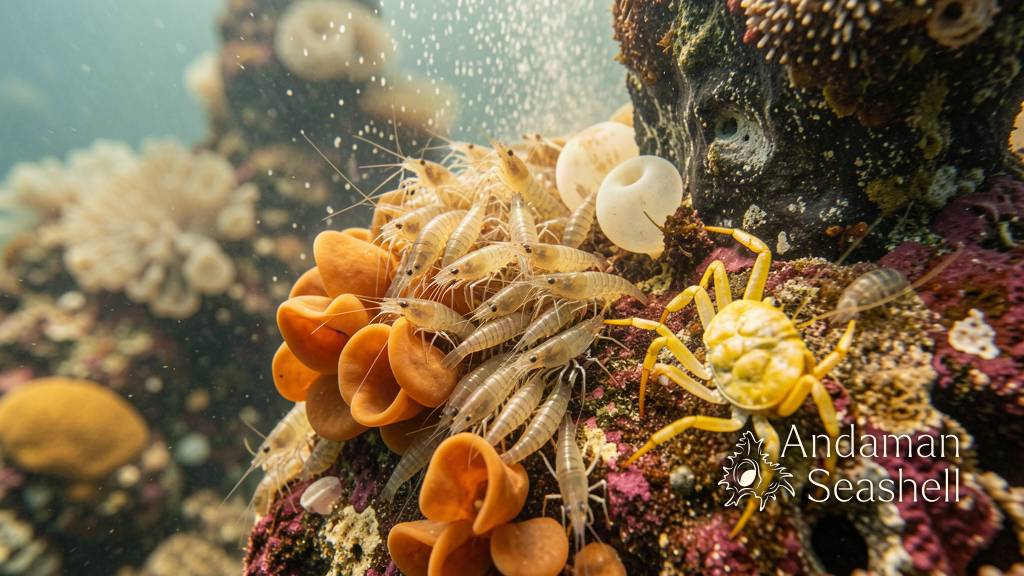
One of the two sites was especially rich. It covered about 99,000 square metres, or roughly 24 acres, and included 23 hydrothermal vents, 13 of them active black smoker chimneys [ref:2][ref:3]. At that site, the team measured superheated fluids reaching 280°C, hot enough to make the scene feel almost impossible and yet intensely alive [ref:2]. Around those chimneys were anemones, crabs, and thousands of blind Rimicaris shrimp, part of an ecosystem powered not by sunlight but by chemosynthetic bacteria that turn vent chemicals into usable energy [ref:2][ref:3].
The second vent field was much smaller and weaker, but it added another important clue: it lay about 170 kilometres from the first site and was found on the expedition’s last ROV dive [ref:2][ref:3]. Together, the two finds suggest that hydrothermal circulation may be more widespread in transform systems than researchers had previously recognised [ref:1][ref:2].
The discovery kept getting better
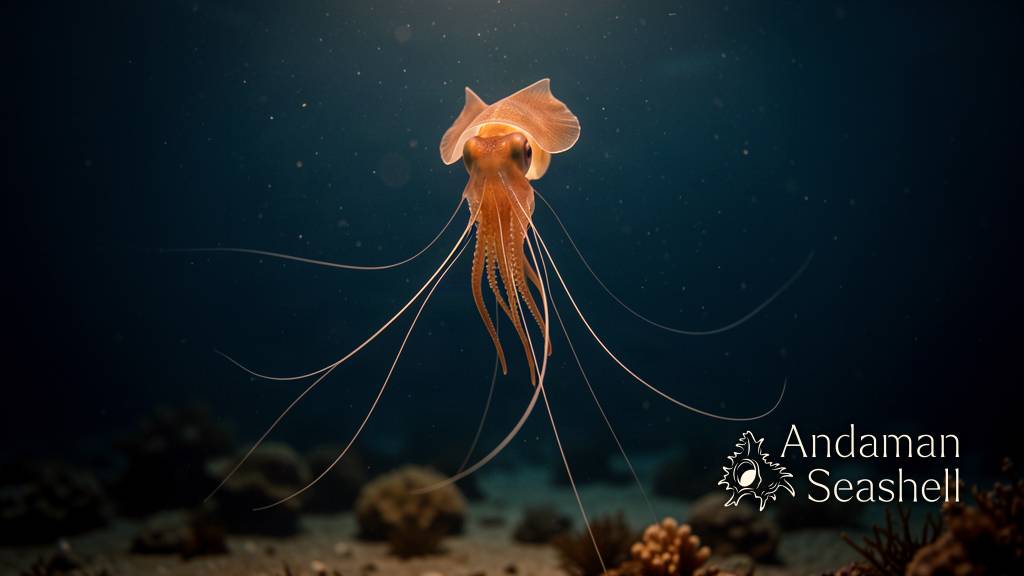
The story did not end with vents. During the same expedition, the team also saw two bigfin squids (Magnapinna sp.), famous for thread-like tentacles that can reach up to eight metres long, at roughly 3,634 metres below the surface [ref:2]. They also captured the first footage of Winteria telescopa alive in its natural habitat at about 710 metres depth, a barreleye fish known for its translucent head and tubular eyes [ref:2]. Those encounters gave the expedition a wider meaning: careful seafloor mapping was not only finding geology, but revealing whole layers of deep-ocean life.
For readers who love ocean wonder, the nicest lesson here is also the simplest. Even in the Atlantic, a basin studied for generations, a first close look can still uncover new vents, new animal footage, and better clues about how life thrives without sunlight. That makes the Doldrums feel less like an empty name on a chart and more like a living science map that is only just beginning to open.


No comments yet. Be the first to share a thought.