



On 15 July 2026, a team at the University of Tokyo's Atmosphere and Ocean Research Institute published proof of one of the ocean's most astonishing commute routes: a snail, born in total darkness more than a kilometre beneath the waves, spends its youth sunbathing near the surface before diving back down to settle on a hydrothermal vent [ref:1].
The travellers are vent limpets — flattened sea snails no bigger than a fingernail that live nowhere else but around hot seafloor springs. Their homes are among the strangest real estate on Earth: hydrothermal vents, where mineral-rich water heated by underground volcanism escapes through cracks in the seafloor, hosting more than 640 animal species found in crushing pressure, extreme heat and metal-laden water [ref:1].
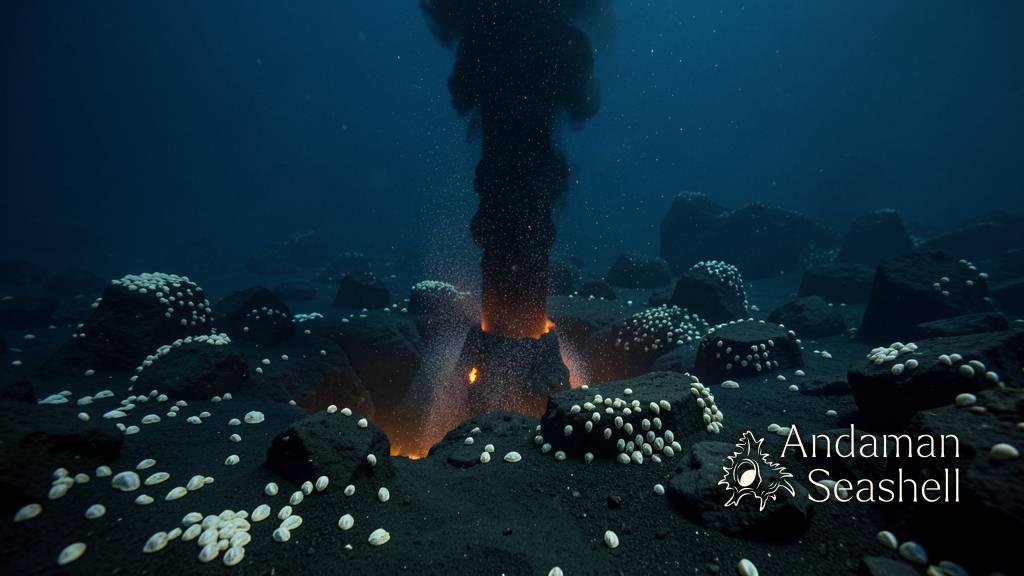
A question decades in the making
Marine biologists have long puzzled over a simple-sounding mystery: how do members of the same snail species turn up at vents separated by hundreds, even thousands of kilometres of barren ocean floor? The leading suspect was the larvae — microscopic, free-swimming youngsters that might drift with the currents. But nobody had ever been able to watch a speck smaller than a grain of rice cross an ocean [ref:2].
Assistant Professor Takuya Yahagi and Associate Professor Yasunori Kano found a different kind of witness: the shells themselves.
The shell as a boarding pass
Here is the elegant trick. When a limpet larva finally settles on a vent and transforms into its adult form, its tiny larval shell — about a millimetre across — sometimes stays attached to the adult body like a childhood keepsake. And that shell records, in chemistry, the water the baby snail grew up in.
The team analysed 39 limpets of three species, collected by research vessels from two very different corners of the west Pacific: six from the Tu'i Malila vent site, 1,845 metres deep in the Southwest Pacific, and 33 from a vent field about 440 metres down on the Kaikata Seamount in the northwestern Pacific [ref:2].
Using the NanoSIMS instrument at Kashiwa, they measured oxygen isotopes in the larval shells — a built-in thermometer. The readings showed the young snails had grown up in warm water matching the euphotic zone, the sunlit upper 200 metres of the ocean. Meanwhile the barium and manganese levels, chemical fingerprints of hot vent fluid, were high only in the adult shell growth — proving the larvae had not simply lingered near the vents [ref:1].
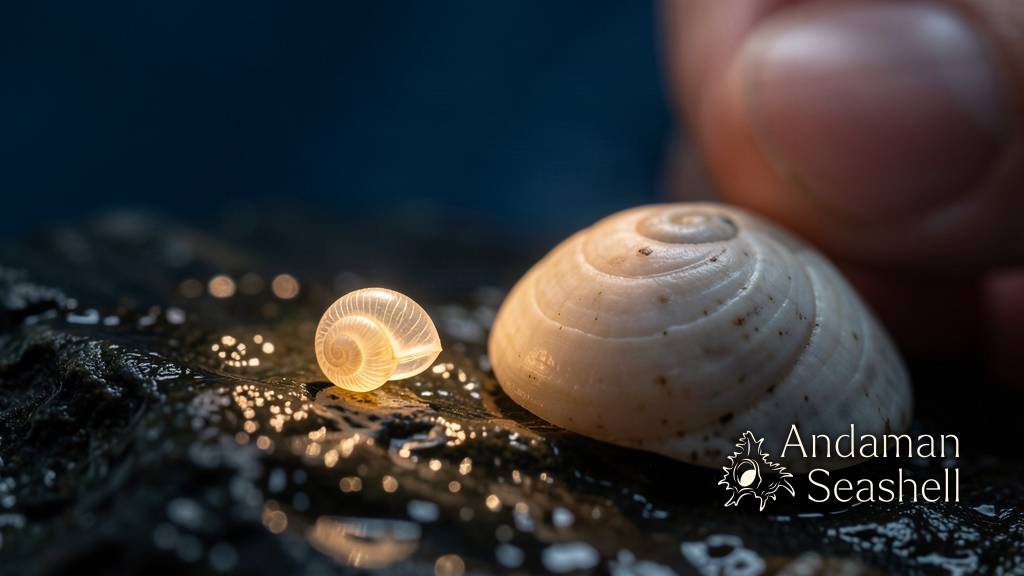
Every single limpet analysed had made the journey. The pattern wasn't a lucky exception; it is the life cycle [ref:3].
Why travel so far?
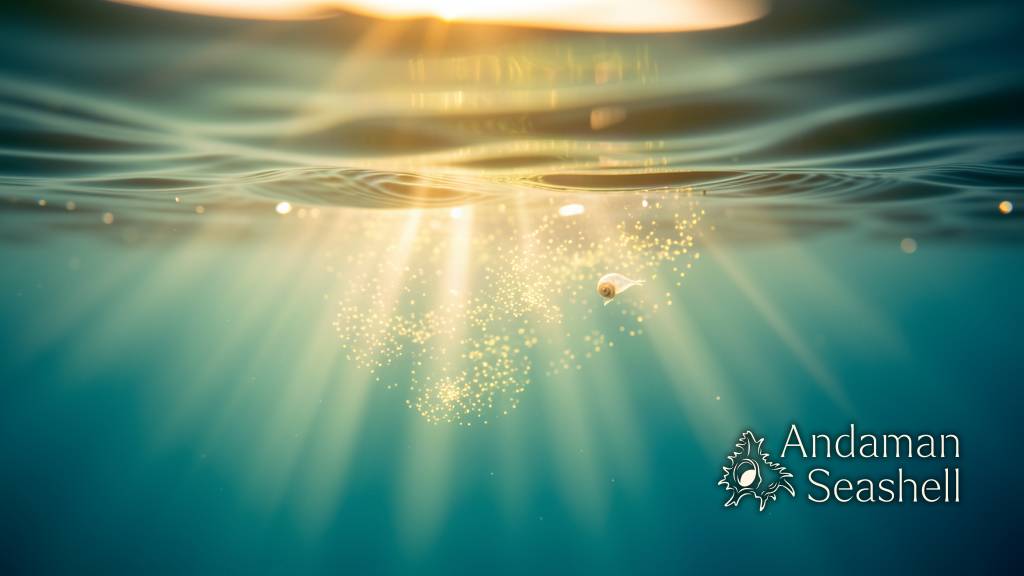
The trip makes practical sense. Up in the sunlit zone, the larvae can feast on phytoplankton — food that simply doesn't exist in the dark deep — while strong surface currents act as a conveyor belt, carrying them toward new vents. Experiments suggest at least one species may drift near the surface for more than a year before diving back down [ref:3].
The odds, admittedly, are wild: almost all larvae are eaten or lost before finding a suitable vent, which is why vent snails produce enormous numbers of offspring to begin with [ref:2].
Why it matters
The discovery, published in Science Advances, does more than satisfy curiosity. It shows that the fate of communities living kilometres below the surface depends on conditions far above them — surface currents, temperature and food supply. That makes the findings directly useful for modelling how deep-sea ecosystems stay connected and for planning marine protected areas [ref:1]. It also hints that if warming seas change surface currents, vent populations could feel it — though the researchers note the three limpet species, with their huge broods and long-range dispersal, may be among the more resilient travellers of the deep [ref:3].
A snail small enough to sit on your fingertip has quietly been running one of the longest errands in the animal kingdom — and its shell kept the receipt all along.
References
- Yahagi et al., Science Advances (2026) — Gastropod shells record larval migration from deep-sea hydrothermal vents to the euphotic zone
- Science News — Deep-sea snails ride surface currents to reach distant hydrothermal vents (Javier Barbuzano)
- University of Tokyo press release — Deep-sea creatures' epic migrations between hydrothermal vents


No comments yet. Be the first to share a thought.