



12,000 Tiny Fossils From a Darwin Warehouse Just Rewrote the Opening Chapter of Complex Life
In an open-air warehouse in tropical Darwin, Australia, dozens of trays hold cylindrical cores of rock that mineral exploration companies drilled hundreds of metres underground decades ago — and largely forgot. Nobody imagined that inside those cylinders of hardened seafloor mud slept more than 12,000 fossils of some of the oldest complex organisms ever found: single-celled eukaryotes up to 1.75 billion years old, the ancient cousins of every animal, plant, alga and fungus alive today [ref:1][ref:2].
A new study published in Nature has finally read their story — and it answers one of the biggest questions in the life sciences: what the very first complex cells on Earth needed to survive [ref:1].
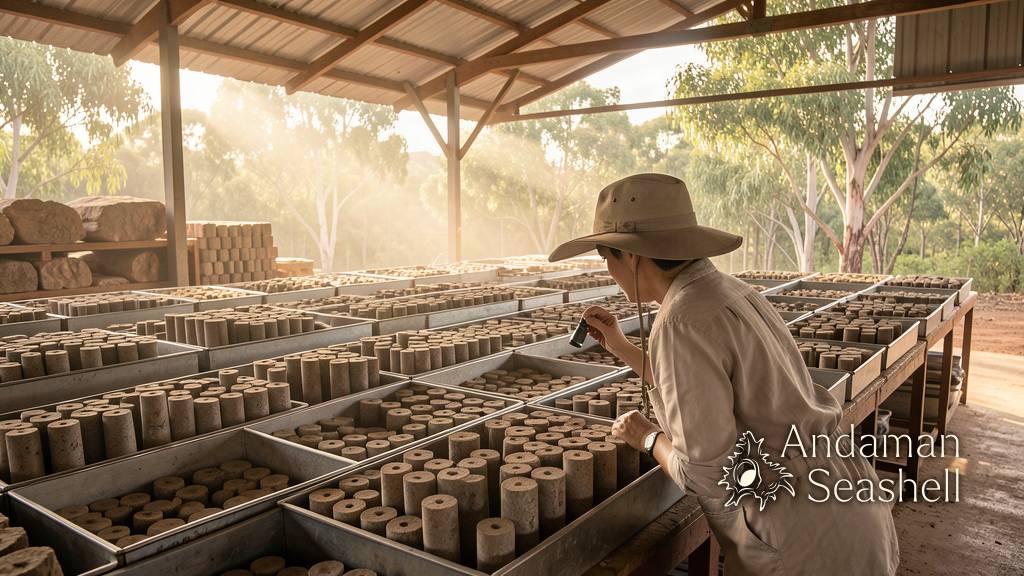
A warehouse full of time machines
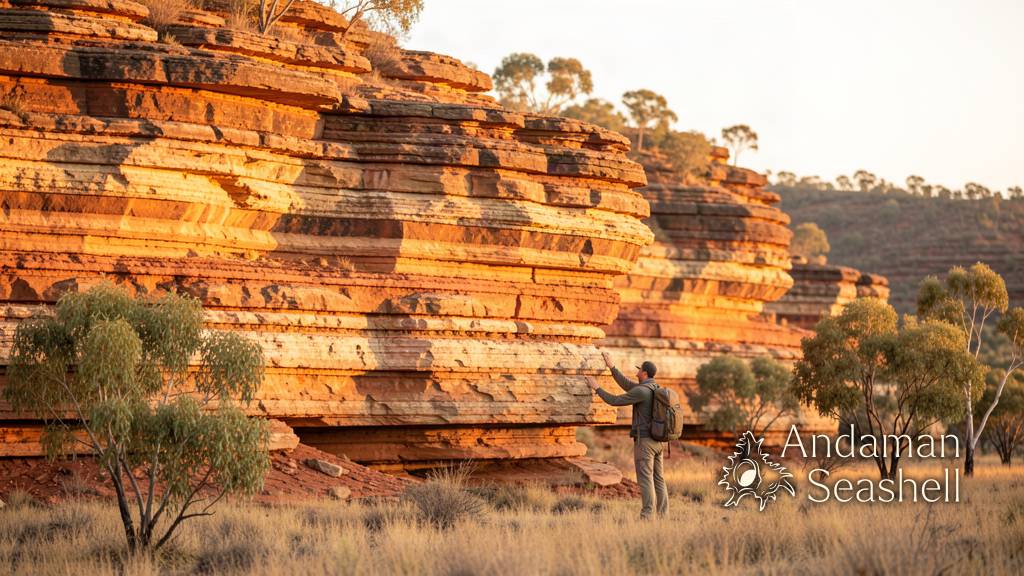
The rock cores belong to the Northern Territory Geological Survey. They were cut from the McArthur and Birrindudu basins, a region that today ranges from red outback savanna to the billabongs and forests of Kakadu National Park. But between 1.75 and 1.4 billion years ago, this same landscape was a shallow inland sea full of lagoons, offshore mudflats and calm coastal waters — and its muddy floor became a perfect archive of the life that lived there [ref:3].
To read it, the research team — led by paleontologist Leigh Anne Riedman of UC Santa Barbara and geobiologist Max Lechte of McGill University — crushed samples of the cores and dissolved them in acid that preserves organic material. Under the microscope, the leftover residue revealed fossil after fossil: more than 12,000 of them [ref:2].
Some were simple spheres. Others were surprisingly elaborate, decorated with jutting appendages, plates, and creased surfaces like the whorl of a fingerprint — a level of craftsmanship nobody expects from something a billion years old [ref:3].
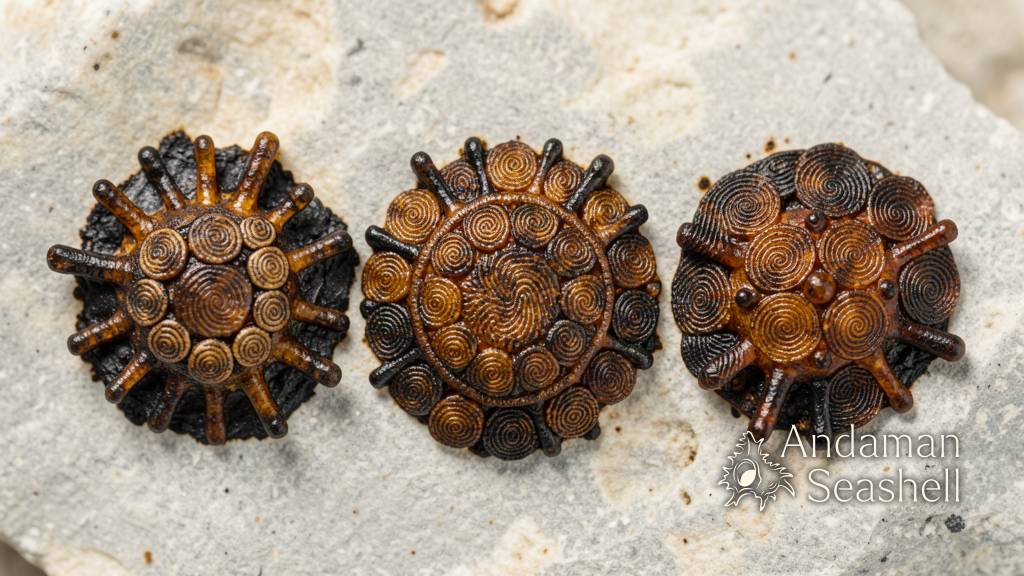
The oxygen clue
Then came the detective work. By studying the sediment types and the chemistry of the mudstones — including minerals and trace metals such as iron pyrite, vanadium, molybdenum and uranium, which record how much oxygen was in the ancient seawater — the team matched each fossil to the environment it lived in [ref:3].
The pattern was beautifully clear. Eukaryotes turned up in coastal mudflats and in the open sea, in shallows and offshore — but only ever in oxygenated settings. Every oxygen-free sample contained nothing but simple bacteria [ref:2].
That matters because at the time, oxygen was precious. Atmospheric concentrations were one per cent or less of today's levels. "We would not have been able to breathe," said Susannah Porter, the study's senior author [ref:3]. The oldest complex life didn't just enjoy oxygen — it depended on it, clustering in the few oxygen-rich pockets of the seafloor like pioneers waiting for the sea to breathe.
The distribution also told a second story: these organisms lived on the seafloor itself, not floating in the water column as scientists long assumed. And it sets a minimum date for one of life's greatest mergers — the acquisition of mitochondria, the oxygen-burning powerhouses of complex cells — at sometime before 1.7 billion years ago [ref:3].
Why they waited a billion years
The discovery even solves an old puzzle. Eukaryotes existed for nearly a billion years without becoming abundant or diverse. Why the long pause? Because they were confined to a limited habitat — oxygenated patches of seafloor. As Riedman and Porter put it, the fossils that are 800 million years old and the ones 1.7 billion years old are, for the most part, "the same cast of characters" [ref:3]. Only much later, when oxygen spread, did complex life finally bloom into algae, fungi, sea sponges, jellyfish — and eventually us.
The researchers, part of a joint project by the Simons Foundation and the Gordon and Betty Moore Foundation, are now searching even older rock layers for the chapter before this one [ref:3].
A humble beginning worth celebrating
There is something wonderfully encouraging about the picture that emerges. Complex life did not arrive with a bang. It began as patient, ornamented single cells holding on in quiet, oxygen-rich corners of an ancient sea — and every leaf, coral reef, shell, whale and person is descended from cells that made it through that long apprenticeship [ref:1].
The next time you stand on a shoreline and watch the tide stir oxygen into the shallows, you are watching the very thing our oldest ancestors waited a billion years for. The sea finally breathed — and the world never stopped changing.
References
- Riedman, L.A. et al. — Early fossil eukaryotes were benthic aerobes, Nature (2026)
- ScienceDaily / The Conversation — 1.7-billion-year-old fossils reveal a crucial clue to the rise of complex life (2026-09-27)
- phys.org / UC Santa Barbara — Early complex life clung to oxygenated seafloors for hundreds of millions of years (2026-05-20)


No comments yet. Be the first to share a thought.