



The Giant That Waited 40 Years in a Drawer: Meet Science's Newest Colossogiant
Some discoveries begin with a submarine dive. This one began with a drawer.
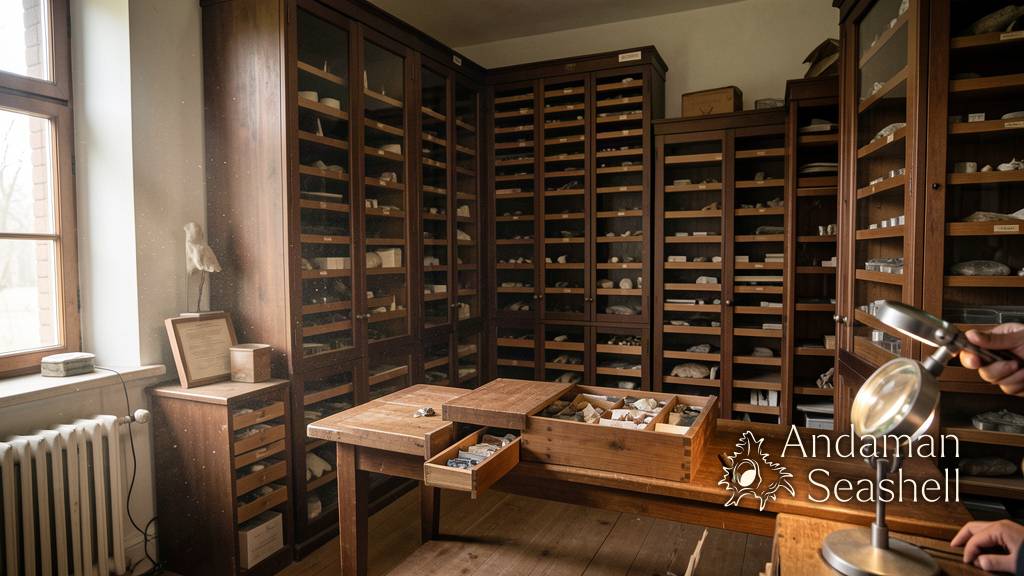
In the archive of the University of Tübingen's Paleontological Collection in Germany, a dried, armored sea creature rested quietly among the fossils. It had arrived in the 1980s, collected at a research station in Puerto Rico by the celebrated paleontologist Dolf Seilacher (1925–2014), who brought it home as a teaching specimen [ref:1]. For roughly four decades it sat, catalogued but unrecognized — until a paleontology student and isopod expert named Benedikt Kästle, working with collection curator Dr. Ingmar Werneburg, took a closer look with modern imaging techniques. The verdict, published in October 2026 in the journal Scientific Reports: not a known species at all, but a species entirely new to science [ref:2].
A Name That Honors Two Homes
The new species was christened Bathynomus tuebingoborikensis — a name that carries both halves of its story. "Tübingen" honours the German university town where it was finally recognized; "borikensis" comes from Boríken, the Indigenous Taíno name for Puerto Rico, the island whose waters it once roamed [ref:1].
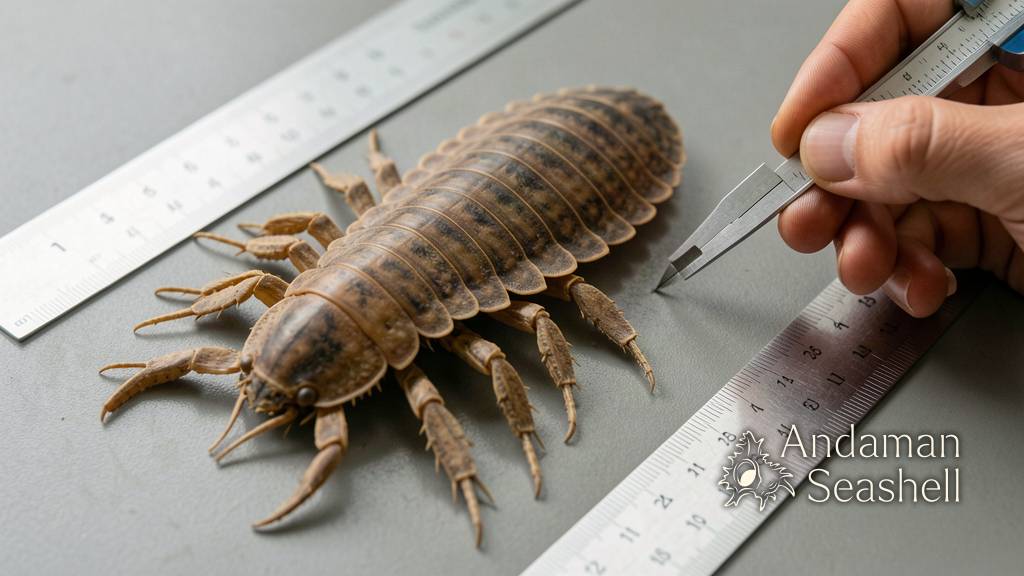
And it is a genuine heavyweight. The specimen measures 32.2 centimetres long, placing it in what researchers call the "colossogiant" class — the upper tiers of a family already famous for its size [ref:1]. Its closest known relative lives off the Yucatán Peninsula in Mexico, a Caribbean family link that is helping scientists reconstruct how these animals conquered the world's oceans [ref:3].
A Woodlouse the Size of a Suitcase
Giant isopods of the genus Bathynomus look like enormous versions of the little woodlice you find in a damp garden — and that resemblance is honest. They are close crustacean cousins, scaled up dramatically. Found in all of the world's oceans, they can grow up to 50 centimetres and weigh several kilograms, making them among the largest invertebrates on the seafloor. They live at depths reaching 2,500 metres, encased in exoskeletons of calcareous, scale-like segments, and they earn a living as patient omnivores [ref:3].
A Family Tree Written in Armour
The new study did more than name a species — it mapped an epic journey. The phylogenetic analysis suggests the entire Bathynomus genus originated in what is now the Gulf of Mexico during the Miocene, more than 15 million years ago [ref:1].
At that time, the Isthmus of Panama had not yet closed. A strait ran between North and South America, and the marine animals were able to spread westward — initially as far as Japan [ref:1]. In the Indian and Pacific oceans they diversified into many new species: the "giants" up to 15 centimetres, and the "supergiants" beyond that [ref:1]. They even reached Europe, before the collision of the Arabian and African continental plates sealed their route and they became extinct there at the end of the Miocene [ref:3].
Then came a turning point. As Earth cooled at the Miocene–Pliocene boundary 5.333 million years ago, a unique group of true colossi evolved in the Indo-Pacific — animals exceeding 25.2 centimetres, physiologically perfectly adapted to the new conditions. From Australia they spread via Antarctic waters to South and Central America, where they met their smaller relatives who had stayed behind on the first journey [ref:1]. The Tübingen specimen is a descendant of that second great wave.
Why a Drawer Can Out-Dive a Submarine
The loveliest lesson of this discovery is about the drawers themselves. "The discovery underscores the great importance of natural history collections as global archives of nature," Werneburg points out [ref:1]. Museums and universities hold hundreds of millions of specimens worldwide — dried, jarred, pinned and labelled — and every year, imaging and DNA tools grow sharp enough to read stories that earlier generations of scientists could not. New species are not always found at sea; sometimes they are waiting on shelf 4, patiently, for the right eyes.
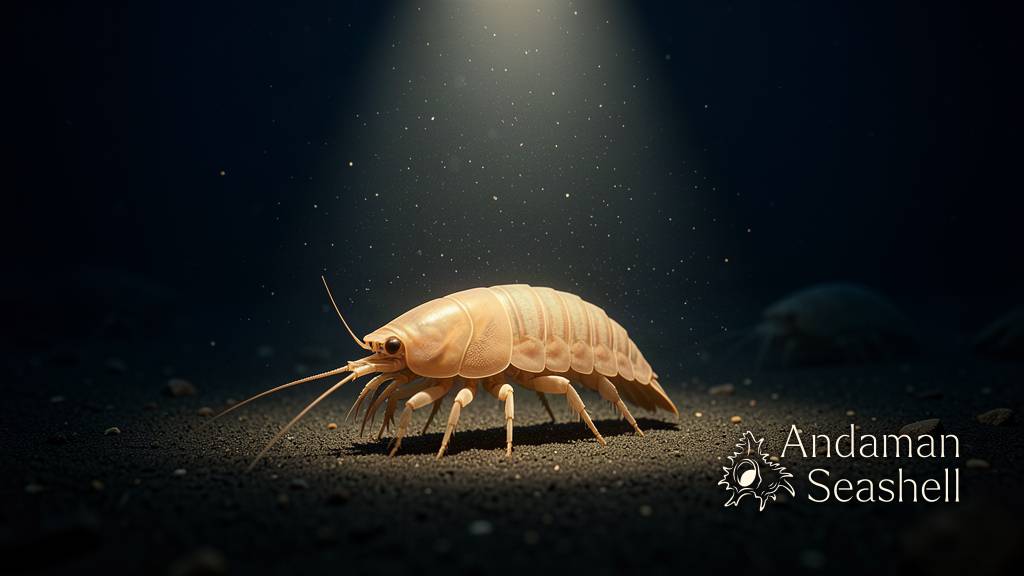
Somewhere in the Caribbean's deep water, the living relatives of Bathynomus tuebingoborikensis are still patrolling the dark in their plated armour — unchanged in spirit, and now, at last, properly named [ref:2].


No comments yet. Be the first to share a thought.