



A chain of underwater mountains in the eastern Indian Ocean has just become one of the year’s most delightful science stories. Around Christmas Island and the Cocos (Keeling) Islands, researchers have now documented 149 species new to science after surveying 22 seamounts and the surrounding abyssal plain, turning a once-blank patch of ocean into a place with names, numbers, and vivid living detail.[ref:1][ref:2]
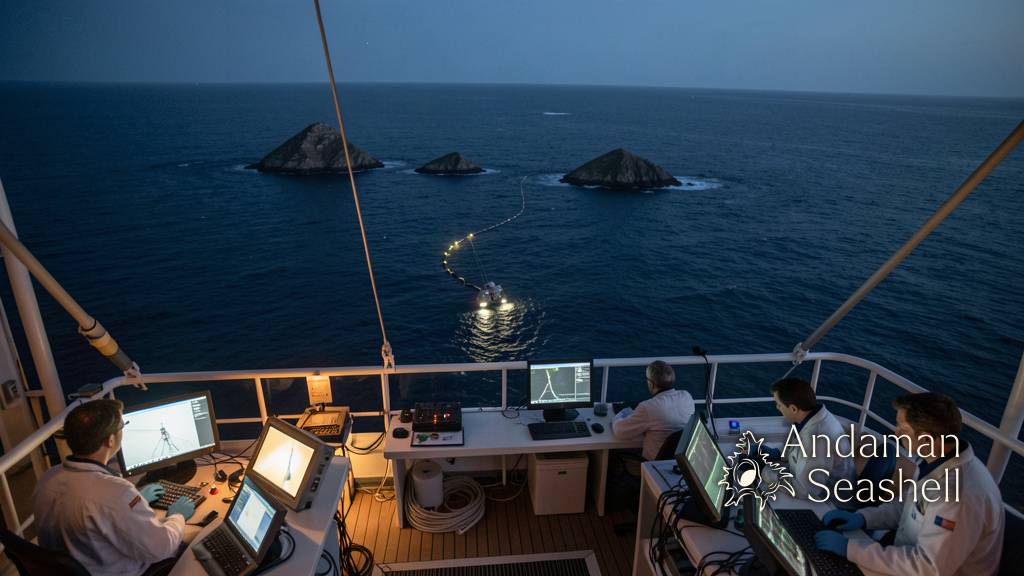
A map that suddenly filled in
What makes this discovery so satisfying is its scale. The work came from two research voyages in 2021 and 2022 aboard the 94-metre RV Investigator, with scientists from Museums Victoria, CSIRO, the Australian Museum, and partner institutions collecting specimens from waters near Australia’s Indian Ocean territories.[ref:2][ref:3] Across the wider project, the team sampled depths from 94 metres down to 5,431 metres and recovered 67 seafloor macrofaunal samples from 22 seamounts, the two island groups, and the nearby abyssal plain.[ref:3] Before these voyages, almost nothing was known about the region’s deep-sea biodiversity beyond the islands’ shallower margins.[ref:3]
That gap matters because these seamounts are not small bumps on the seabed. CSIRO describes them as massive underwater mountains, mostly of late Cretaceous age, about 65 to 80 million years old.[ref:3] Mongabay reports that some of them can span up to 70 kilometres across, and their slopes interrupt currents in ways that create feeding opportunities for animals living far below the sunlit surface.[ref:1] In other words, the geology is doing part of the ecological work.
Why the numbers are so exciting
The most useful number is not only 149. Across the two voyages, researchers identified 1,059 taxonomic groups from collected material.[ref:3] Of those, 495 could already be matched to described species, while 149 — about 14 percent — were identified as species new to science.[ref:3] Decapods and fishes produced the highest species counts, and ophiuroids, the brittle stars, were the most abundant group overall.[ref:3] That combination makes the story richer: this is not one spectacular animal, but a whole layered community.
ABC’s reporting adds a lovely human detail here. More than 400 collected species are still on the shelf waiting to be formally described, which means the expedition is still giving science gifts years after the ship returned to port.[ref:2] The deep ocean can look still from above, but on a taxonomist’s table it is busy for a very long time.
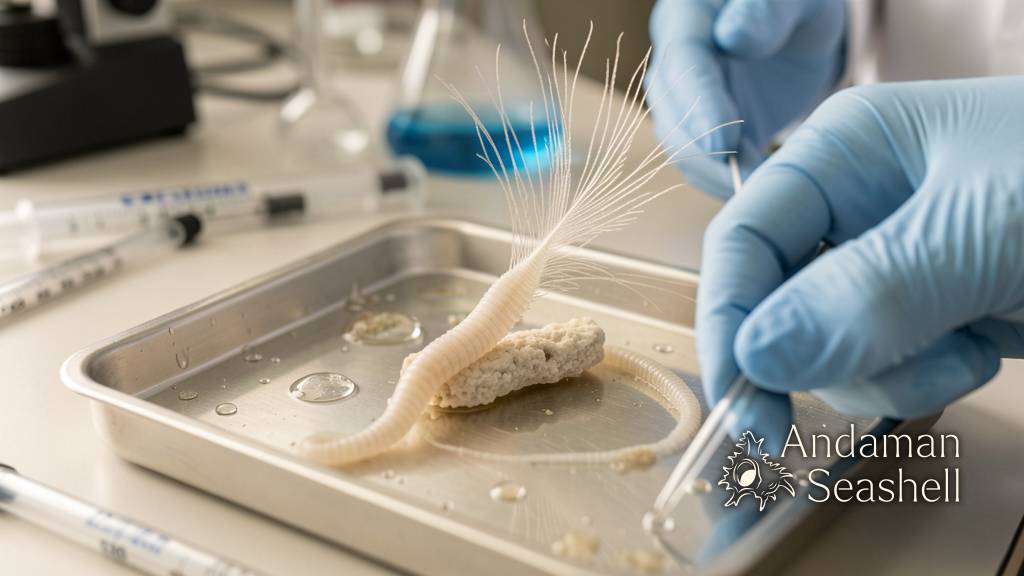
The creatures that make the place memorable
Several finds help the reader picture that hidden world. One newly described annelid worm, Bathyvermilioides juliebrockae, was collected at around 4,990 metres and is among the deepest new species discoveries made in more than 100 RV Investigator voyages.[ref:2][ref:4] Another new arrival was a greeneye fish from the genus Chlorophthalmus, dramatic enough that one seamount was named Green Eye after the family found there.[ref:1] Researchers also recorded a sea cucumber believed to belong to the genus Oneirophanta, plus black corals, octocorals, hard corals, barnacles, fishes, sea stars, brittle stars, and deep-sea worms.[ref:1][ref:4]
Mongabay’s most cinematic detail may be the “Eye of Sauron,” a caldera-shaped seamount discovered at 3,103 metres depth and about 282 kilometres from Christmas Island.[ref:1] The team did not sample inside that crater, but even its mapping hints at how much structure the seafloor still keeps hidden. These mountains do not simply host isolated oddities; scientists now think they can act like stepping stones, helping deep-sea organisms spread from one habitat to another rather than evolving in total isolation.[ref:2]
A deep archive, not just a species count
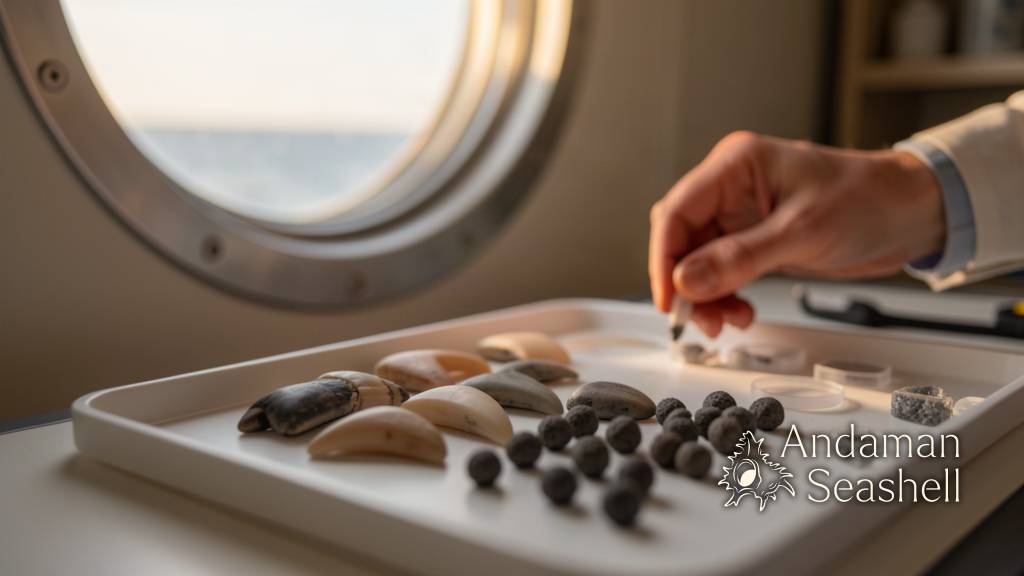
The voyage also brought up a completely different kind of evidence: more than 1,000 shark teeth from the Cocos Abyssal Plain, many collected from around 5,400 metres depth.[ref:1][ref:3] According to Parks Australia, those teeth include remains from both modern and extinct sharks and date back roughly 33 to 22 million years.[ref:4] Mongabay adds that the haul included teeth from great white, mako, tiger, and even Otodus megalodon, with some specimens containing manganese nodules.[ref:1] It is a beautiful reminder that a deep-sea trawl can uncover both a living ecosystem and a fossil archive in the same sweep.
That is why this story lands so well. It offers facts that are easy to picture — a seven-day sail from Darwin to Christmas Island, Cocos lying roughly 960 kilometres southwest of Christmas, and a survey zone stretching down past five kilometres of water.[ref:1] But it also offers a larger idea: when scientists finally visit understudied places with good maps, cameras, DNA tools, and patient taxonomy, the ocean answers with abundance.
For readers who enjoy ocean stories, this is the happiest kind of update: not a closing chapter, but an opening one. A world-first survey has already turned 22 remote seamounts into a readable ecosystem, and with hundreds of specimens still awaiting description, the Indian Ocean is almost certainly not finished introducing itself yet.[ref:2][ref:3]


No comments yet. Be the first to share a thought.