



The tjanting tool touches cotton, and hot wax beads along the traced line. In the open-air workshop on Ko Yao Yai, a dozen hands steady fabric frames while the morning breeze from Phang Nga Bay carries the scent of melted beeswax and indigo dye [ref:1].
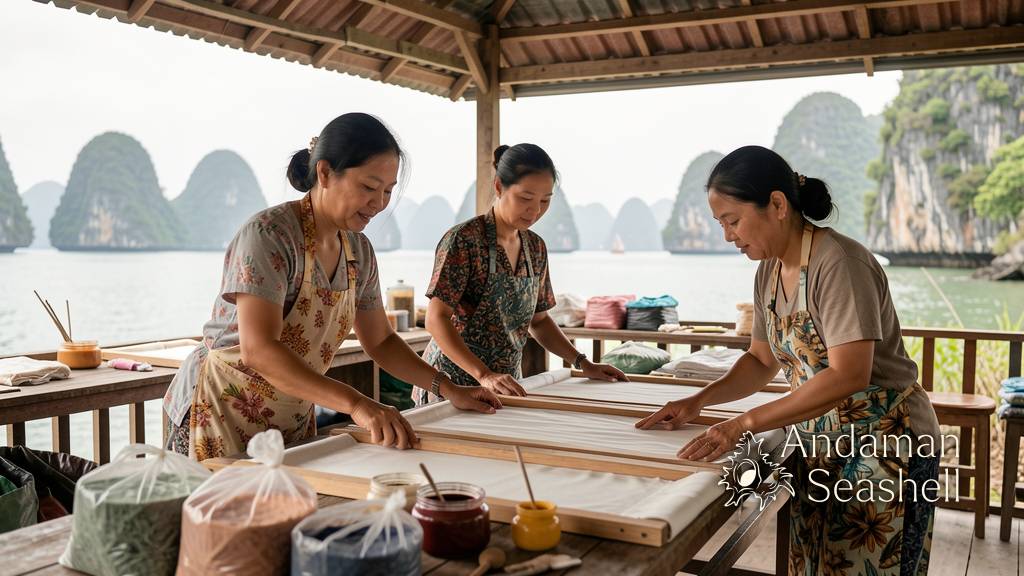
Batik De KohYao sits just before Klong Hia Pier on the eastern shore of Ko Yao Yai, the larger and quieter of the two Ko Yao islands. The workshop runs daily from 9 AM to 6 PM, with the last session starting at 5 PM. What began as a single artisan's table has grown into a community teaching space where visitors — mostly day-trippers from Phuket and Krabi — spend two hours learning a technique that has traveled across Southeast Asia for centuries [ref:2].
The Wax-Resist Technique
Batik is a wax-resist dyeing method: hot wax is applied to fabric in patterns, the cloth is dyed, and the wax is removed to reveal the design beneath. The wax blocks dye from penetrating the fiber, creating sharp contrasts between protected and exposed areas. In Thai batik, practitioners use both the traditional Javanese tjanting pen (a small copper cup with a spout) and brushes for broader strokes [ref:3].
At the Ko Yao Yai workshop, students begin with a pre-washed cotton square and a pencil outline of their chosen pattern — island motifs like mangroves, longtail boats, or the limestone karsts that rise from Phang Nga Bay. The instructor demonstrates how to hold the tjanting at a low angle, letting gravity pull the wax in a steady bead. Mistakes are permanent; there is no eraser for hot wax on cotton.
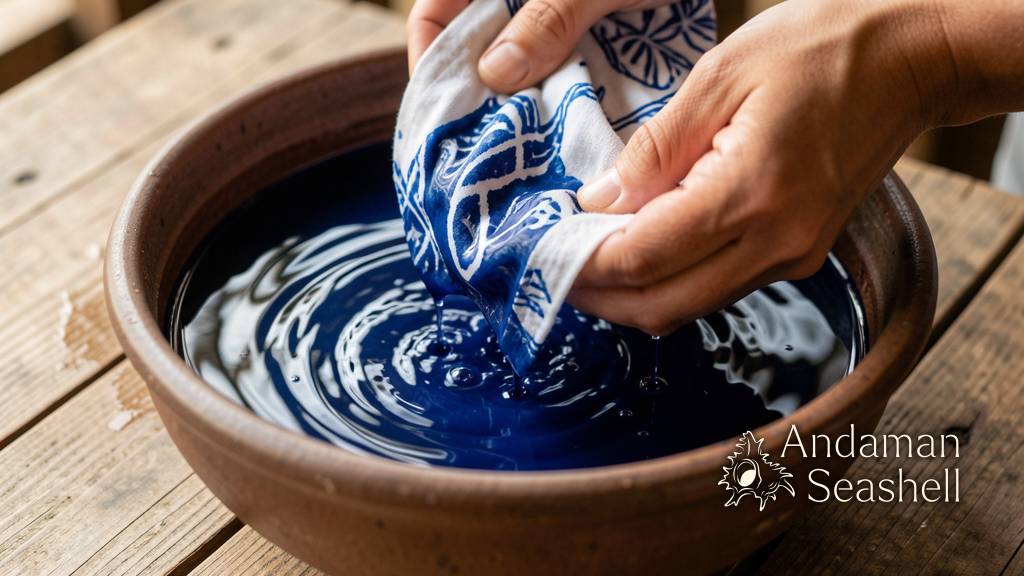
The dye baths are prepared fresh each morning. Natural dyes — indigo, turmeric, and morinda — sit in ceramic basins alongside synthetic options for brighter hues. Once the wax has cooled and hardened, the fabric is submerged. Dye time varies by color intensity, from five minutes for pale yellows to twenty for deep blues. After rinsing, the cloth is boiled to melt away the wax, revealing the pattern in crisp white against the dyed ground.
Island Craft, Island Rhythm
Ko Yao Yai remains one of the less-developed islands in Phang Nga Bay. The batik workshop is part of a broader community tourism effort that includes rubber tapping demonstrations, mangrove kayaking, and homestays with Muslim fishing families. The island's pace is slower than Phuket's west coast; workshops run on tidal time, with breaks timed to the call to prayer from the village mosque [ref:1].
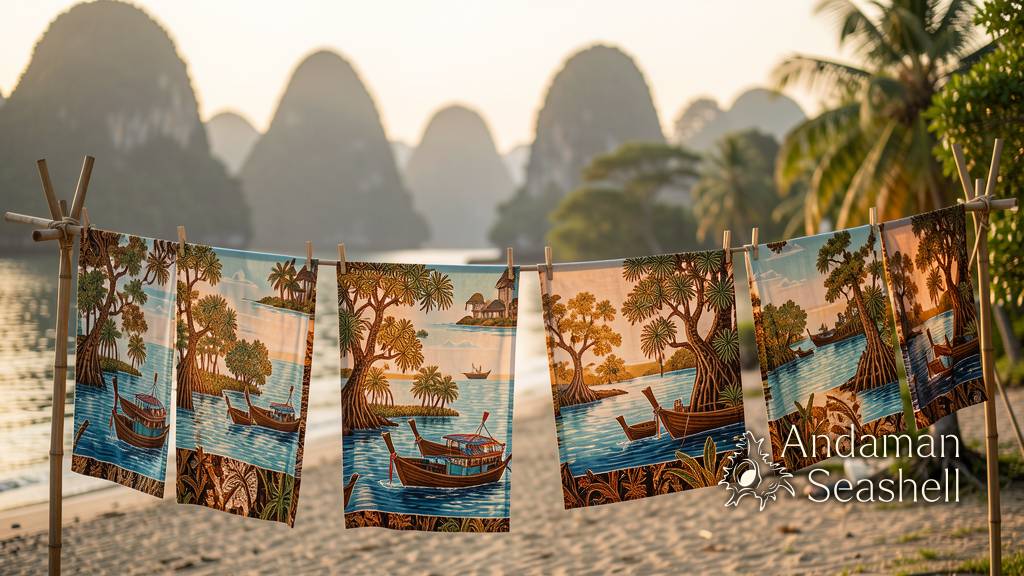
The workshop space doubles as a small shop selling finished batik scarves, wall hangings, and tote bags — all made by local artisans. Prices are set by the collective, not by bargaining. A hand-dyed scarf costs 350-500 baht depending on size and complexity; workshop fees (including materials) run 600 baht per person for the two-hour session.
Most participants leave with their finished piece still damp, wrapped in paper for the ferry ride back to Phuket or Krabi. The fabric will continue to set for another day; instructors recommend a cold-water rinse before the first wear to lock the dye. What stays longer than the color is the muscle memory of guiding hot wax across cotton, the smell of indigo on your hands, and the knowledge that you've added one more pattern to a tradition that stretches back long before tourism arrived in Phang Nga Bay.


No comments yet. Be the first to share a thought.