



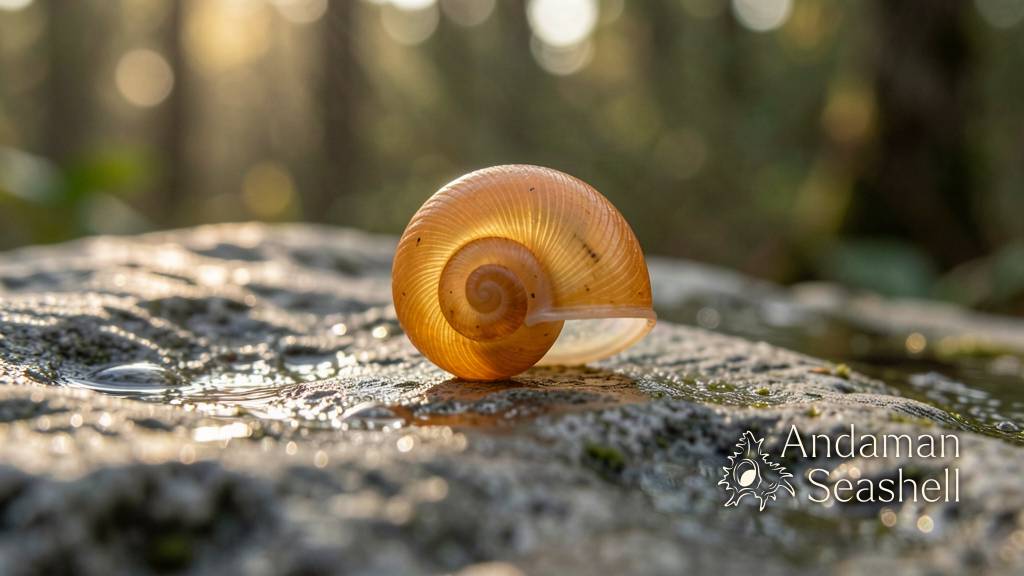
Kneel close to a limestone outcrop in the Thai countryside after rain, and you may meet one of the quietest jewels in the kingdom. It is a snail no bigger than a fingernail, its shell low and polished like old lacquerware — and around its soft body, folds of living tissue flare outward like a tiny cape caught mid-swirl. This month, that little cloak-wearer finally got the honour it deserved: a formal place in the catalogue of life.
On 3 October 2026, a team from the Animal Systematics Research Unit at Chulalongkorn University in Bangkok published a landmark revision of one of Thailand's most charming groups of land snails [ref:1]. They described two species entirely new to science — Siamochlamys isanensis and Siamochlamys lannaensis — and in doing so doubled the known size of their genus to five species, every one of them found in Thailand and nowhere else on Earth.
A name stitched from Siam and a cloak
The genus name is a small poem. Siamochlamys joins "Siam", the former name of Thailand, with the Greek chlamys, meaning cloak or mantle — a nod to the five dramatic mantle extensions these snails spread around their bodies like a garment [ref:2]. The genus was first described in 2023 with a single species, S. panhai, found on limestone outcrops; until this month it was a genus of one. The two newcomers carry regional names — isanensis pointing to Isan in the northeast, lannaensis to Lanna in the north — a geography lesson pressed into a shell smaller than a coin.
Their field marks are subtle and lovely: a depressed, well-polished shell, an open umbilicus (the little "navel" spiral on the underside), and that signature cloak of soft tissue. No other helicarionid snail in the region combines quite the same set of features [ref:2].
How you prove a snail is new
Describing a new species is not a matter of a glance. The Chulalongkorn team, led by Arthit Pholyotha with Piyoros Tongkerd, Somsak Panha and Chirasak Sutcharit, worked through extensive collections gathered across the whole country, comparing shells, internal anatomy and DNA [ref:1]. They sequenced three genetic markers — COI, 16S rRNA and 28S rRNA — and the phylogenetic trees split the genus cleanly into two groups: one containing the three previously known species, the other holding the two new ones side by side.
The revision also righted an old oversight. Two snails first described by the German malacologist Eduard von Martens back in 1865 and 1867 had been sitting in the wrong drawers for more than 150 years; the new analysis formally moves them into Siamochlamys [ref:1]. A genus that began 2026 with one member now closes the year with five.
Why limestone hills are treasure islands
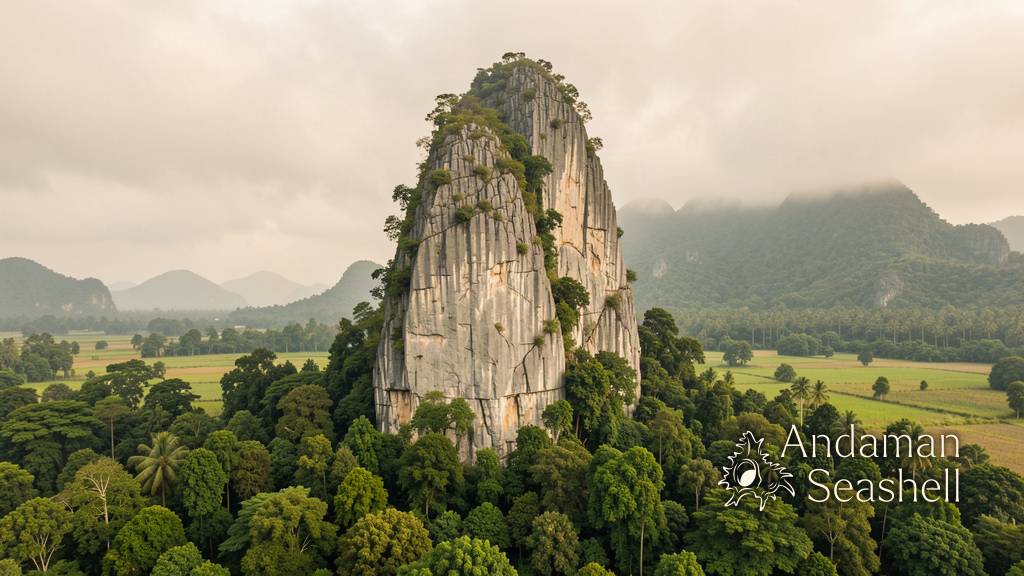
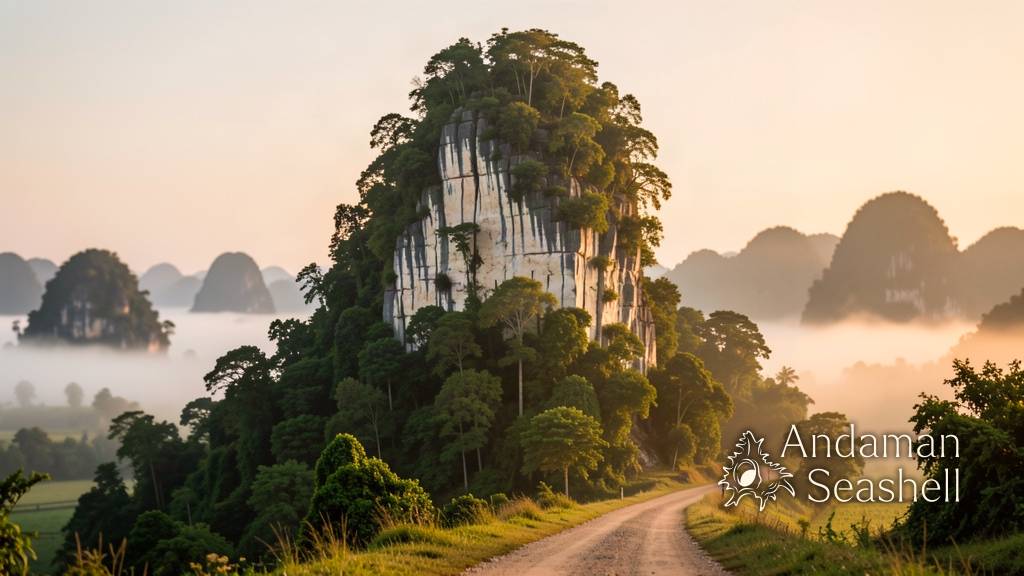
Every species in the genus lives on limestone karst — the steep, pale, cave-pocked hills that rise from Thailand's landscapes like islands from a sea. To a snail, each hill really is an island: populations separated by lowlands slowly become distinct species over millennia. That makes karst outcrops some of the most species-dense, and most delicate, habitats in the tropics — which is exactly why naming what lives there matters. A species with a name can be protected; one without cannot even be counted.
That is the quiet triumph of a paper like this. It is not just two new names in a journal — it is Thailand's endemic wildlife gaining two new entries in the ledger of things we have promised to look after.
So the next time you pass a limestone hill, slow down. Rest your eyes on the grey rock, look for the glint of a polished shell. Somewhere on that stone may be an animal that exists on this one hill, in this one country, and nowhere else in the universe — wearing, as it has always worn, a beautifully tailored cloak.


No comments yet. Be the first to share a thought.