



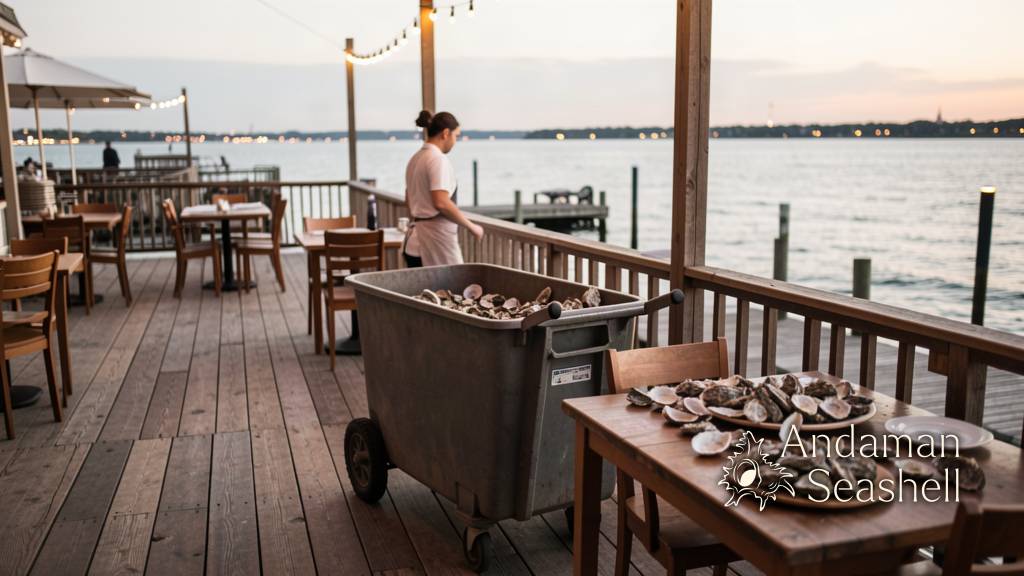
At Little Em's Oyster Bar in San Antonio, Texas — a hundred miles from the nearest bay — a freshly shucked oyster shell lands in a bright recycling bin instead of the trash [ref:1]. By morning it begins the most satisfying journey a dinner leftover can take: a ride south to the coast, a long rest in the sun, and a second career as a home for baby oysters.
A shell's second job
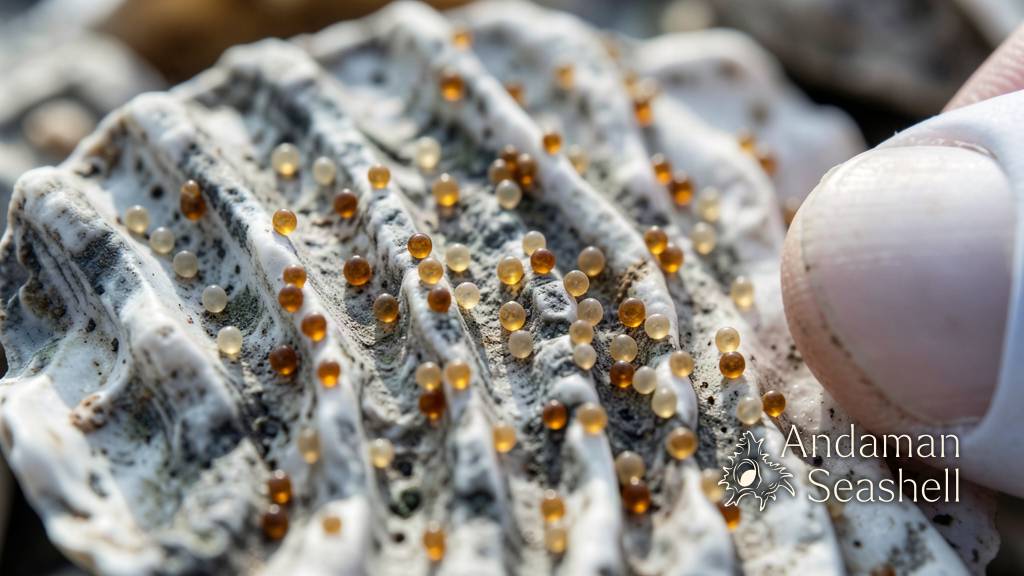
An oyster shell is one of the ocean's best building materials. Baby oysters — called spat — hatch with no shell at all. They swim freely for about three weeks, then look for something hard to attach to, and given the choice they settle on the shells of older oysters [ref:2]. When harvesting removes shells from a bay, the next generation loses its favourite landing pad. Returning them restarts the cycle.
Before any shell goes back in the water, it must first do time on land. At a quarantine site at the Port of Corpus Christi, collected shells cure in the open for at least six months — long enough for sun and heat to remove any hitchhikers — before barges and volunteers carry them back out to Texas bays [ref:2].
The numbers are getting wonderful
Texas's Sink Your Shucks program, founded in 2009, has reclaimed more than 3.5 million pounds of shell and restored over 45 acres of oyster reef in the Mission-Aransas Estuary, across Copano, Aransas and St. Charles bays [ref:2]. On September 10, 2026 it announced a first-of-its-kind expansion: four restaurants more than 100 miles inland in San Antonio — Southerleigh, Brasserie Mon Chou Chou, Pullman Market and Little Em's — now send their shells coastward, and more than 5,500 pounds have already been collected [ref:1].
Louisiana's program has recycled more than 17 million pounds of shell since 2014, building over 10,000 feet of living reef [ref:4]. Maryland's Shell Recycling Alliance has banked more than 330,000 bushels since its 2010 pilot — and a bushel is real weight, about 76 pounds dry [ref:3]. Georgia collects roughly 2,300 bushels a year from 33 restaurants and six public drop-off centres [ref:3]. Louisiana even rewards restaurants with a tax credit of one dollar per 50 pounds of shell recycled, up to $2,000 a year [ref:4].
And now, shells that clean the water
Here is the newest chapter. A 2026 peer-reviewed review of more than two decades of studies found that crushed, powdered or calcined seashell by-products can actively clean coastal aquaculture water and sediment — buffering pH in acidified ponds, adsorbing nitrogen and phosphorus, suppressing hydrogen sulfide, and improving conditions for bottom-dwelling life [ref:5]. The same calcium carbonate a mollusk spent its life building becomes, after its second life as habitat, a third life as a water filter.
So the loop keeps widening: a shell serves an oyster, then a reef, then a farm of fish or shrimp growing in cleaner water — and the review notes carbon can be locked into healthier sediments along the way [ref:5].
A day at the bay
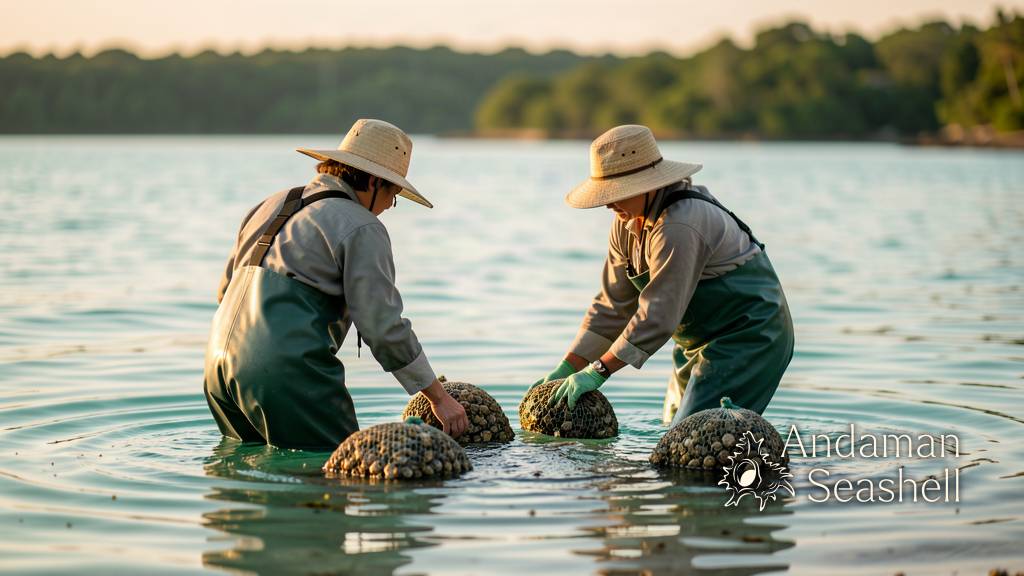
The friendliest part of the story is how hands-on it is. On Saturday, October 3, 2026, volunteers gathered at Goose Island State Park for Sink Your Shucks' first fall Community Oyster Reef Restoration Event, preparing cured shell by hand for placement back into the bays [ref:1]. Along the Atlantic coast, similar volunteer days pack shell into biodegradable bags for living shorelines — the Texas lab now uses fully biodegradable materials instead of plastic [ref:2].
The next time a platter of oysters lands on your table, enjoy it twice: once for dinner, and once for the quiet mathematics of a shell going back to work. As the San Antonio coordinators put it, it is a true bay-to-table and back-to-bay cycle [ref:1]. Somewhere in a sunny curing pile, next season's reef is already waiting.
References
- Harte Research Institute — San Antonio expansion (Sep 10, 2026)
- Harte Research Institute — Sink Your Shucks program
- ASMFC — Atlantic States Shell Recycling (Feb 2026)
- Coalition to Restore Coastal Louisiana — Oyster Shell Recycling Program
- ScienceDirect (2026) — Seashell by-products for coastal aquaculture remediation


No comments yet. Be the first to share a thought.