



Crouch down on a pale limestone slope high in Montenegro's Durmitor mountains, turn a stone the size of your palm, and you might meet an animal science had never named. That is exactly what happened — twice — to teams of citizen scientists working between 2018 and 2025, and in July 2026 their two tiny finds were formally welcomed into the library of life: Cochlostoma komarnica and Cochlostoma dobrido, described on July 27, 2026 in the open-access Biodiversity Data Journal [ref:1][ref:2].
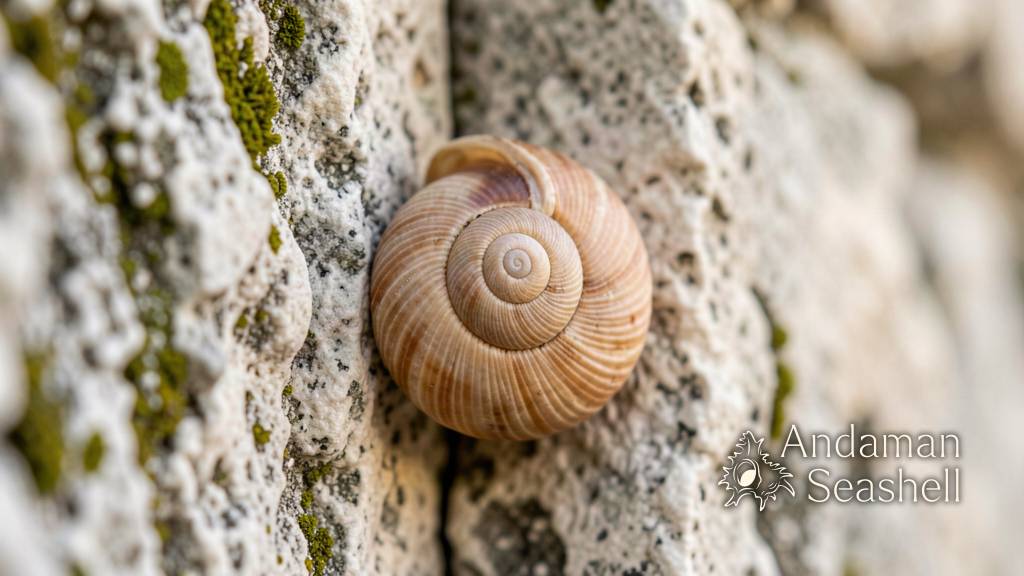
Neither snail has an English name yet. Both carry ribbed, cone-shaped shells about 6 millimetres long, and both do something most garden snails never attempt: a circular disk attached to the tail can be pulled across the shell opening and shut like a tiny round door [ref:1].

A shell that closes like a door
Look closer and the oddities multiply. The eyes of a Cochlostoma snail sit along the sides of its head — not on the tips of stalks the way most land snails wear them. The snails graze on algae and lichens painted across limestone faces, which is precisely why these mountains suit them: Durmitor's rock is a vast, slow buffet of stone-dwelling life [ref:1].
And then there is the door. Formally it is called an operculum — a horn-like disk anchored at the tail. When the air dries or a predator probes, the snail withdraws and pulls the disk tight, sealing moisture inside like a jar lid. For a creature 6 millimetres long, that little door is the difference between a bad afternoon and survival.
Found by travellers, named by vote
The discoveries came through Taxon Expeditions, an organisation that runs real scientific fieldwork that ordinary people can join, alongside the nonprofit Taxon Foundation and the Montenegrin Ecologists Society. International researchers worked side by side with citizen volunteers, local students and conservationists across Durmitor National Park and Komarnica Canyon [ref:1][ref:2].
The fieldwork was only half the story. It took laboratory dissections and genetic analysis back home to prove these were genuinely new species — two shells that had been hiding in one of Europe's most visited corners [ref:1].
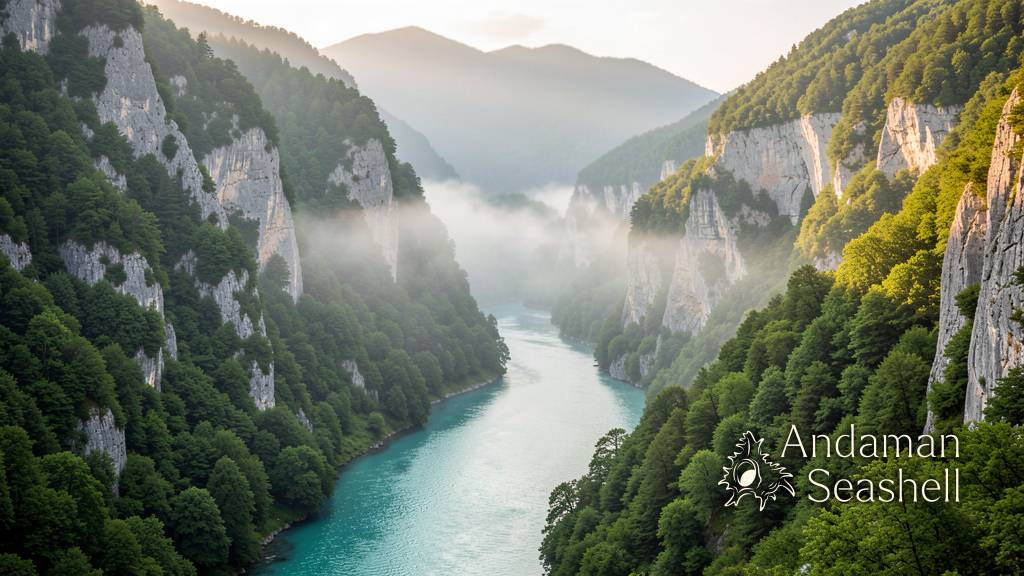
Best of all: the participants voted at camp to name the snails after the places that raised them. Cochlostoma komarnica honours the scenic, still-unprotected Komarnica Canyon south of Durmitor, while Cochlostoma dobrido takes its name from the Dobri Do Plateau, wedged between Durmitor's peaks [ref:1]. A Dutch musician named Janine Buisman joined one expedition as a citizen volunteer — and ended the journey as a co-author on the scientific paper. "I was amazed that it is still possible to discover new animal species in Europe," she said [ref:1].
Small shells, big argument
Co-author Jovana Đokić, a biologist with the Montenegrin Ecologists Society, points out that much of the biodiversity of the western Balkans remains undocumented — and that its canyons and gorges may hold many more species unknown to science [ref:1].
That is why these two thumbnail-sized animals matter beyond their charm. Biologist Jovana Đokić and her colleagues at the Montenegrin Ecologists Society are campaigning for Komarnica Canyon to be included within the UNESCO World Heritage site of Durmitor — and the two new snails have become tiny, six-millimetre ambassadors for that case [ref:1][ref:2].
Why it delights us
Here at a shop that celebrates shells in every form, a story like this feels like a handshake across continents. The same instinct that makes you pause over a perfect spiral on a beach made a musician, a student and a retiree crouch over Balkan limestone with a hand lens — and science got richer for it.
Europe's map of life is still being drawn. Sometimes the cartographers are professionals; sometimes they are simply curious people who booked a trip, lifted a rock, and paid attention.


No comments yet. Be the first to share a thought.