



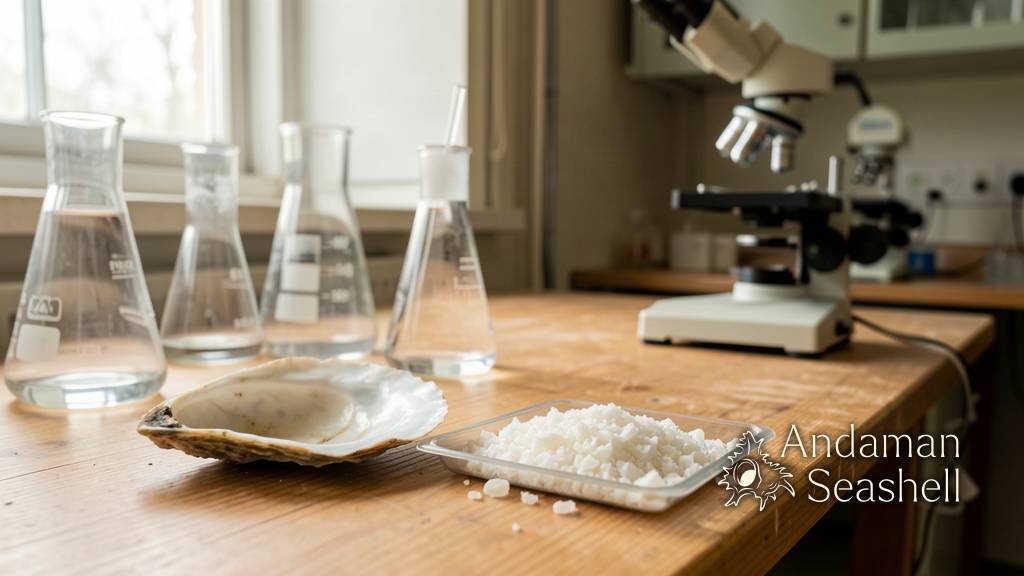
Pick up the oyster shell left on your plate after dinner. Turn it over. Run a thumb across the chalky white layers. It looks finished — a piece of natural packaging whose job is done. Yet in a geology lab at Trinity College Dublin, researchers have just shown that this humble leftover has a remarkable second career waiting: it can pull rare earth metals out of polluted water and lock them away as stable crystals [ref:1].
The study, led by Dr Rémi Rateau and principal investigator Dr Juan Diego Rodriguez-Blanco and published in the journal Science of the Total Environment, found that one gram of crushed oyster shell can capture up to roughly 1.5 grams of rare earth elements from contaminated water — more than the shell's own weight in metal [ref:1].
Rare earths: the metals inside everything
Rare earth elements are the quiet workhorses of modern life. They sit inside wind turbines, electric vehicle motors and smartphones, and global demand keeps climbing as the green energy transition accelerates [ref:1]. The catch is what happens when these metals escape into rivers and lakes during mining and processing: they can build up in aquatic ecosystems and disrupt the microorganisms, plants and animals that live there [ref:1].
That is why a cleanup method made of shell waste — cheap, abundant and otherwise bound for landfill — has scientists so excited.
The chemistry trick hiding in the layers
What the Trinity team discovered is less like filtering and more like transformation. When crushed shells meet rare-earth-rich water, the calcium carbonate minerals they are built from begin to dissolve. In their place, brand-new rare earth carbonate minerals crystallise — the shell acts as a template, converting dissolved metals into solid crystals that stay locked inside the grain [ref:2].
The transformation follows a beautiful sequence of mineral phases: calcium carbonate becomes lanthanite, then kozoite, then hydroxylbastnäsite — with kozoite the most common product under the tested conditions [ref:2]. In experiments, shell fragments were steeped in solutions of three key rare earths — lanthanum, neodymium and dysprosium — at temperatures from 25 to 205 °C, for periods of up to three months [ref:4].
Why the oyster beats the mussel and the cockle
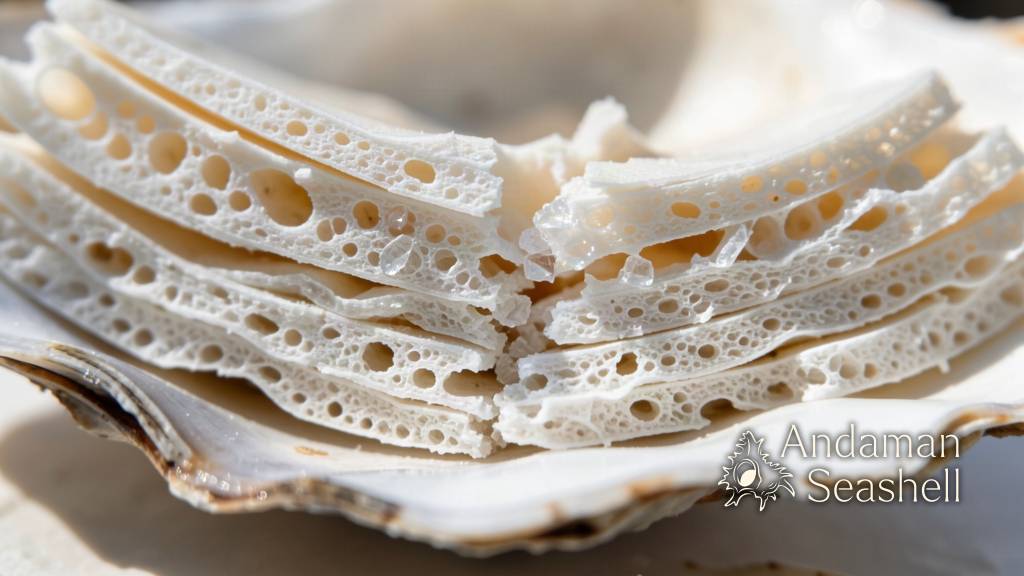
The team tested mussels, cockles and oysters, and the oyster won decisively. In mussel and cockle shells, a crust of rare earth crystals rapidly seals the surface, blocking the reaction and leaving more than half of the original shell unchanged. The oyster's naturally porous microstructure lets the reaction keep working deeper and deeper into the grain, until almost the entire calcium carbonate skeleton has been replaced [ref:1]. Cockles performed worst of all; oysters achieved the highest uptake of all — that remarkable 1.5 grams per gram [ref:4].
It is also the first time seashells have been investigated for this job at all. Earlier research had tried eggshells as rare earth absorbers, but nobody had put seashells — with their intricate internal architecture — to the test [ref:4].
A greener way to un-mix metals
Perhaps the most elegant finding: different rare earths join the growing crystals at different moments. Neodymium is preferentially captured early in the process, while lanthanum and dysprosium are absorbed mainly in the later stages [ref:4]. Because neodymium is the metal that makes wind-turbine and EV magnets work, that timing difference hints at a future where crushed shells could help separate individual rare earths from one another — a step normally done with harsh chemical processes [ref:1].
From landfill to water filter
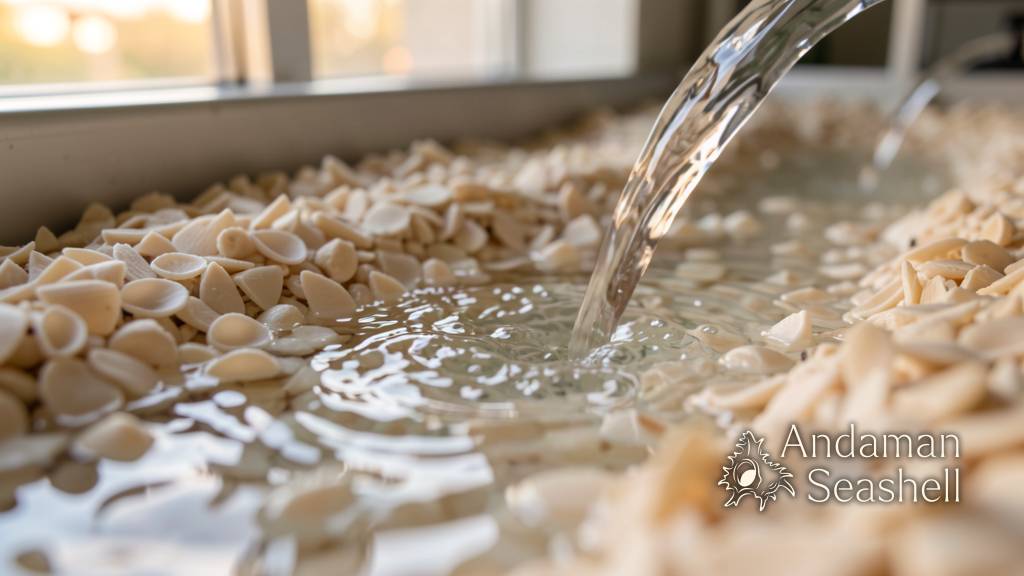
The scale of the opportunity is hard to overstate. The global aquaculture industry generates millions of tonnes of shell waste every year, much of it discarded or sent to landfill [ref:1]. The researchers imagine crushed shells packed into filtration systems, treatment beds or permeable barriers through which contaminated water simply flows [ref:3]. As Dr Rodriguez-Blanco puts it, the process is entirely mineral-driven — the shells do the work on their own, without expensive equipment or difficult engineering [ref:1].
A few kilograms of shell, the team calculates, could capture kilograms of dissolved rare earths from heavily contaminated water [ref:1]. Not bad for the part of the seafood platter everyone throws away.
So the next time an oyster shell crosses your path, hold it a moment longer. That layered little piece of calcium carbonate spent years building itself, layer by layer, in the sea — and it may yet spend its afterlife cleaning water and handing back the metals the wind turbines of tomorrow need [ref:3].
References
- Trinity College Dublin — Seashell saviours: discarded oyster shells can clean polluted water (26 Mar 2026)
- Phys.org — Discarded oyster shells may pull rare earth metals from polluted water (26 Mar 2026)
- The Conversation — The surprising power of seashells (15 Apr 2026)
- The University Times — Harnessing Seashells to Extract Metals and Purify Water (Apr 2026)


No comments yet. Be the first to share a thought.