



If you looked west over Phang Nga Bay around 7:30 pm on June 9th, you saw something extraordinary — two blazing dots of light, almost touching, hanging just above the darkening treeline. The brighter one was Venus, 261 million kilometres away. The dimmer one was Jupiter, nearly five times farther out at 920 million kilometres. Yet from where you stood on the sand, they appeared close enough to cover both with your pinkie finger held at arm's length [ref:1].
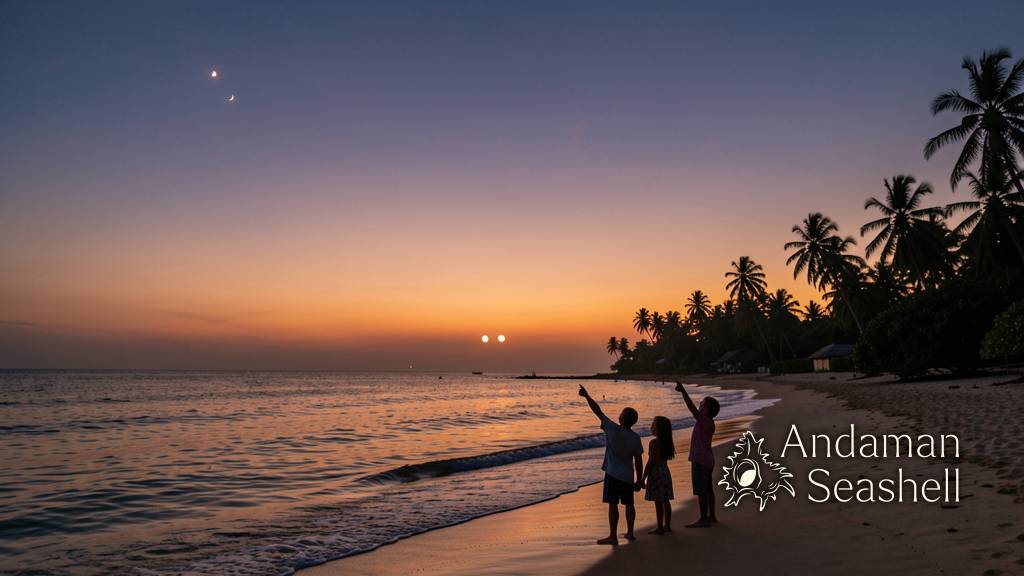
The Cosmic Kiss That Captivated the World
Astronomers call it a conjunction — the moment two planets appear to meet in our sky, even though they're actually hundreds of millions of kilometres apart in space. This particular Venus-Jupiter conjunction was special. According to National Geographic, it was the closest visible pairing of these two planets from the Northern Hemisphere until late 2028 [ref:2]. At their nearest, only 1.6 degrees separated them — roughly the width of your thumb at arm's length.
People photographed the event from Sicily to New York, from Bahrain to Kolkata. One photographer in India spent 30 days capturing a single composite image, showing how the two planets slowly drifted toward each other night by night [ref:3]. Here on the Andaman coast, the western horizon over the sea made for a natural front-row seat.
A Week of Planetary Neighbours
The show didn't end on June 9th. Between June 11 and 15, a third planet joined the party — Mercury, sitting lower on the horizon, creating a rare trio of planets visible to the naked eye after sunset [ref:1]. Then, on June 16 through 18, a thin crescent Moon slid into the scene, positioning itself between the planets. Photographers around the world captured the crescent Moon flanked by Venus and Jupiter — one of the most beautiful naked-eye sky events of the year [ref:3].
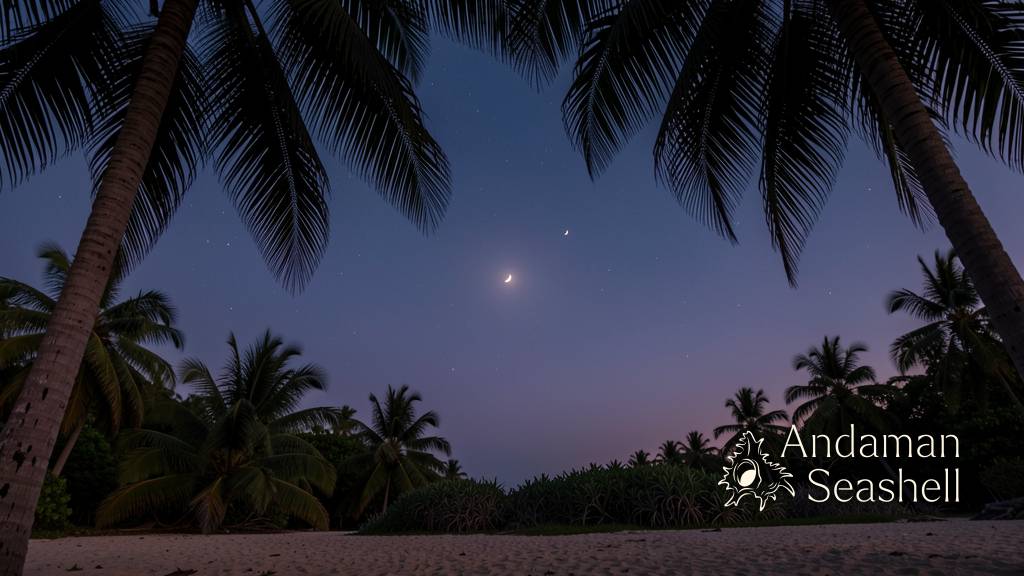
What You Can Still See This Week
Venus hasn't gone anywhere. Step outside tonight after sunset and look west — that unmistakable bright beacon above the horizon is Venus, currently travelling through the constellation Leo. Jupiter, meanwhile, is sinking lower each evening and will soon disappear into the Sun's glare for a few weeks.
But look up later in the evening, and a whole new show awaits. The Summer Triangle — three of the brightest stars in the sky — is now climbing high over Phang Nga. Vega sits at the top, blue-white and brilliant. Deneb marks the left corner. Altair completes the triangle to the right. You don't need a telescope or even binoculars. Just your eyes and a patch of sky away from streetlights [ref:1].
Here's a fun fact to share with friends: Vega is about 25 light-years away. That means the light hitting your eyes tonight left that star around the year 2001 — when some of you reading this weren't even born yet.
Mark Your Calendar: Full Moon, June 29
The next big sky event from Phang Nga comes this Sunday — a full Moon rising in the east as the Sun sets in the west. Full Moons on the Andaman coast are always worth watching because of the tidal connection. The Moon's gravity literally pulls the ocean toward it, and during a full Moon, the tides swing wider than usual. Fishers in Phang Nga Bay have known this rhythm for generations [ref:1].
Your Stargazing Checklist for This Week
- Just after sunset: Look west for Venus, still the brightest point of light in the sky
- Around 8 pm: Watch for the Summer Triangle rising — Vega, Deneb, and Altair
- June 29: Full Moon rising in the east — bring a camera
- Any clear night: Count how many stars you can see between monsoon clouds — green season gaps make each clear window feel earned
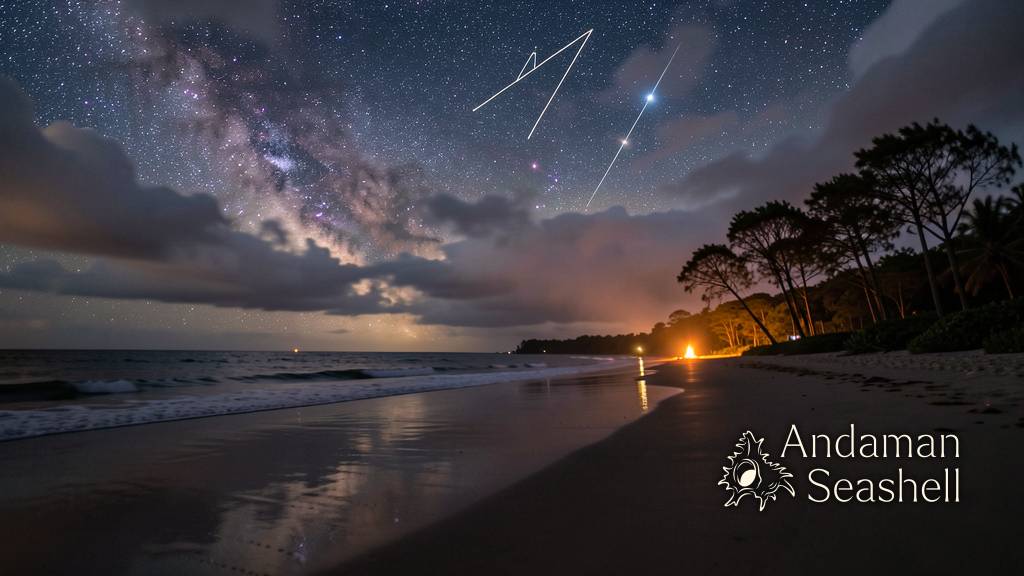
No telescope required. No apps needed. Just a Phang Nga beach, a clear patch of sky, and the willingness to look up. The universe puts on a free show every single night — and this June, it's been particularly generous.


No comments yet. Be the first to share a thought.