



At 670 metres down on the Nazca Ridge, in the southeastern Pacific, the floodlights of an underwater robot swept across a seamount slope and lit up something that looked like a pale, branching tree growing straight out of the darkness. It was a coral — but not the kind anyone snorkels past. It had no skeleton at all, and this month it became the key to a puzzle that scientists have been turning over for well over a century.
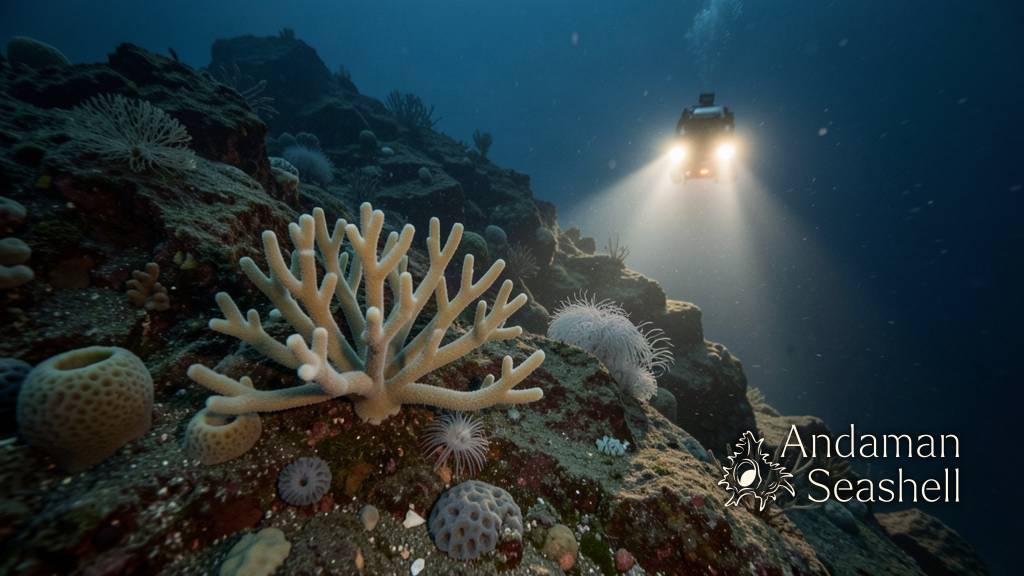
The coral is a brand-new species, Paragorgia quitinosa, formally described on 13 September 2026 in the journal Scientific Reports by Juan Armando Sánchez, Eric E. Easton and colleagues [ref:1]. Researchers collected the holotype during the Schmidt Ocean Institute expedition FKt240708 aboard the research vessel Falkor (too), and named the species after the very substance that makes it special: chitin [ref:1].
A tree built from grains of sand
Bubblegum corals of the genus Paragorgia are genuine giants of the deep. Colonies from New Zealand seamounts reach several metres in height, and fisheries observers have reported specimens taller than ten metres — among the largest branching colonies of any marine invertebrate [ref:1].
And yet their building blocks are almost comically small. Instead of a solid skeleton, these corals are held together by sclerites — tiny crystals of high-magnesium calcite typically smaller than 0.3 millimetres, roughly the size of a grain of sand. In P. quitinosa, the large capstan-shaped sclerites average just 0.095 millimetres [ref:1].
How does a soft, skeleton-free animal stack sand-grain crystals into a tree that outgrows a shipping container? As far back as 1887, the naturalist Studer peered at similar corals under his microscope and noted that their sclerites appeared to be "connected by horny material or by a crystalline calcareous substance" — but no one ever chemically identified that connecting glue [ref:1].
The hidden plumbing
This is where the new species delivered its surprise. When the team examined P. quitinosa in the lab, the walls of its internal canals stubbornly resisted digestion by dilute hypochlorite — ordinary bleach. A battery of techniques followed: scanning electron microscopy with energy-dispersive spectroscopy, FTIR and RAMAN spectroscopy, and gas chromatography–mass spectrometry. All of them pointed to the same answer: chitin [ref:1].
It is the first time visible chitin has been documented in octocoral tissues, and only the third report of chitin anywhere in the anthozoans, after sea anemones and black corals [ref:1]. Chitin is the same tough, flexible polymer that armour-plates beetle shells, crab carapaces and butterfly wings — one of nature's most successful building materials. In P. quitinosa, it forms a network of microscopic tubes running through the entire colony, acting like hidden plumbing and scaffolding at once, gluing the sand-grain sclerites into one resilient structure [ref:1].
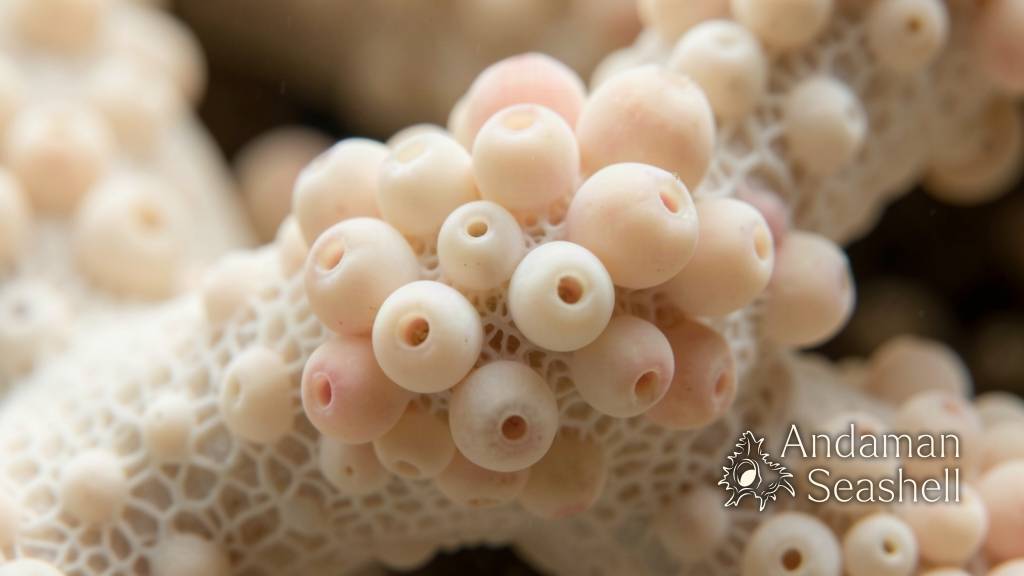
The species itself is charmingly distinctive: its feeding polyps retract onto prominent, rounded mounds, giving the colony a bumpy, berry-like texture, and it belongs to a small club of just seven known whitish bubblegum corals — the first ever recorded from the Nazca Ridge and the entire southeastern Pacific [ref:1].
A mother colony and her family tree
Before preserving the specimen, the team ran it through a micro-CT scanner — and discovered their holotype was a reproductively active female, carrying multiple cohorts of eggs tucked exclusively into her siphonozoids, the tiny non-feeding polyps that line the colony [ref:1]. Even brand-new to science, she was already busy raising the next generation.
DNA work using ultraconserved elements and mitochondrial genes placed P. quitinosa as a sister species to P. johnsoni and P. jamesi — and, in a bonus for taxonomists, confirmed that the old genus Sibogagorgia is polyphyletic, meaning it grouped together corals that aren't actually close relatives [ref:1].
Why a glue molecule matters
Beyond the elegance of the solve, the discovery explains something practical: flexibility. A chitin-reinforced body can sway in deep currents where a rigid skeleton might snap, and octocorals' habit of swapping skeletal strategies may be one reason this group weathered ancient ocean-chemistry shifts and mass extinctions better than their reef-building cousins [ref:1]. That is precisely why initiatives like the Ocean Census keep exploring seamounts — every specimen hauled up still has stories like this one locked inside it [ref:2].
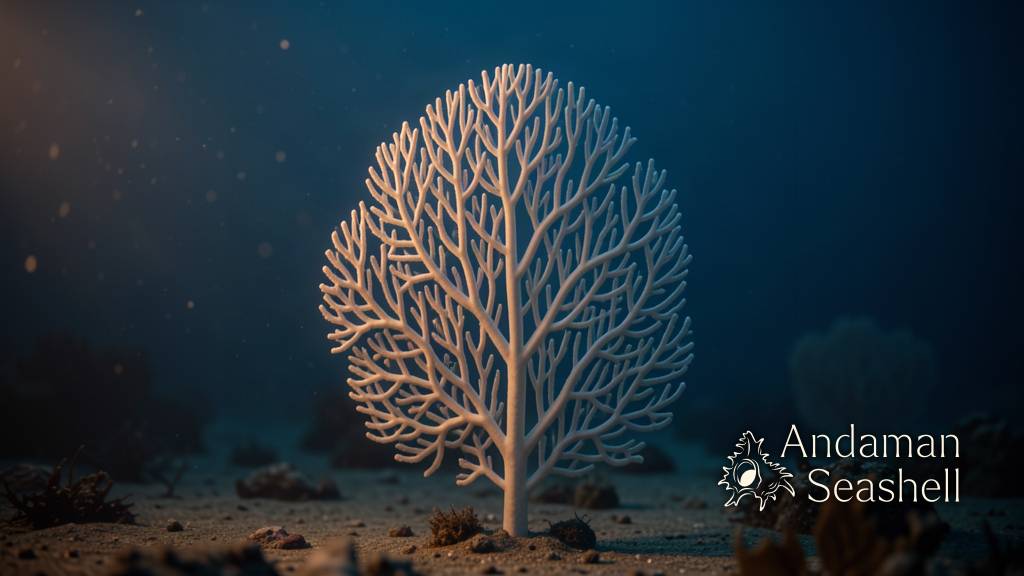
So the next time a beetle crosses your path, take a second look at its shell. Somewhere far below the Pacific waves, on a ridge nobody can see from the surface, a ghost-white coral tree is wearing the very same armour — and thanks to it, standing several metres tall in the dark.


No comments yet. Be the first to share a thought.