



On a July morning in 2026, a research vessel called R/V Falkor (too) slipped out of Port of Spain harbour carrying something Trinidad and Tobago had never sent to sea before: a deep-sea expedition led by its own scientists. A month later, the team came home with the most comprehensive map of the country's underwater territory ever made — and a list of discoveries that reads like a naturalist's wish list [ref:1].
The Chief Scientist was Dr Diva Amon, a Trinbagonian marine biologist and co-director of the non-profit SpeSeas. As the first locally led deep-sea expedition in the nation's history, the voyage was a kind of homecoming — a country finally getting a proper look at 93% of itself that lies far below recreational scuba depth [ref:1].
Reading bubbles like a treasure map
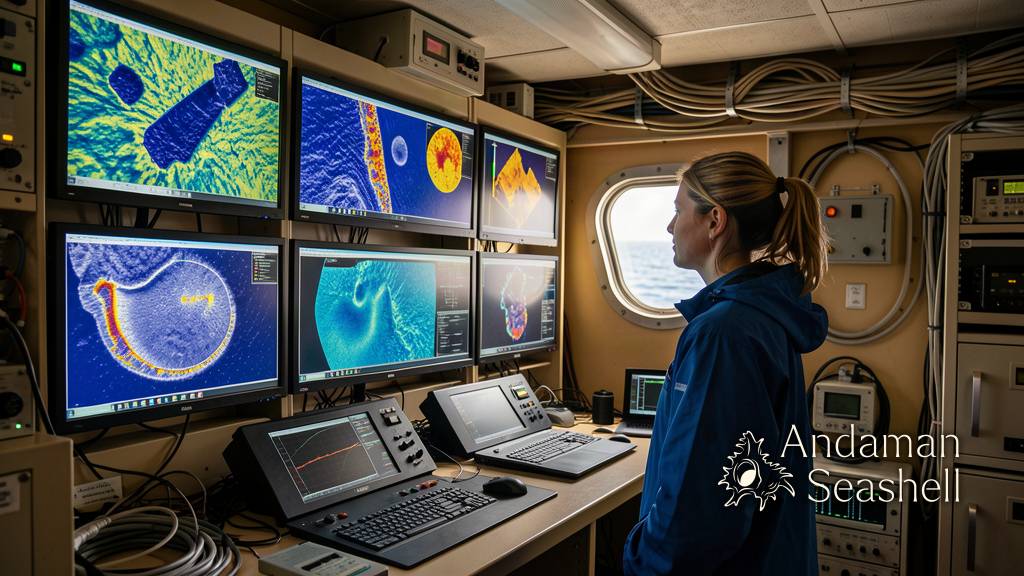
The survey began with sound. Over a single month, the team mapped 11,335 square kilometres of previously uncharted seafloor — roughly 13% of Trinidad and Tobago's entire marine territory [ref:1]. On those new maps, the scientists spotted 219 bubble streams: thin columns of methane rising from the ocean floor, each one a possible sign of a cold seep [ref:2].
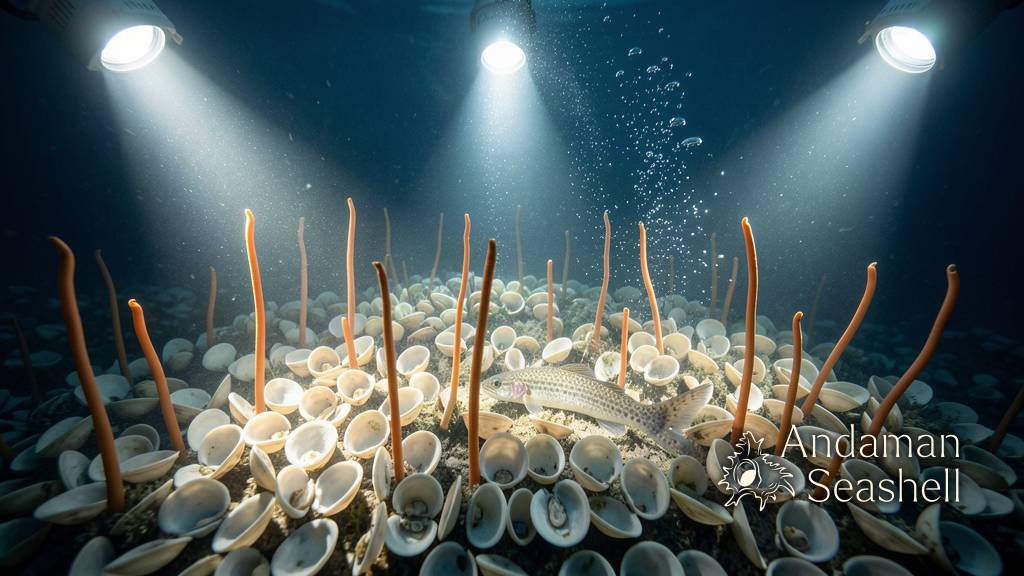
Cold seeps are among the ocean's most fascinating inventions. Unlike coral reefs, they run on no sunlight at all. Methane seeping from the seabed feeds chemosynthetic bacteria, and those bacteria in turn feed mussels, clams and tubeworms — entire ecosystems powered by chemistry rather than light. Diving the remotely operated vehicle SuBastian on the bubble streams, the team visually confirmed more than 25 active cold seep ecosystems. The largest is about half an acre — less than a third of a World Cup football field — carpeted in mussels and tubeworms [ref:1].
Twenty suspected new species — and one patient octopus
The dives delivered a stream of firsts. The team recorded at least 20 suspected new species — corals, carnivorous sponges and squat lobsters among them — three of which may be entirely new genera [ref:1]. One candidate is a Graneledone octopus that Dr Amon first glimpsed on an expedition back in 2014, before anyone had the data to confirm what it was. Twelve years later, her team finally collected the evidence to settle the question [ref:1].
In total, more than 54 species had never before been observed in the country's waters — ghost sharks and zombie worms among them — and the ROV even filmed a rare manta-ray fall: a Mobula carcass resting 1,025 metres down, feeding a slow parade of deep-sea scavengers [ref:1].
A museum that grew twelve-fold overnight
Perhaps the loveliest detail: everything stayed home. All 700-plus specimens collected on the voyage are being housed at the Zoology Museum of the University of the West Indies in St Augustine — increasing the museum's deep-sea collection twelve-fold in a single expedition [ref:1]. Future Caribbean scientists will meet their deep sea in their own institution.
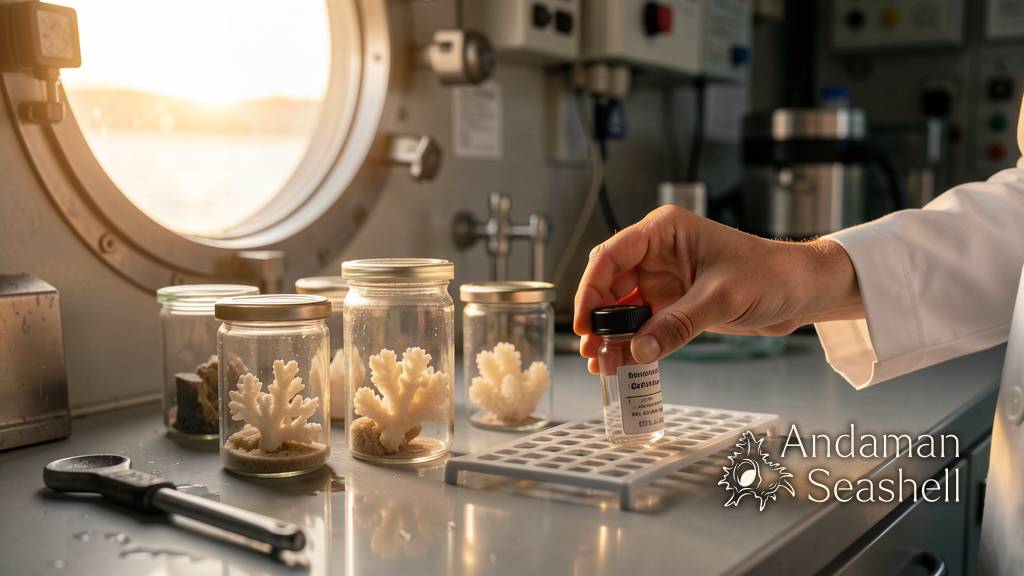
The expedition also tested a new cryoprotectant technique that freezes living tissue without the damage liquid nitrogen causes. Using it, researcher Dr Megan Conkling cryopreserved tissues from more than 86 species of deep-water sponges, corals and sea cucumbers, creating the Caribbean's first "frozen zoo" — a living baseline against which future change can be measured [ref:1].
Knowledge that becomes protection
Every map, specimen and video from the voyage now feeds directly into marine governance and spatial planning in Trinidad and Tobago, including the design of new marine protected areas [ref:1]. And the scientists shared the journey as it happened: more than 2,000 students, officials and community groups joined through the Ship-to-Shore programme, with a further 1,000 people reached through school and university visits before the ship even sailed [ref:1].
The team also carried DORIS, a low-cost deep-ocean camera developed by the Ocean Discovery League and Blue Robotics — proof that frontier-grade exploration is becoming affordable for coastal nations everywhere [ref:1].
Dr Amon put it simply: the discoveries are proof that Caribbean scientists can uncover their own deep-sea backyard. Every new ecosystem, species or behaviour deepens understanding of what is at stake — and strengthens the country's ability to be a true steward of the unseen ocean it owns [ref:1].
References
- Schmidt Ocean Institute — First Caribbean-Led Expedition to Explore Trinidad and Tobago's Deep Sea Unveils Rich Ecosystems
- Ocean News — RV Falkor (too) Supports Trinidad and Tobago's First Deep-Sea Survey Uncovering 25 Cold Seeps
- Baird Maritime — New species and ecosystems discovered during deep-sea expedition off Trinidad and Tobago


No comments yet. Be the first to share a thought.