



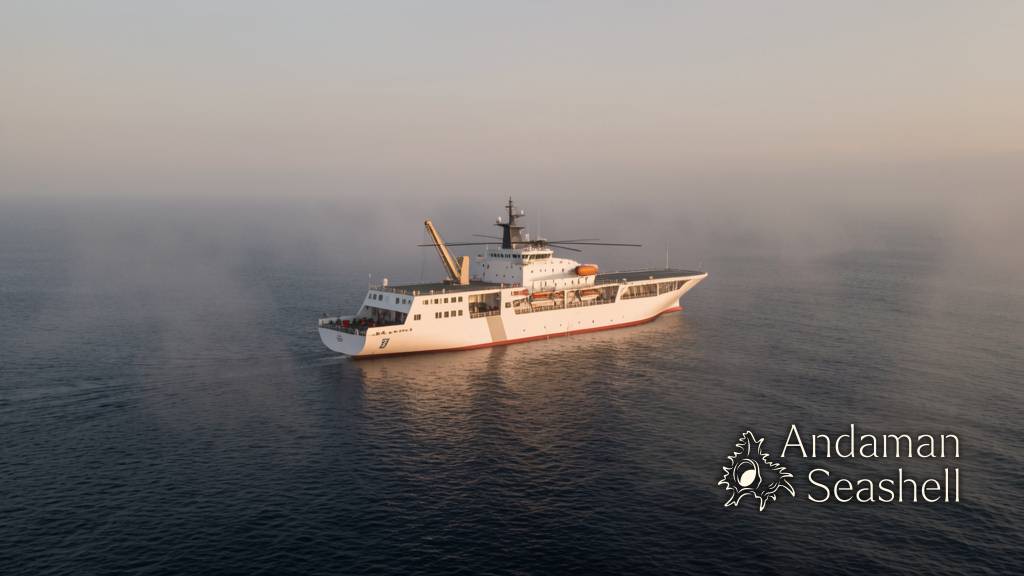
On a bright morning in June 2026, an international team of scientists aboard the research vessel Falkor (too) announced something extraordinary. In just fourteen days of exploring the ocean's midwater — the vast, dark region between the sunlit surface and the seafloor — they had discovered more than thirty species entirely new to science. [ref:1]
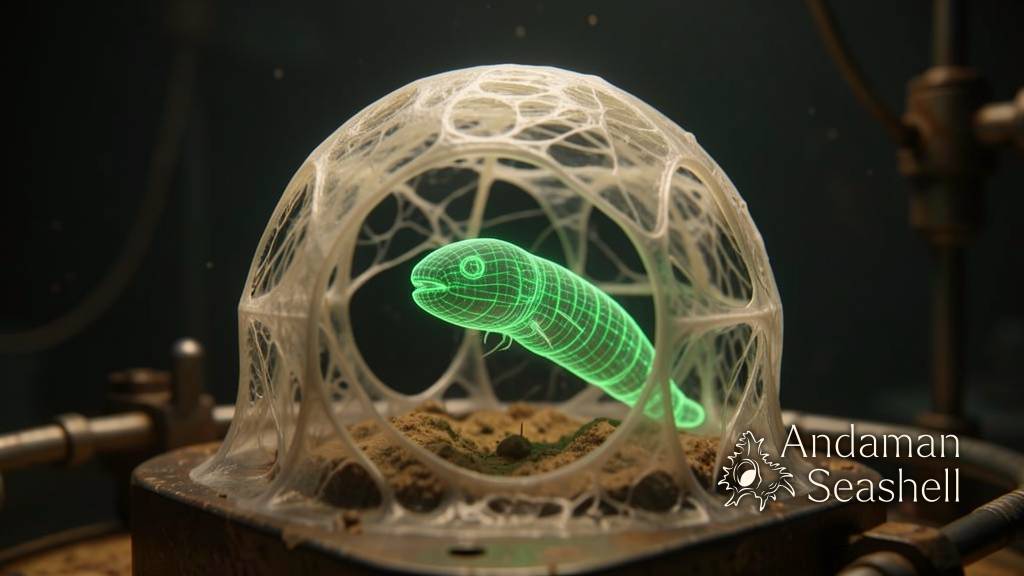
The discovery, led by Dr. Karen Osborn of the Smithsonian National Museum of Natural History and Dr. John Burns of Bigelow Laboratory for Ocean Sciences, took place off the coast of Brazil in the tropical South Atlantic. Among the finds: nine previously unknown jellyfish, seven new siphonophores (colonial organisms related to corals), four larvaceans that build intricate houses from mucus, two giant single-celled organisms visible to the naked eye, and a gossamer worm that moved far faster than its delicate body shape suggested was possible. [ref:2]
But the headline is not really the species count. It is how fast the count happened.
From Decades to Days
Traditionally, confirming a new marine species is a patient, slow process. A specimen gets collected, preserved in formaldehyde, shipped to a museum, and studied — sometimes for decades — before it receives a formal scientific name and joins the catalogue of known life. The Falkor (too) expedition compressed that entire pipeline into a matter of days.
The team used laser imaging systems called DeepPIV and EyeRIS — developed by the MBARI Bioinspiration Lab in California — to create three-dimensional scans of gelatinous animals in their natural environment, without ever removing them from the water. A specialised shadowgraph camera captured fine anatomical details invisible to standard photography. Most importantly, onboard genome sequencing let the team read the DNA of each new species before the ship even docked. [ref:3]
Dr. John Burns, the expedition's lead scientist, described the experience with genuine awe: "The ocean never let up with surprises in every pocket of water that we explored." [ref:1]
The Squid Microscope
Perhaps the most astonishing tool aboard was an open-source confocal microscope built by Stanford University's Prakash Lab and nicknamed the squid microscope. During this expedition, it achieved something never done before at sea: the first-ever three-dimensional imaging of living internal cellular structures inside a marine organism.
When the team aimed it at a large single-celled protist drifting in the midwater, they could watch its glass skeleton interacting with its living cellular machinery in real time — hundreds of kilometres from the nearest laboratory on land. This is the kind of observation that, before now, required a major research facility and weeks of preparation.
Why the Midwater Is Earth's Last Frontier
The midwater is the largest habitat on the planet by volume — and simultaneously its least explored. It stretches from roughly 200 metres below the surface down to the ocean floor, encompassing the mesopelagic and bathypelagic zones where sunlight fades to permanent darkness. Traditional sampling methods drag nets through these depths, but nets crush and mangle the delicate gelatinous animals that dominate the midwater food web. That is precisely why so many species have gone unnoticed for so long.
The Falkor (too) expedition proved that a fundamentally different approach — pairing expert taxonomists with innovative engineers — can change the picture dramatically. Dr. Jyotika Virmani, Executive Director of the Schmidt Ocean Institute, called the technology suite "a glimpse into the future of marine biological science." [ref:3]
What Might the Andaman Sea Be Hiding?
Here on the Andaman coast, we know our shallow waters well — the mangrove channels of Phang Nga Bay, the coral reefs around the Surin and Similan islands, the seagrass meadows where dugongs graze in the early morning light. But the deep Andaman Sea beyond the continental shelf remains largely unmapped and unexplored.
The same midwater zone that yielded thirty-one new species off Brazil exists right here. The Andaman Basin reaches depths exceeding 4,000 metres, with submarine canyons and ridges that have barely been surveyed by modern instruments. If fourteen days of high-tech exploration in the South Atlantic produced thirty new species, imagine what a similar expedition could reveal in waters that local fishing communities have navigated for centuries.
For now, the creatures of the Andaman's deep midwater remain a mystery — but it is the most hopeful kind of mystery. Every expedition, every new tool, every unexpected creature reminds us that the ocean is far from fully known. It is still overflowing with wonder, waiting to be discovered.


No comments yet. Be the first to share a thought.