



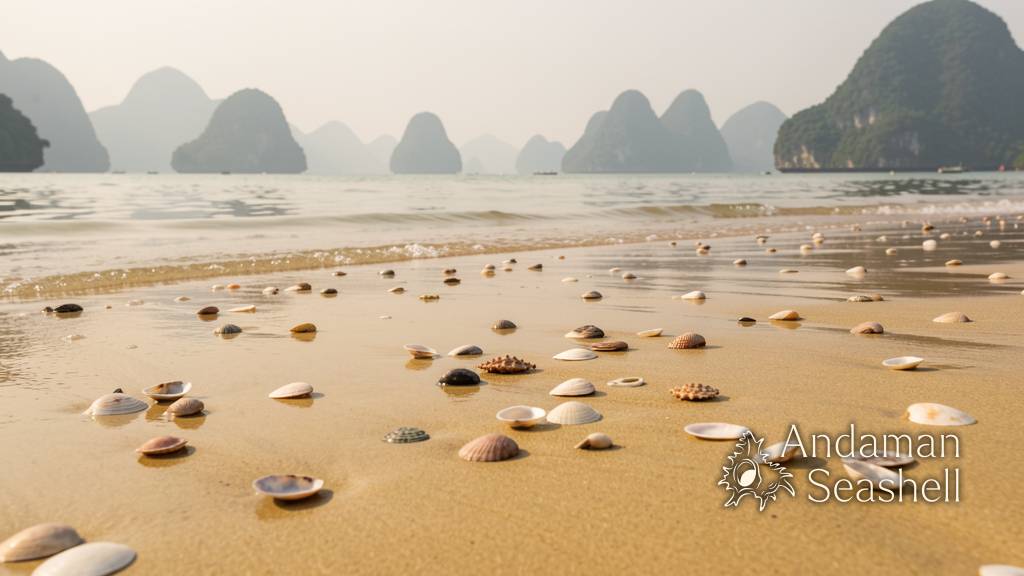
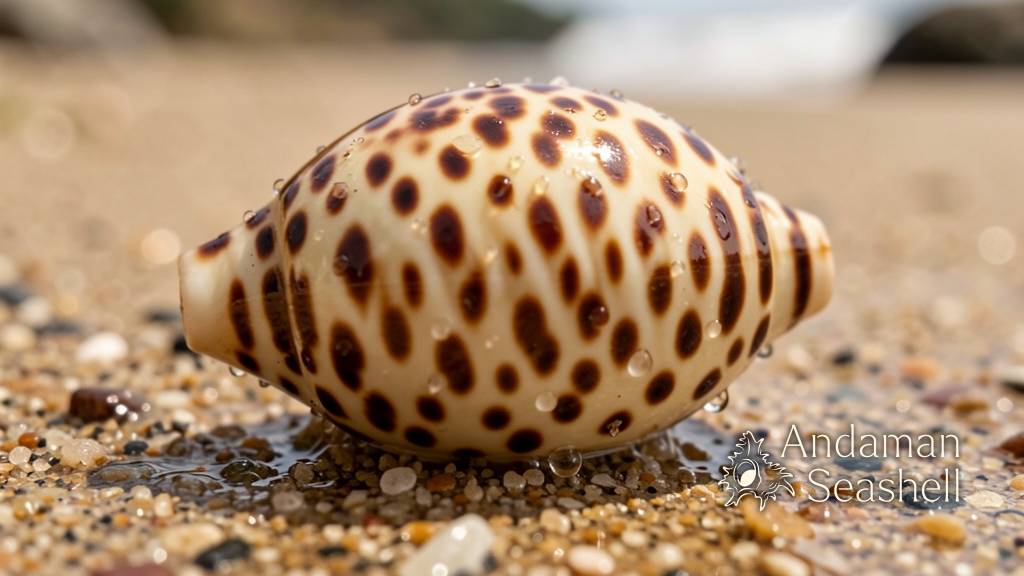
At the waterline on Koh Phra Thong's eastern shore, where the tide leaves a ribbon of treasures each morning, a visitor crouches down and picks up a tiger cowrie. The shell is perfect — glossy, cream-coloured, speckled with brown spots like a leopard's coat. For a moment she holds it to the light, turning it, marvelling at the precision of its pattern. Then she sets it back on the sand, takes a photograph, and walks on.
That small act — finding, admiring, returning — is the heart of ethical shell collecting. It's a practice growing in popularity along the Andaman coast, where beachcombers are discovering that the deepest relationship with the shore comes not from what you take home, but from what you learn to see. [ref:1]
What the Shell Knows
Every shell on an Andaman beach is a piece of architecture built by a living creature. The tiger cowrie (Cypraea tigris), one of the coast's most recognisable finds, secretes layer upon layer of calcium carbonate to form its glossy dome. When the animal dies, the shell washes ashore — but its story doesn't end there. Empty shells become homes for hermit crabs, nesting material for shorebirds, and a slow source of calcium that replenishes the very sand beneath your feet. [ref:2]
This is why ethical collecting begins with a simple question: Is anything still living inside? A quick check — hold the shell, feel for weight, look for an occupant — tells you everything. If a mollusc, hermit crab, or any living creature is inside, the shell goes back. No exceptions.
The Three Rules of the Andaman Beachcomber
Experienced collectors along the Phang Nga coast follow a shared code, drawn from global ethical shell-collecting principles and adapted for local conditions: [ref:1]
- Never take anything alive. If it moves, has unexpected weight, or shows signs of an occupant, it stays.
- Limit spiral shells. These are the most sought-after homes for hermit crabs, who cannot make their own.
- Take less, photograph more. Choose one or two empty shells that truly delight you. Leave the rest for the ecosystem — and for the next curious visitor.
What You Might Find
The Andaman coast is one of the most biodiverse shorelines in Thailand. A single morning walk during low tide can reveal an extraordinary variety of shells — from the smooth, egg-shaped cowries to the cone-shaped hunters that prowl the shallows. Here are a few you might encounter:
- Tiger cowrie (Cypraea tigris) — large, glossy, spotted. One of the most beautiful finds on any tropical shore.
- Lettered cone (Conus litteratus) — tall, patterned with fine letter-like markings. Stunning to photograph.
- Common olive (Oliva oliva) — small, cylindrical, with a porcelain sheen. Often half-buried in wet sand.
- Moon shell (Naticidae) — round, smooth, with a distinctive spiral. Sometimes found with the sand-collar egg cases still attached nearby.
Each one is a small masterpiece of natural engineering — and each one plays a role in the coastal ecosystem long after its original builder has gone.
From Beach Walk to Science: Andaman Turtle Watch
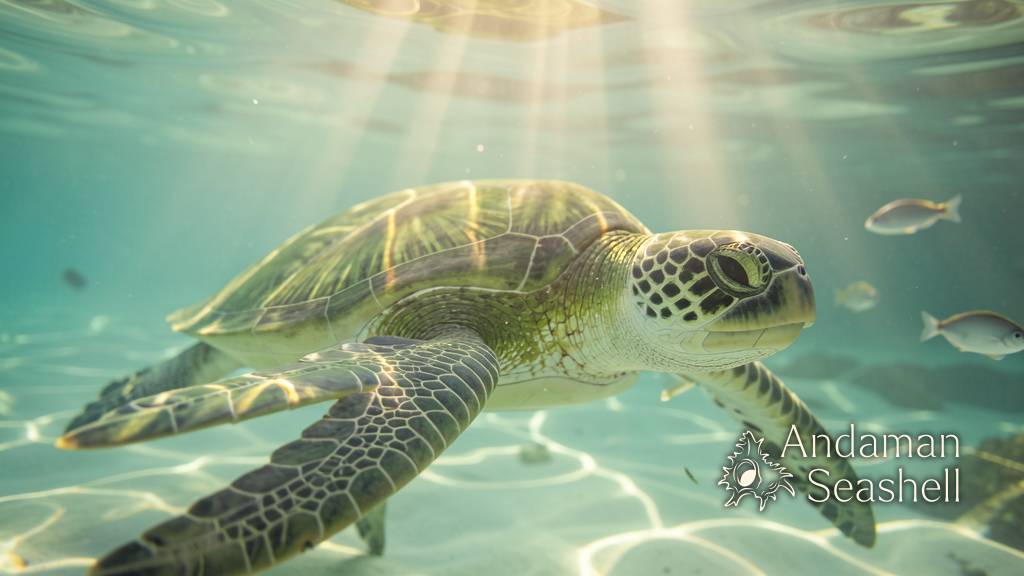
Here is where ethical collecting opens into something even more rewarding. The same attentiveness that makes you a thoughtful shell-collector — the slow walk, the careful observation, the willingness to photograph rather than possess — is exactly the skill that powers Andaman Turtle Watch, a citizen science initiative based in Khao Lak that has become Thailand's first sea turtle photo-identification database. [ref:3]
The concept is simple and brilliant. Every sea turtle has a unique pattern of facial scales — as individual as a fingerprint. When divers, snorkelers, or beach visitors photograph a turtle and submit the image, researchers can identify and track individual animals across years and dive sites. In their 2025 season alone, the initiative logged 96 verified sightings — 85 hawksbill turtles and 11 green turtles — identifying 45 unique individuals, 40 of them with complete photo-ID profiles. [ref:3]
In 2026, Andaman Turtle Watch launched a community competition encouraging even more people to submit sightings, turning every beach walk and snorkel into a potential contribution to marine research. You don't need to be a scientist. You just need to be paying attention — the same kind of attention that makes you notice the perfect cowrie at the waterline.
A Deeper Kind of Souvenir
There is something satisfying about bringing a shell home from the Andaman coast — a small, tangible piece of the sea to place on a shelf and remember the morning by. The practice isn't wrong. But the most enduring treasures from a beach walk are often the ones you can't put in your pocket.
A photograph of a tiger cowrie in morning light. The knowledge that the spiral shell you left behind will shelter a hermit crab through the monsoon. A sea turtle sighting submitted to a database that helps scientists track a named individual across years. These are souvenirs that deepen rather than deplete — and they connect you to the Andaman coast in a way that a pocketful of shells never quite can.
The next time you walk the tide line on a Phang Nga morning, try this: find one shell that stops you. Hold it. Learn its name. Understand what it is and what it does for the shore. Then decide — is this one coming home, or does its beauty belong right here, where the tide will find it again tomorrow?
Either way, you'll have seen something wonderful. And that, in the end, is what the coast gives most freely.
Andaman Seashell celebrates the wonder of the Andaman shore. Visit us in Phang Nga to explore our curated collection of ethically sourced shells, pearls, and coastal treasures — each one with a story to tell.


No comments yet. Be the first to share a thought.