



A gold-detailed Satsuma vase rises from the gallery floor like a small firework frozen in clay. A few steps later, a lacquer incense box shaped like a pair of clams catches the light in black, red, and gold. Then the mood shifts again: tiny Kaiyodo animal figures and realistic food models prove that Japanese craft still loves precision, even when it becomes playful. That rhythm is the pleasure of The Superlative Artistry of Japan, now at TCDC Bangkok through 23 August 2026.[ref:1][ref:2]
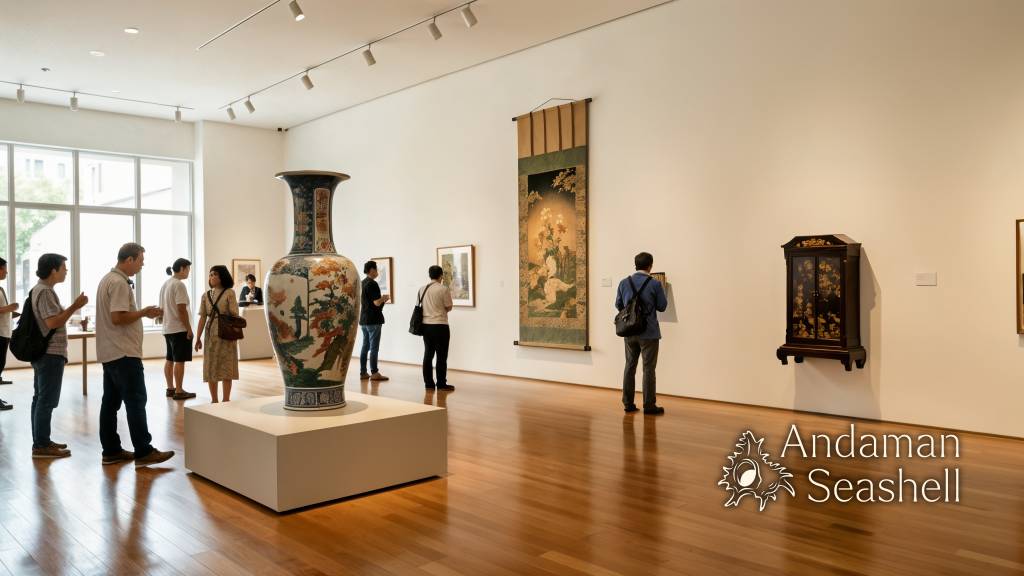
The exhibition is on the first-floor gallery at TCDC Bangkok in the Grand Postal Building on Charoen Krung Road. Entry is free, opening hours are 10.30am to 7pm, and the Bangkok stop runs from 25 July to 23 August, closed on Mondays.[ref:1] Time Out’s listing also confirms visitor slots through 20-23 August, which makes this week a particularly good moment for a last-minute cultural detour if you already have a Bangkok day planned.[ref:3]
Why this show feels so easy to love
Part of the show’s charm is that it does not ask you to choose between “serious art” and “fun design.” The Japan Foundation, Bangkok and Thailand’s Creative Economy Agency co-organized it as a travelling exhibition, and Professor Yuji Yamashita supervised the selection.[ref:1] That curatorial choice matters. Instead of separating history from everyday delight, the exhibition sets up a conversation across eras: Meiji-period kogei—that is, fine craft—speaks directly to contemporary objects that still value patience, finish, and exactness.[ref:1][ref:2]
Time Out describes it perfectly as a place where “century talks to century.”[ref:2] You can start in the 19th century with Japanese works from the Meiji period, 1868 to 1912, and then move toward present-day pieces without feeling any break in spirit.[ref:1] The show has been touring internationally since 2017, but 2026 is the year it finally lands in Thailand, with Bangkok first, then Khon Kaen from 1-30 September, and Chiang Mai from 10 October to 15 November.[ref:1][ref:2]
The objects worth slowing down for
The exhibition page singles out the Kinkozan Large Satsuma Vase with Flower Viewing Design, a Meiji-period work believed to have been produced in the old Satsuma domain, now Kagoshima Prefecture.[ref:1] Its ivory-toned body is covered with enamel overglaze decoration and gold leaf, which helps explain why even people who usually move quickly through exhibitions tend to stop here.[ref:1] This is the kind of piece that rewards a long look rather than a quick photo.
Another highlight is the embroidered hanging with Yomeimon Gate at Nikko. According to the official exhibition notes, it uses threads of different thicknesses and required tens of thousands of strands to be embroidered by hand.[ref:1] That number changes the way you look at the surface. What first reads as a single rich image becomes a patient accumulation of tiny decisions.
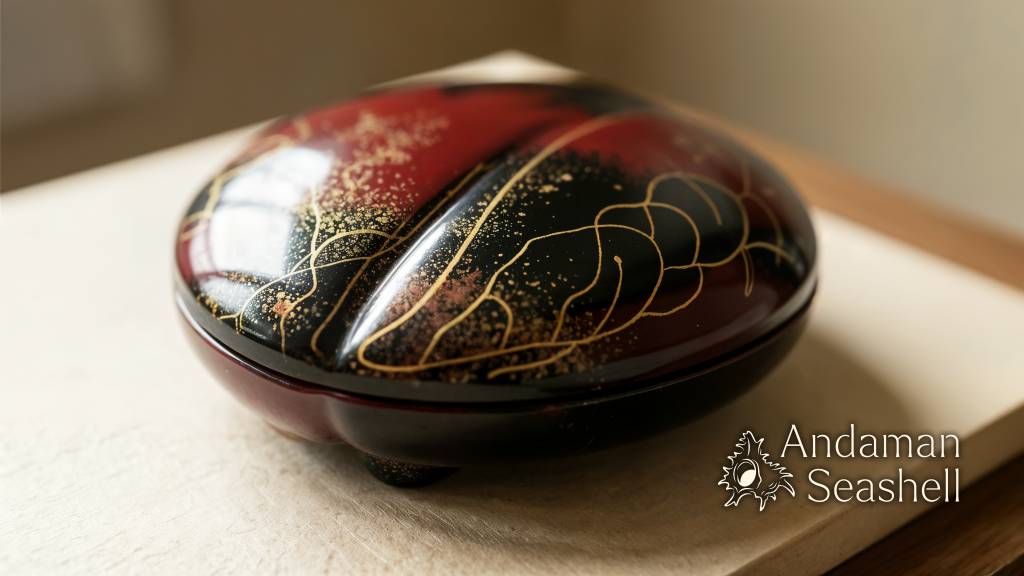
Then there is the maki-e lacquer incense box shaped like a pair of clams. Maki-e is a lacquer decoration technique in which gold powder and gold paint are used to build images on black and red lacquered surfaces.[ref:1] It is one of the smartest pieces in the room because it connects material, shape, and idea at once: an incense box made as a shell, then finished with a glow that feels almost liquid.
Where the contemporary section gets delightful
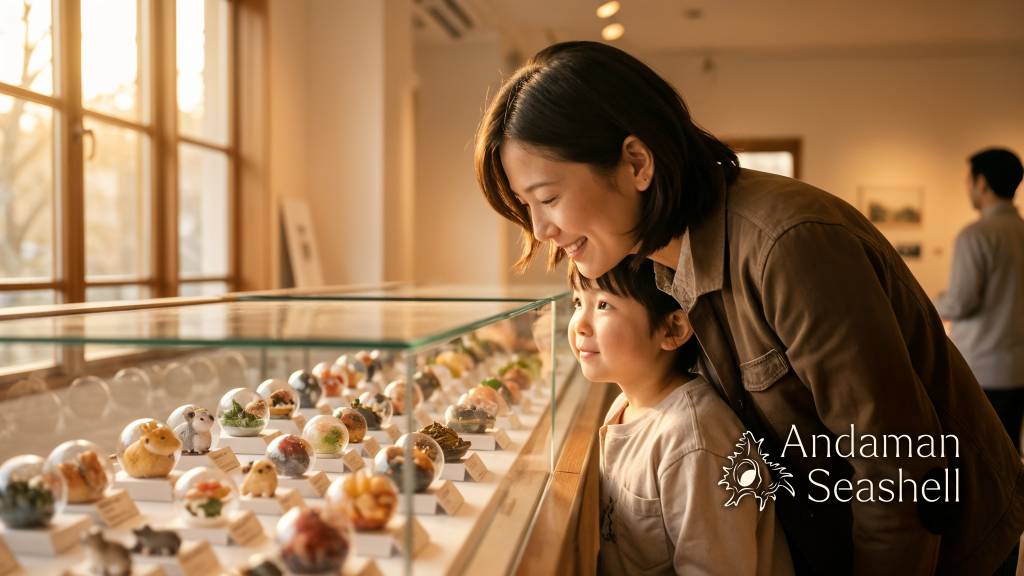
If the older pieces establish the exhibition’s authority, the contemporary section makes it warm. Time Out points to realistic food models, a cabbage-leaf bowl, and more than 100 tiny Kaiyodo animal figures.[ref:2] The official page identifies the Kaiyodo Capsule Q Museum series as works from 2013-2017, descended from Japan’s candy-toy concept yet produced with strikingly high detail.[ref:1] That is the exhibition’s happiest surprise: miniature and mass-market objects are shown not as jokes, but as proof that craftsmanship can travel into modern manufacturing without losing character.
For visitors, that means the show is especially good with mixed company. Someone who loves decorative arts can linger over Meiji silk embroidery; someone more drawn to contemporary design can spend time with capsule figures and food replicas; and both will still be following the same story about care, finish, and imagination.[ref:2]
A smart visit before it moves on
Because admission is free and the route is compact, this is the kind of exhibition that works beautifully even if you only have an hour.[ref:1][ref:3] It is also well placed for a soft Charoen Krung day: coffee, a river walk, and then a gallery visit that leaves you looking more closely at surfaces, edges, and handwork than you did before.
There is a Japanese phrase, shokunin kishitsu, often used for the spirit of dedicated making. You do not need to know the term before you go. By the time you have moved from the Satsuma vase to the silk embroidery, from the lacquer clamshell to Kaiyodo’s tiny animals, the exhibition has already explained it with objects.[ref:1][ref:2]


No comments yet. Be the first to share a thought.