



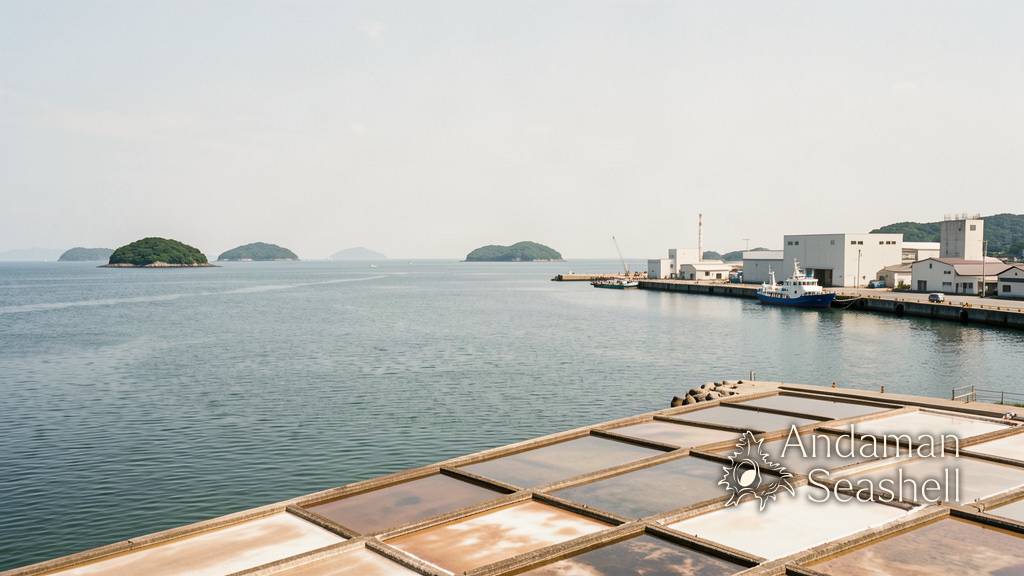
Inside a darkened salt warehouse by the Seto Inland Sea, you crawl through a low entrance the size of a tea-house door — and a labyrinth of pure white salt rises out of the darkness, drawn by hand across the floor. This is how artist Motoi Yamamoto opened Japan's newest art festival on 3 October 2026: not in a museum, but inside a working salt factory in Tamano, Okayama [ref:6].
Seven factories, one enormous museum
The Setouchi Art and Industry 2026 — in Japanese, Setouchi Sangyo Geijutsusai — is the first festival of its kind: a "dispersed museum" spread across seven operating factories and industrial sites in Okayama City, Kurashiki, Tamano and Toon in Ehime Prefecture, running from 3 to 31 October [ref:1][ref:4]. Organized by the Japan Industrial Art Foundation, its idea is simple and delightful: the artwork is not placed in the factories — the factories themselves are the exhibition.
The supervisors give the project serious credentials. Architect Kazuyo Sejima (of SANAA, the firm behind the Louvre-Lens) and curator Yuko Hasegawa lead a team that turns shipyards, salt works and recycling plants into places of contemplation [ref:1][ref:2]. Japanese has a beautiful word for this spirit of making things with care: monozukuri — literally "the making of things," but carrying the pride and patience of the people behind every product.
A shipbuilding city opens its doors
Four of the seven venues sit in Tamano, a small city that has built ships for over a century. Naikai Salt Industries, whose salt business traces back to 1829 when Buzaemon Nozaki began laying salt fields in Kojima, hosts Yamamoto's luminous salt installation in a warehouse from the era when salt was a government monopoly [ref:3].
Next door in history: Tombow, founded in 1876 to sew tabi socks, which switched to school uniforms in 1930 and celebrates 150 years in business this year. Inside its factory, three playwrights turned the hum of sewing machines into an audio drama about growing up [ref:3]. At Mikuni Kogyo, which makes giant marine-engine components with Japan's leading domestic market share, artist collective MANTLE built a plinth for finished parts that animates with film the moment a component is placed upon it [ref:1][ref:4].
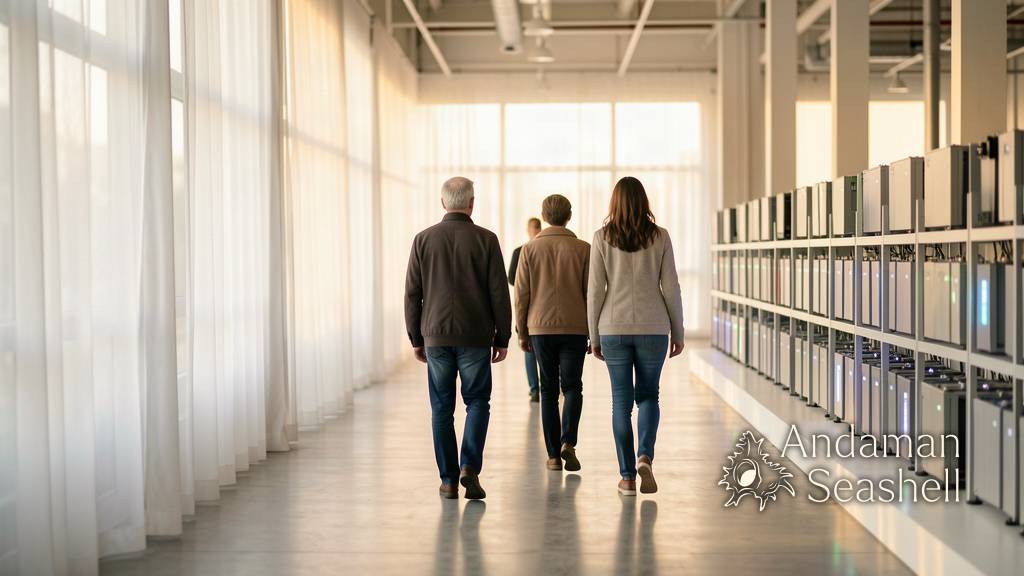
And then there is PowerX, the festival's window into the future: its Power Base battery factory, completed in 2023, uses robotics, automated guided vehicles and local 5G — and during October its glass halls become an artwork about electricity itself [ref:3][ref:5].
From cotton field to your jeans
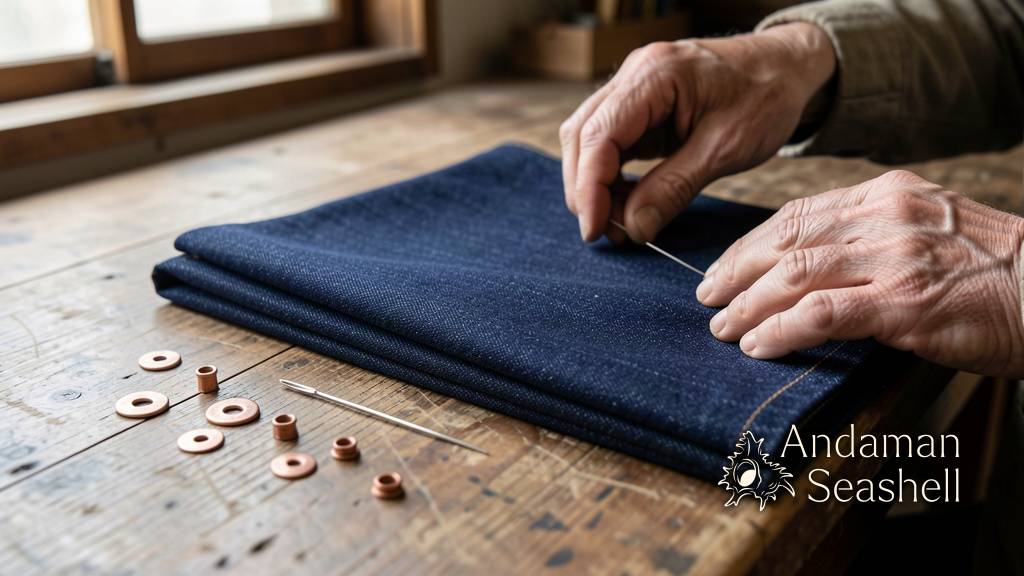
In Kurashiki, the story turns to denim. Kojima Jeans Street — a roughly 400-metre lane that is the accepted birthplace of Japanese-made jeans — hosts an exhibition by SYMBOLPLUS that traces a single pair of jeans from a recreated cotton field through the workshops and specialist craftspeople of the district [ref:3][ref:4]. You leave understanding why a good pair of jeans takes so many hands.
How to visit (and why you should book now)
Every artwork requires an advance reservation — normal factory operations and safety come first, so this is not a drop-in festival [ref:1]. The easiest route is an official guided bus tour from Okayama Station, priced between 6,000 and 8,000 yen, with packages combining Shinkansen tickets and accommodation for travellers from farther away [ref:2].
If you want Yamamoto's salt labyrinth specifically, plan carefully: the artist listed only 10 and 24 October for individual visits, and those tickets sold out quickly [ref:3]. The idea, though, was proven early: a pilot tour in January 2025 drew 183 curious visitors over three days and earned glowing surveys, convincing the organizers to go big in 2026 [ref:4].
The wonder of watching how things are made
There is something deeply hopeful in a festival that asks us to slow down and admire a salt crystal, a weld, a bolt of denim — the ordinary infrastructure of daily life. In Ehime, visitors even put on site clothing and ride by bus into Ohno Development's recycling valley, where architecture meets environmental industry under Ryue Nishizawa's participation [ref:1][ref:3].
The Japanese describe beauty in humble, imperfect things as wabi-sabi. This October, on the calm inland sea that Thai travellers love for its Setouchi art islands, a new kind of wonder is flowing — one where the makers, not just the artists, take the bow.
References
- Okayama Prefecture Official Tourism Guide — Setouchi Art and Industry 2026
- Japan.co.jp — What Happens When a Working Factory Becomes the Museum?
- Mice Times — Setouchi Industrial Art Festival 2026 preview
- Setouchi Art & Industry — Official artworks page
- Motoi Yamamoto — Upcoming: Setouchi Art and Industry 2026
- Discover Japan — October 2026 issue: Kyushu feature incl. Setouchi Industrial Art Festival


No comments yet. Be the first to share a thought.