



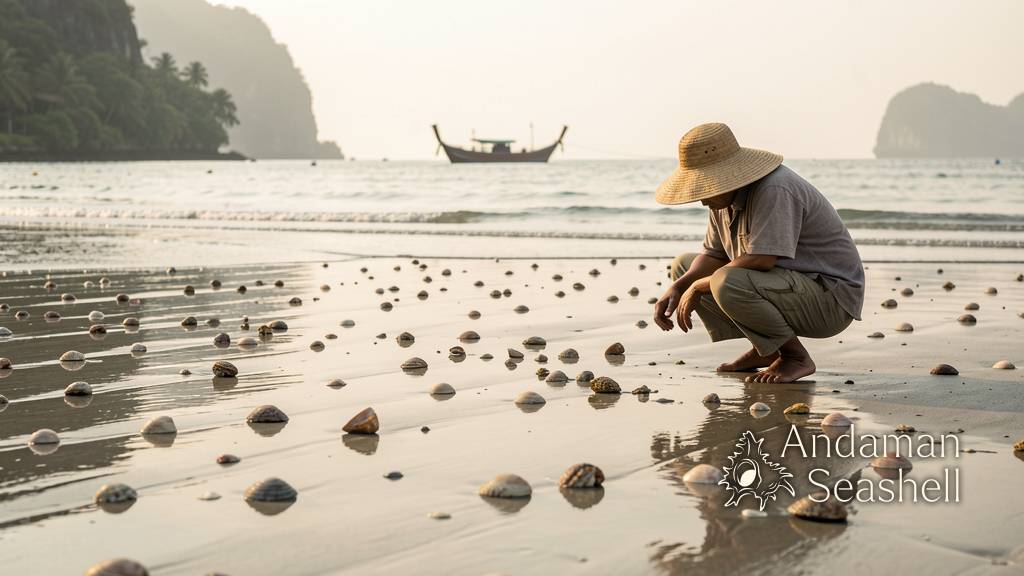
A child kneels at the edge of a Phang Nga tide line and turns a pale spiral shell in her palm. It is light as a biscuit, smooth on one side, ridged on the other, and suddenly it feels like more than a pretty beach find: it feels like a tiny map.
That is the joyful lesson behind one of the ocean’s biggest discovery stories this year. Ocean Census announced that scientists had found 1,121 previously unknown marine species in a single discovery year, with work spanning 13 expeditions and 9 species discovery workshops around the world [ref:1]. CNN’s coverage highlighted the same number and noted the global network behind the effort, involving researchers across 85 countries [ref:2].
For Andaman Seashell readers, the most delightful part is this: many ocean discoveries begin the same way a good shell story begins — by looking closely at form, texture, and the small details that most people walk past.
What a shell can tell you
A shell is not just an object left behind by the sea. In living molluscs, it is architecture. A mantle, the soft tissue of the animal, lays down calcium carbonate layer by layer. That is why a shell can show growth lines, repairs, color bands, spiral geometry, and sometimes the subtle record of changing conditions.
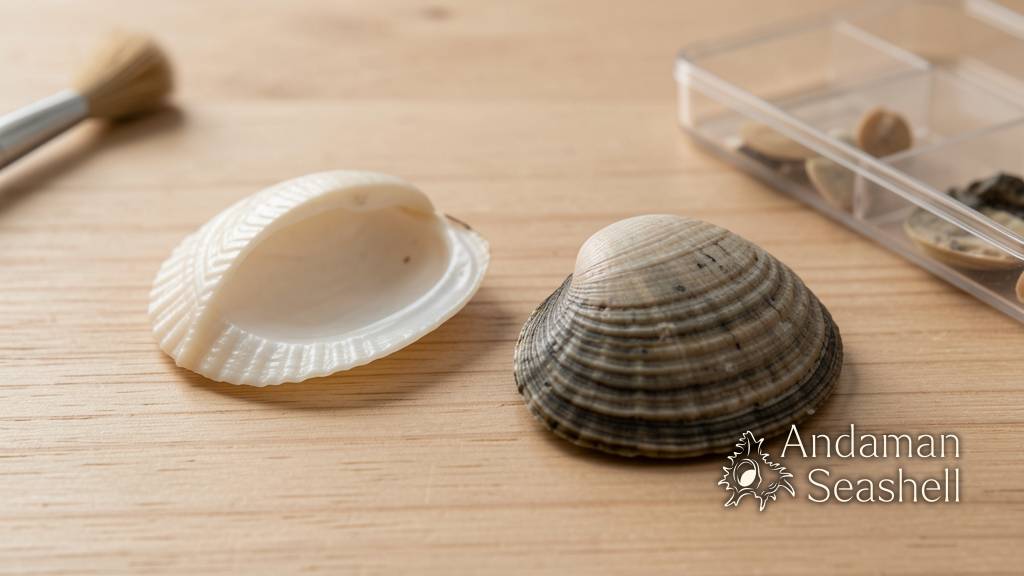
Hold a shell from an Andaman beach and you are holding a shape made by biology. The curl of a gastropod shell gives room for a growing animal. The two hinged halves of a bivalve protect a soft body that filters food from the water. The shine of mother-of-pearl comes from microscopic layers that scatter light beautifully.
This is where souvenir wonder and scientific wonder meet. A shell can be admired for its beauty, but it can also invite better questions: What kind of animal made this? Was it a snail, a clam, an oyster, or another mollusc? Why are the ridges close together here and wider there? Why does one shell feel heavy and another almost paper-thin?
From beachcombing to deep-sea discovery
The Ocean Census discoveries are not all shell animals, of course. The 2026 announcement highlighted a ghost shark in Australia’s Coral Sea, a ribbon worm in Timor-Leste, corals, crabs, shrimps, sea urchins, anemones, and a remarkable polychaete worm living inside the chambers of a glass sponge on a Japanese seamount [ref:1].
But mollusc-shaped thinking runs through the whole story: notice the structure, record the place, compare the details, and let specialists test what the eye suspects. Ocean Census says the traditional gap between first discovery and formal scientific description has averaged 13.5 years, and its NOVA platform is designed to make validated discovery data visible much faster [ref:1].
That matters because names are practical tools. When scientists describe a species, they give it a passport into knowledge: a way for museums, researchers, communities, and marine managers to talk about the same living thing. A beautiful shell on a shelf can start a conversation; a named species can join a global map.
The Andaman connection: look closely, collect kindly
On the Andaman coast, shell appreciation is best when it is slow and respectful. Look for empty shells above the wash line. Turn them gently. Notice whether a hermit crab has already moved in. Photograph unusual finds. Leave living animals in place, especially in tide pools, mangrove edges, and reef flats where small creatures are part of a larger coastal rhythm.
This approach makes shell collecting feel more premium, not less. The most meaningful souvenir is not the biggest shell; it is the story you can tell accurately. “I saw the spiral that made room for a sea snail.” “I noticed the growth lines like tree rings.” “I left the occupied shell for the hermit crab and took a photo instead.”
That kind of attention is exactly what modern marine science celebrates. Ocean Census also reported a July 2026 species discovery workshop in Buenos Aires connected to the Mar del Plata Canyon work, showing how specimens, experts, and careful comparison keep turning ocean observation into shared knowledge [ref:3].
A small shell, a bigger ocean
Next time you visit an Andaman beach, try a quiet shell-walk. Choose one shell to study for two minutes. Trace the lip, count the whorls, look for repair marks, and imagine the animal that built it while moving through sand, seagrass, or reef.

Then look up. The same ocean that leaves pearly spirals on Phang Nga sand is still surprising scientists with new life in deep canyons, volcanic seamounts, coral seas, and shallow tropical water. The shell in your hand is not separate from that story. It is the friendly, pocket-sized doorway into it.
And that is why a shell can be more than a souvenir. It can be a small lesson in design, patience, and discovery — polished by the sea, ready to make a curious person even more curious.


No comments yet. Be the first to share a thought.