



Inside a bright cleanroom at Kennedy Space Center, a gold-and-black telescope has just stood up like a guest of honor. NASA says engineers raised the Nancy Grace Roman Space Telescope from horizontal to vertical on June 25, 2026, after its arrival in Florida, preparing it for inspections, testing, and launch processing [ref:1].
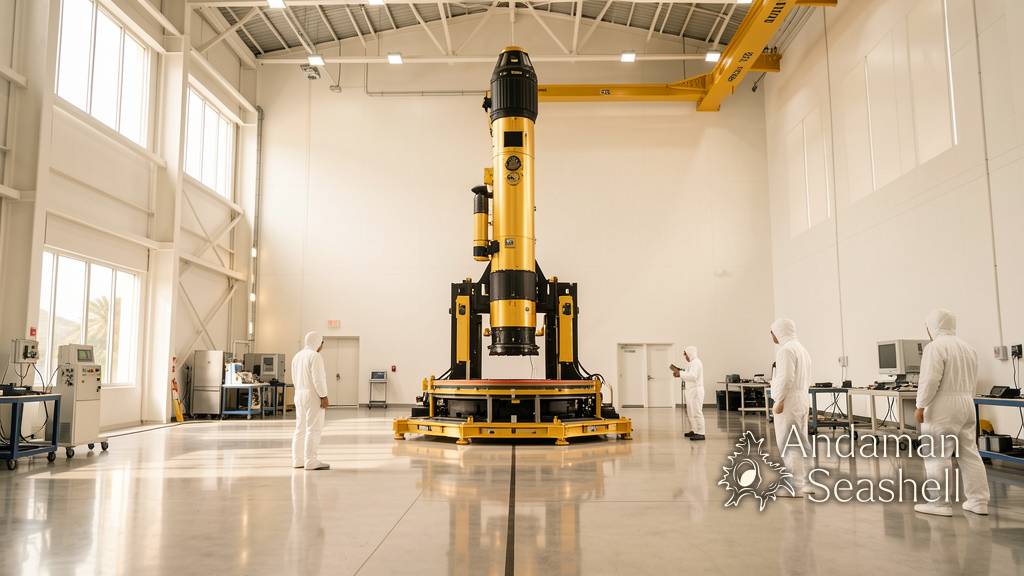
That is a wonderful little sentence with a huge meaning: Roman is no longer just an artist’s drawing or a future mission on a calendar. It is a real observatory in a real building, being readied by real technicians for a launch NASA and SpaceX are targeting no earlier than Sunday, Aug. 30, 2026, on a Falcon Heavy rocket from Launch Complex 39A [ref:1].
For Andaman stargazers, this is a perfect “look up and imagine” moment. You will not see Roman in the sky from Khao Lak like a bright planet, but you can picture what it will do: open a wider window on the universe, the way stepping from a shell counter to the shoreline lets you suddenly see the whole pattern of waves.
Why Roman feels like a panoramic camera for space
NASA describes Roman as a telescope with a field of view at least 100 times larger than Hubble’s [ref:1]. That does not mean Hubble becomes less amazing. Hubble is like a jeweler’s loupe: it can show exquisite detail in a small patch of sky. Roman is more like a wide, beautifully sharp travel lens: it can see large cosmic neighborhoods while still keeping fine detail.
SpaceFlight Now reported the same idea in delightfully practical terms: Roman’s 300-megapixel Wide Field Instrument has 18 detectors, and mission officials described it as observing a much wider area with Hubble-like resolution [ref:3]. If Hubble is a careful close-up of one special shell, Roman is a tray of shells sorted by color, spiral, age, and pattern — suddenly the relationships appear.
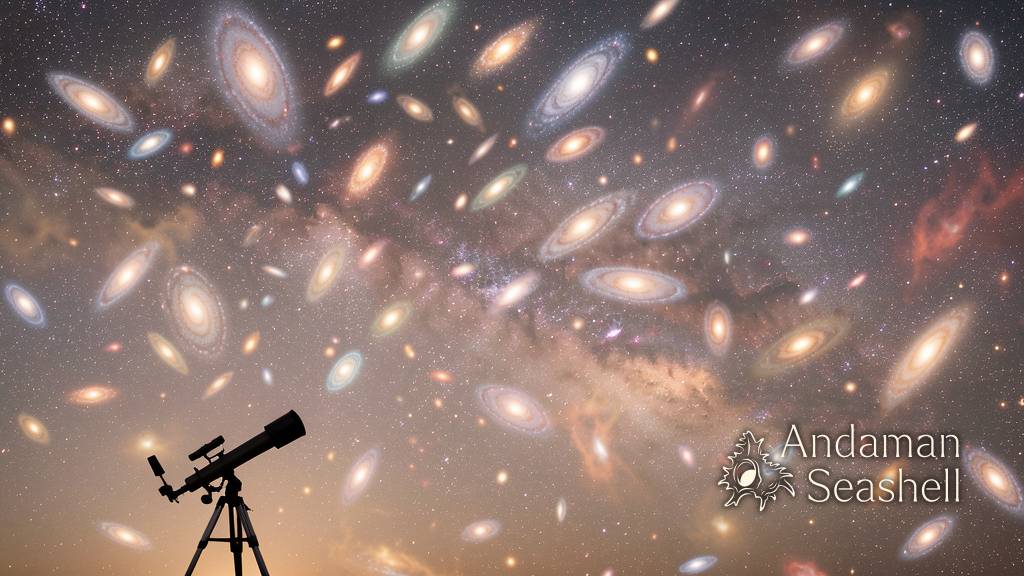
That wide view matters because the universe is full of patterns that only make sense when you see many examples. Astronomers want to count galaxies, watch how they group together, find distant exploding stars, study planets around other suns, and map clues about dark matter and dark energy — the invisible ingredients scientists use to explain how the cosmos is shaped and how it grows.
The camera with 18 little windows
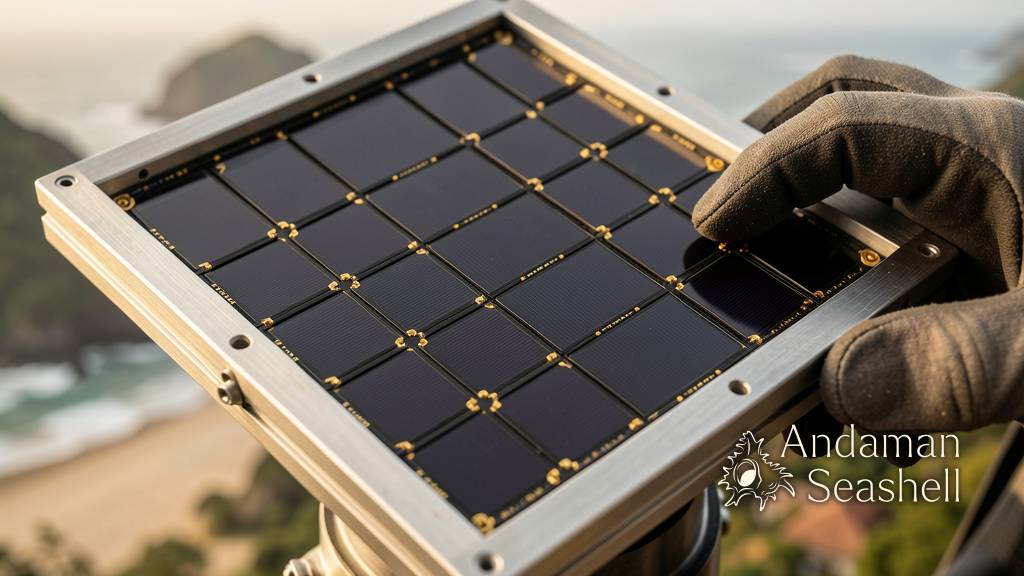
Here is the fun gadget fact to share with a curious kid: Roman’s main science camera, the Wide Field Instrument, uses 18 detectors arranged like tiles in a mosaic [ref:3]. Imagine 18 tiny windows working together, each catching infrared light from ancient galaxies and faint stars.
Infrared light is especially useful because it can reveal objects and structures that ordinary visible light does not show as easily. Roman will use that ability for large surveys — repeated, systematic looks across the sky — rather than only one-off snapshots. NASA’s mission page presents Roman as a next-generation observatory designed for wide-field infrared surveys and a major leap in cosmic mapping [ref:2].
The telescope also carries a coronagraph technology demonstration, a special instrument designed to block the bright light of a star so fainter nearby objects can be studied. A simple way to picture it: hold your hand near the Sun’s glare so you can see a bird crossing the sky. Roman’s version is far more precise, but the idea is wonderfully human — shade the bright thing, discover the delicate thing.
A telescope named for a sky pioneer
Roman is named for Nancy Grace Roman, NASA’s first chief astronomer, often called the “Mother of Hubble.” NASA and SpaceFlight Now both highlight that legacy: she championed the idea that space telescopes could transform astronomy by rising above Earth’s atmosphere [ref:2][ref:3].
That story gives this mission a warm heart. Roman is not only a machine; it is also a thank-you note to someone who helped make space astronomy possible. Every child who has ever looked up and asked, “How do we know that?” belongs in the same long chain of curiosity.
For visitors on the Andaman coast, Roman is also a reminder that wonder travels both ways. Some nights, the Milky Way appears as a pale river above the sea. Some mornings, a shell’s spiral looks like a tiny galaxy in your palm. Science does not take away the poetry of those moments — it gives you more ways to enjoy them.
What to watch next
The next public milestones are practical and exciting: more testing, more launch processing, and the planned journey to space. If the target date holds, Roman will ride a Falcon Heavy from Kennedy Space Center and eventually work far from Earth, giving astronomers a huge new survey tool for years of discoveries.
So here is the simple version: a golden telescope has stood up in Florida, and a wider universe is getting ready to come into view. That is a lovely thing to tell a child at dinner, a friend on the beach, or yourself the next time you step outside and look at the night sky.


No comments yet. Be the first to share a thought.