



On September 21, 2026, planetary scientists opened the best water diary Mars has ever kept — and it was written in a rock nobody expected to find. NASA's Perseverance rover, patiently exploring the rim of Jezero Crater, has revealed that a band of stone called the "Margin Unit" was touched by water on at least three separate occasions in the planet's deep past, each time by a different kind of water: groundwater, a lake, and hot mineral-rich fluids heated from below [ref:1].
It's the kind of discovery that makes you love science a little more. The team went looking for one story and found three.
The rock that was supposed to be something else
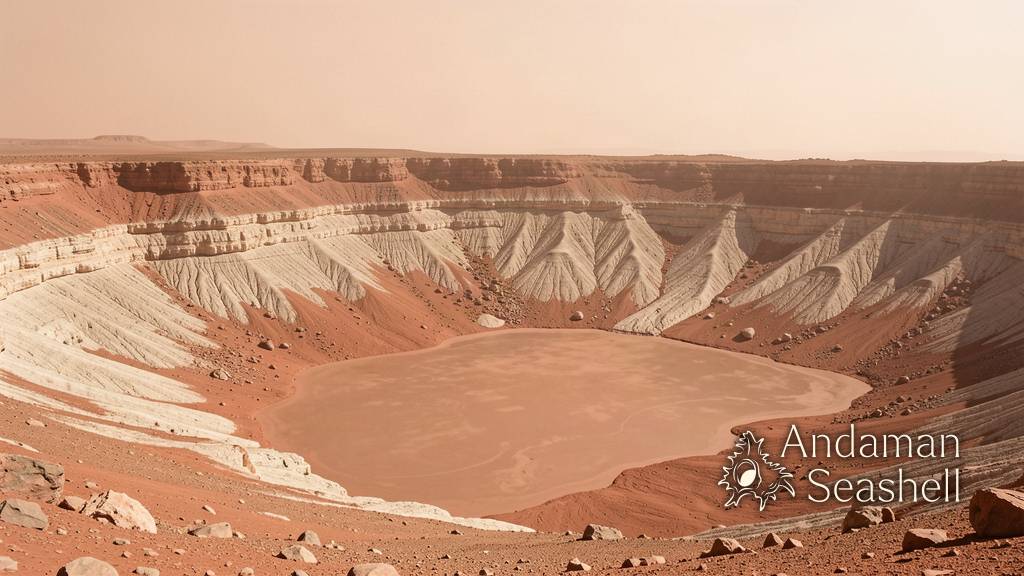
When Perseverance arrived at the inner edge of Jezero Crater in September 2023, the expectations were clear. The Margin Unit hugs the shoreline of an ancient Martian lake, so scientists anticipated sedimentary rock — layers of clay and silt piled up over millennia, the kind that on Earth preserves signs of microbial life. Orbiters had also spotted strong carbonate signals from above, and on Earth, carbonates often form in shallow lakes and seas that can support life [ref:1].
Instead, the rover found igneous rock — stone born from magma, either deep underground or in surface volcanism. At first glance, a disappointment. In practice, a gift. Igneous crystals are meticulous record-keepers: they lock in details of the exact moment they formed. And these particular crystals had met water — again and again and again [ref:2].
A robot that reads stone with light
How do you read a rock on another planet? With a laser. Perseverance's SuperCam, perched on the rover's mast, can fire at targets up to 21 feet (6.5 metres) away. The flash of plasma that comes back carries a spectrum — a chemical fingerprint — of whatever the beam touched. Across the Margin Unit, SuperCam has read more than 185 bedrock targets this way, while the rover climbed roughly 870 feet (265 metres) of elevation [ref:1].
Higher up, the stone is coarse, crystalline olivine, showing almost no sign that water ever touched it. It formed in a body of magma deep underground, cooling so slowly that its grains grew large, and only reached the surface after the ground above it eroded away. Lower down, near the old lakebed, the same rock looks transformed — olivine grains fractured apart, silica filling the gaps [ref:1].
Three encounters with water
The SuperCam readings let the team reconstruct a sequence of at least three distinct water episodes [ref:2]:
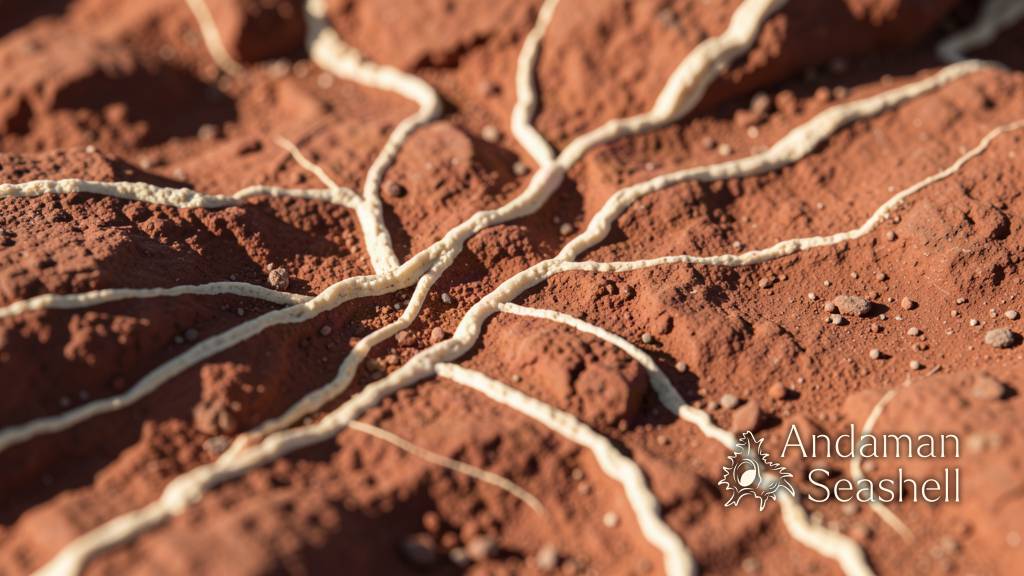
- Episode one: groundwater. Carbon-dioxide-rich groundwater reacted with the olivine, leaving ridges of carbonate running through fractures in the low-elevation bedrock. Today those harder carbonate veins stand raised above the softer rock wearing away around them.
- Episode two: the lake. A second soaking may have come from the lake that once filled the crater. "We see more of that silica in rocks that sat below the water line," explained Eleni Ravanis, a planetary scientist at the University of Hawaii at Manoa and co-author of the study [ref:1].
- Episode three: hot water. In the eastern Margin Unit, mineral veins about 10 inches (25 centimetres) thick carry calcium sulfate and fluorite. Fluorite typically forms when hot water circulates through volcanic rock — evidence of a later, heated underground-water event [ref:1].
Why this matters beyond one crater
Carbonate and silica are signposts in the search for ancient life. When water meets olivine on Earth, the reaction can release hydrogen — a food source for some microbes — and it leaves behind carbonate and silica, minerals that lock in traces of those microbes' existence [ref:1].
The stakes are bigger than Jezero. "Jezero Crater sits inside one of the largest exposures of carbonate on Mars, so what we learn here reaches well beyond this crater," said Candice Bedford of Purdue University, the study's lead author, who describes the site as "a sort of crossroads for aqueous systems" [ref:1]. The findings were published in the journal Communications Earth & Environment [ref:3].

The happy ending of being wrong
Study lead Candice Bedford has spent ten years working with Mars rovers, and her takeaway is wonderfully warm: "Mars constantly throws surprises at you. It is very rare that things are as we expect them to be from orbital data" [ref:1].
That's the quiet lesson here. The wrong rock turned out to be the right one — not because scientists got lucky, but because they built a robot patient enough to look closely, and stayed curious enough to follow the surprise. Somewhere on a rust-coloured slope, that little six-wheeled geologist is still climbing, still firing its laser, still reading — and the red planet is still telling stories nobody predicted.


No comments yet. Be the first to share a thought.