



Six hundred and seventy metres beneath the surface of the southeastern Pacific, on the flank of the Nazca Ridge, a robotic submersible's headlights swept across something wonderful: a pale, branching coral that looks like a clump of bubblegum frozen mid-bubble. This month, that single specimen officially became a brand-new species — and in the same breath, it answered a question scientists have puzzled over for nearly 140 years.
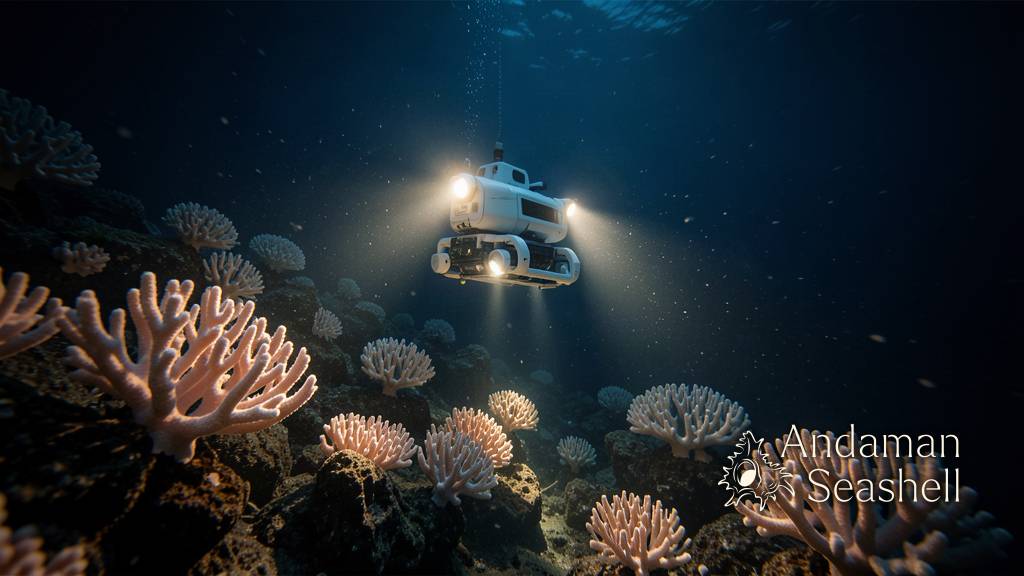
The species is Paragorgia quitinosa, described in the journal Scientific Reports on 13 September 2026 by Juan Armando Sánchez, Erik E. Easton and colleagues, working with a specimen collected during the Schmidt Ocean Institute's RV Falkor (too) expedition to the Nazca Ridge [ref:1]. It is the seventh known bubblegum coral of its whitish kind — and the very first ever recorded from the Nazca Ridge and the entire southeastern Pacific [ref:1].
The coral that shouldn't be able to stand up
Bubblegum corals hold a quiet superlative in the ocean world. Colonies collected from New Zealand seamounts reach several metres in height, and fisheries observers have reported specimens surpassing ten metres — making Paragorgia one of the largest branching colonies known in any marine invertebrate [ref:1].
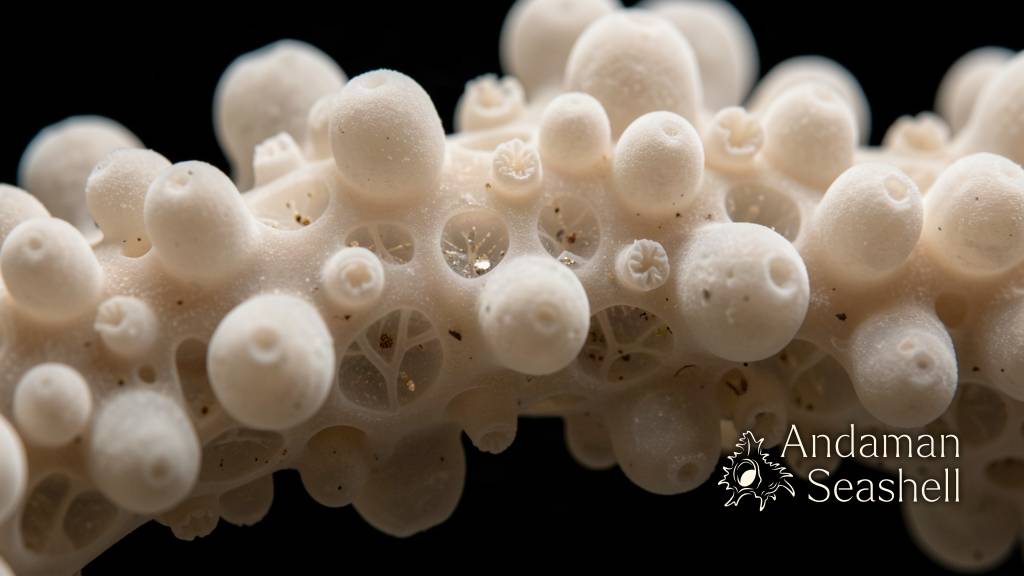
Here is the puzzle: these giants have no skeleton. Reef corals build rigid aragonite frames, and bamboo corals alternate stiff joints with flexible nodes, but a bubblegum coral is held together by nothing more than microscopic calcium-carbonate crystals called sclerites, each smaller than a grain of sand, embedded in soft tissue. As far back as 1887, the naturalist Théodor Studer observed that these sclerites seemed to be "connected by horny material" — yet no one ever chemically identified what that connecting material actually was [ref:1].
Meet the new species
P. quitinosa is a quiet beauty: a whitish colony with colourless sclerites, its feeding polyps and smaller siphonozoids retracted onto prominent rounded mounds, and unusually large capstan-shaped sclerites averaging 0.095 millimetres. When researchers ran micro-CT scans of the holotype, they discovered it was a reproductively active female, carrying multiple cohorts of eggs exclusively inside its siphonozoids [ref:1].
Genetic work using ultraconserved elements placed the new species snugly inside the Paragorgia family tree, closest to P. johnsoni and P. jamesi — and, in the process, confirmed that an entire related genus, Sibogagorgia, is not a true lineage at all but a polyphyletic mix of lookalikes [ref:1].
The secret scaffold: chitin
Then came the chemistry. Four independent techniques — scanning electron microscopy with energy-dispersive spectroscopy, infrared spectroscopy (FTIR), Raman confocal microscopy, and gas chromatography–mass spectrometry — all pointed to the same molecule: chitin [ref:1].
If you have ever picked up a crab shell or watched a butterfly emerge from a chrysalis, you have held chitin. It is the second most abundant polysaccharide in nature, prized for a rare combination of tensile strength and flexibility. And now it turns out that chitin forms a reinforcing canal network running throughout the soft bodies of bubblegum corals — the first time it has ever been detected in octocoral tissue, and only the third report in the whole anthozoan group, after sea anemones and black corals [ref:1].
The molecule even betrayed itself in a delightfully low-tech way: the coral's canal walls resisted digestion in dilute hypochlorite — common bleach — exactly the way chitin-rich structures do [ref:1].
Why a boneless giant matters
This is more than a quirky chemistry fact. Chitin's strength-plus-flexibility profile offers a convincing biomechanical explanation for how a boneless coral can grow metres tall and branch lavishly in deep-sea currents without snapping — solving the structural mystery Studer first noticed in the 1880s [ref:1].
It also enriches the story of how corals survived Earth's turbulent ocean chemistry across hundreds of millions of years: octocorals, with their grab-bag of skeletal strategies, diversified after crises that hit reef-builders hardest [ref:1]. And the Nazca Ridge find raises new questions about how deep-sea communities connect across the Salas y Gómez, Nazca and Juan Fernández ridges — the same expedition that collected this coral surfaced with around twenty suspected new marine species in total [ref:2] [ref:3].
Somewhere in the dark, boneless and unbothered, the bubblegum corals have been quietly building with the same clever molecule as crab shells and insect wings all along. We just needed to visit a seamount 670 metres down, bring one home, and ask.


No comments yet. Be the first to share a thought.