



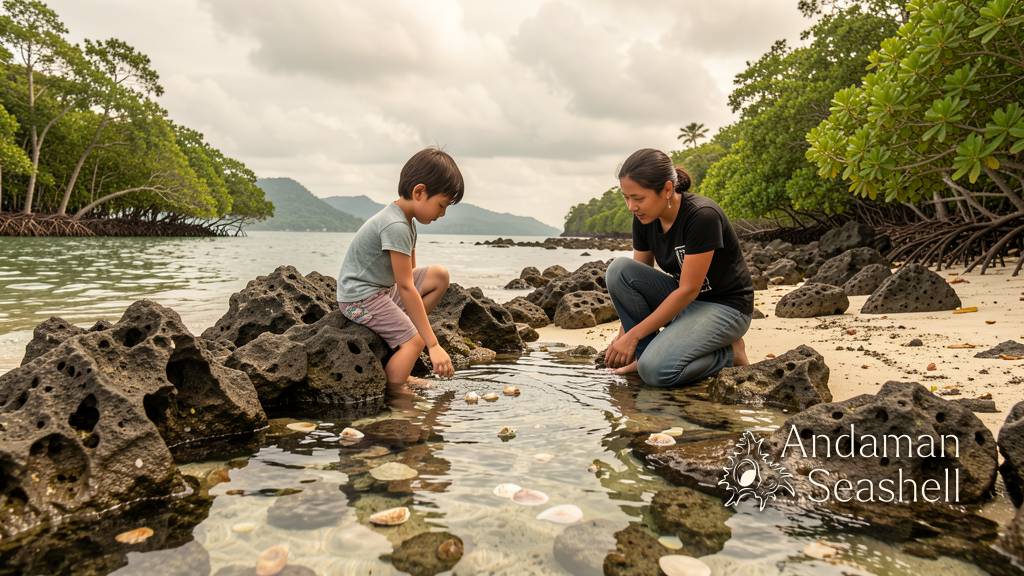
A child leaning over an Andaman tide pool can sometimes spot three worlds at once: a shell polished like porcelain, a tiny fish flicking between stones, and a question bright enough to follow all the way into the deep sea.
That is the cheerful invitation behind the latest Ocean Census milestone. In May 2026, the global programme announced that scientists had documented 1,121 newly discovered marine species in a single year, a burst of discovery drawn from expeditions, museum collections, expert taxonomists, and new technology [ref:1]. Then, in June, another expedition working in the open ocean off Brazil reported 31 new species in just two weeks, including glassy midwater animals that look almost imagined until a camera catches their living details [ref:2].
For a coast like Phang Nga and Phuket, where shells, coral rubble, mangroves, and reef fish are everyday neighbours, this is not distant news. It is a reminder that the sea is still actively introducing itself.
What a “new species” really means
A newly discovered species is not necessarily a brand-new creature that appeared yesterday. Usually, it means science has now collected enough evidence to recognise, compare, describe, and name a life form that was already sharing the planet with us.
That process can begin in many places: a deep-sea robot filming a transparent animal in the midwater, a diver collecting a tiny reef fish, or a museum scientist re-examining a specimen preserved years ago. The Ocean Census describes its mission as accelerating the discovery of ocean life through expeditions, a science network, species-discovery workshops, and shared data tools [ref:1].
The beautiful part is that discovery is both high-tech and deeply human. It needs cameras, genetics, microscopes, and databases. It also needs patient eyes: the taxonomist who notices a different fin shape, the curator who compares shell ridges, the field biologist who knows that “almost the same” can be a clue.
The midwater: Earth’s huge blue middle room
The Brazil expedition focused on the ocean midwater, the layer between the sunny surface and the seafloor. The Guardian reported that scientists aboard Schmidt Ocean Institute’s research vessel Falkor (too) worked with experts from the United States, Australia, Brazil, and Japan, exploring a habitat described as 90% of the living space on Earth [ref:2].
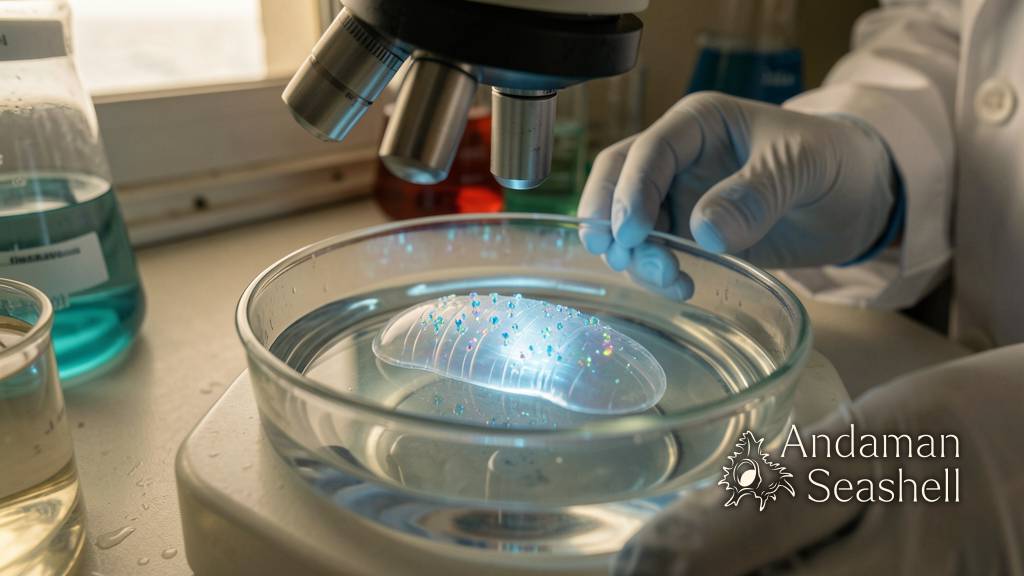
Among the reported finds were jellyfish, siphonophores, comb jellies, larvaceans, amphipods, and giant rhizarians — names that sound like fantasy until you learn their jobs. Comb jellies swim with shimmering rows of tiny moving hairs. Larvaceans build delicate mucus “houses” that filter food from seawater. Siphonophores are colonies of specialised parts working together as one floating animal-like system.
One reason the team could move so quickly was technology. The report notes the use of prototype imaging systems, genetic analysis, and a spinning-wheel confocal microscope nicknamed the Squid, which allowed scientists to observe living 3D cellular structures on board the ship [ref:2]. In simple terms: the researchers could look at fragile animals while they were still fresh, floating, and beautifully themselves.
Why this matters to people who love shells
Shell lovers already understand taxonomy by touch. A cowrie feels different from a cone shell. Mother-of-pearl catches light differently from a clam. A spiral, a hinge, a lip, a ridge — each detail is a kind of sentence written by evolution.
That is why this global discovery story fits naturally beside an Andaman souvenir counter. A shell is not just an object; it is a record of an animal’s life, habitat, minerals, growth, and design. When we handle shells respectfully, learn their names, and admire their structures, we are practising the same habit that helps scientists recognise life: careful attention.
The Andaman coast is especially good at teaching that habit. At low tide, a visitor can see how many creatures prefer edges: the edge of rock and water, the edge of sand and mangrove root, the edge between ordinary-looking and astonishing. A tide pool is a small classroom with no bell.
A bigger ocean library, one page at a time
Schmidt Ocean Institute’s 2026 expedition programme says teams are continuing to explore under-studied parts of the Southern Atlantic, documenting biodiversity, mapping seafloor features, and testing new tools [ref:3]. That steady, collaborative rhythm may be the most exciting part. Discovery is not a single “wow” moment; it is a library being catalogued page by page.
For families visiting Phang Nga, Phuket, Khao Lak, or the islands, the lesson is simple and joyful: look closely. Notice the pattern on a shell before asking where it came from. Watch a tiny fish turn sideways in clear water. Ask why a crab chooses one home and not another. Good science often begins as a good question asked with kindness.
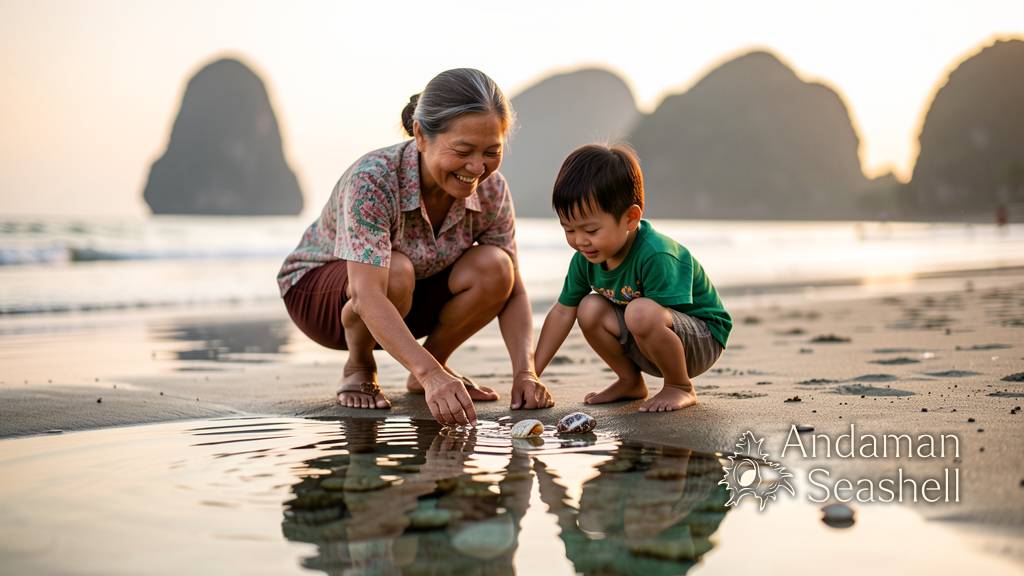
The ocean has just shared 1,121 more reasons to stay curious. And the next time a small shell glows in your palm, it can feel like a bookmark in the planet’s living library — a gentle reminder that the sea still has many beautiful pages left to read.


No comments yet. Be the first to share a thought.