



A tiny orange shrimp in a sea cave can change the way you look at every shell on the sand. This year, the Ocean Census announced 1,121 previously unknown marine species identified in a single year — a joyful reminder that the ocean is still introducing itself, one careful observation at a time [ref:1].
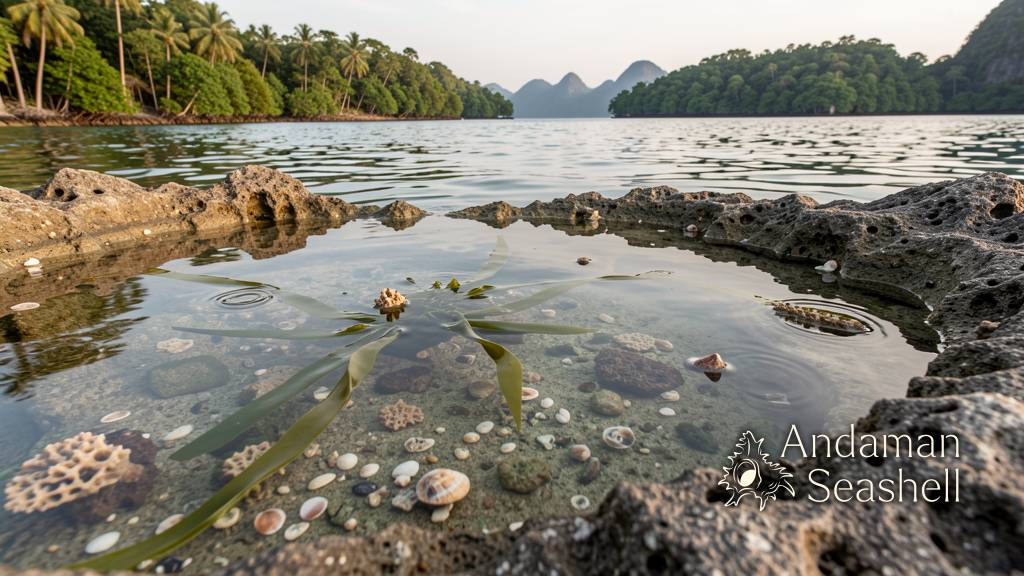
For visitors walking the Phang Nga or Phuket shore, that number is not just a faraway science headline. It is an invitation to look closer: at the spiral of a small gastropod shell, the quick flick of a shrimp under a rock, the way a coral fragment carries a whole history of growth. The Andaman Sea is part of the same living library.
What the Ocean Census actually found
The Ocean Census is a global effort led by The Nippon Foundation-Nekton Ocean Census to speed up the discovery and documentation of ocean life. In its third year, scientists reported 1,121 newly identified marine species from the discovery period of 1 April 2025 to 31 March 2026 [ref:2].
The discoveries came from 13 expeditions and 9 species discovery workshops. They include a deep-sea ghost shark from Australia’s Coral Sea Marine Park, a polychaete worm living inside the glassy chambers of a sponge on a Japanese seamount, corals, crabs, shrimps, sea urchins, anemones and more [ref:2]. Some were collected from depths as great as 6,575 metres — a place where the sea feels almost like another planet.
That range matters because marine discovery is not one kind of science. It is fieldwork, microscopy, genetics, museum expertise, careful naming, and shared databases. A creature is noticed, compared, described, and placed into the family tree of life. The magic is not only in finding something new; it is in giving that life a clear scientific address so people around the world can learn from it.
Why naming a species is a gift
A shell without a name is still beautiful. A named shell becomes a story with a map.
When scientists describe a species, they connect it to relatives, habitats, behaviour, and sometimes to local knowledge. A cowrie on a reef, a conch in seagrass, or a tiny shrimp in a cave is no longer just “something from the sea.” It becomes part of a living system that can be understood and cared for.
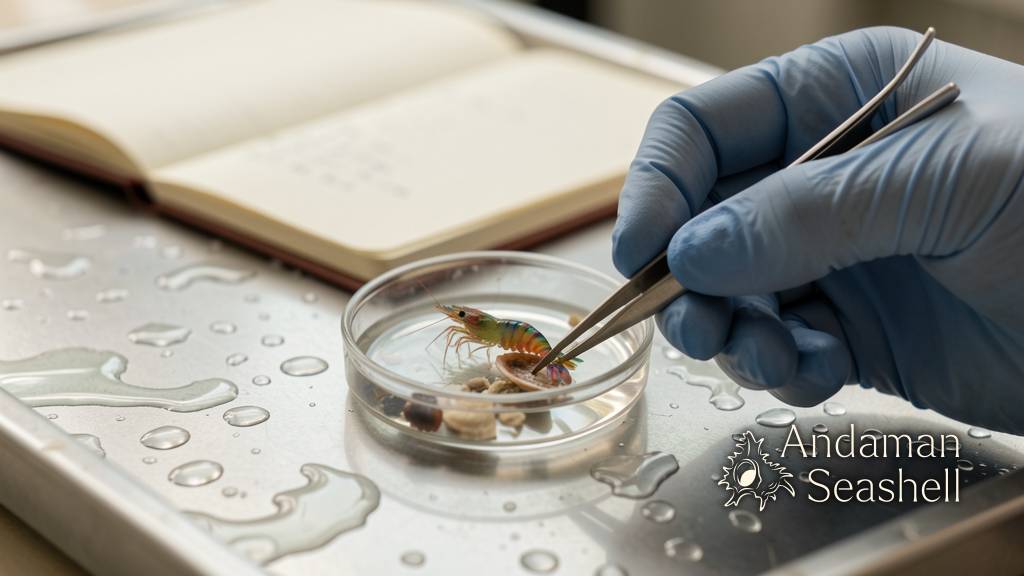
Ocean Census is also trying to make that process faster. The UN Ocean Decade summary notes that Ocean Census NOVA, a new open-access platform, is designed to make collected data available within weeks or even days, and that the network includes more than 1,400 contributing taxonomists and scientists from 660 institutions in 85 countries [ref:2]. In plain language: the ocean’s address book is getting better, and more people can read it.
For a coastal shop and community like Andaman Seashell, this is exactly the kind of science that feels close to the hand. Shells are not only souvenirs. They are the architecture of molluscs, records of growth, and small reminders that beauty often begins as biology.
The Andaman connection: a living classroom
Thailand’s Andaman Sea Nature Reserves — including places in Ranong, Phang Nga and Phuket — are recognised for mangroves, offshore islands, beach forests, coral reefs, seagrass beds and rich biogeographic overlap [ref:3]. UNESCO’s tentative-list description highlights the region’s extraordinary mix of habitats, from old-growth mangroves to fringing reefs around offshore islands [ref:3].
That makes the Andaman coast a wonderful classroom for understanding why discovery matters. A child crouching at a tide pool may not be naming a new species, but the habit is the same: observe first, be gentle, notice differences, and ask better questions.
Try this on your next beach walk:
- Look at shape before colour: spiral, cone, fan, oval, blade.
- Notice habitat: sand, rock, mangrove mud, seagrass, coral rubble.
- Leave living shells and animals where they are; photograph them instead.
- If you collect an empty shell, treat it as a clue, not a trophy.
- Ask: what kind of creature could have built this?
The ocean is still saying hello
The loveliest part of the 1,121-species news is how generous it feels. Even after centuries of sailors, fishers, divers, naturalists and scientists watching the sea, there is still more to meet.
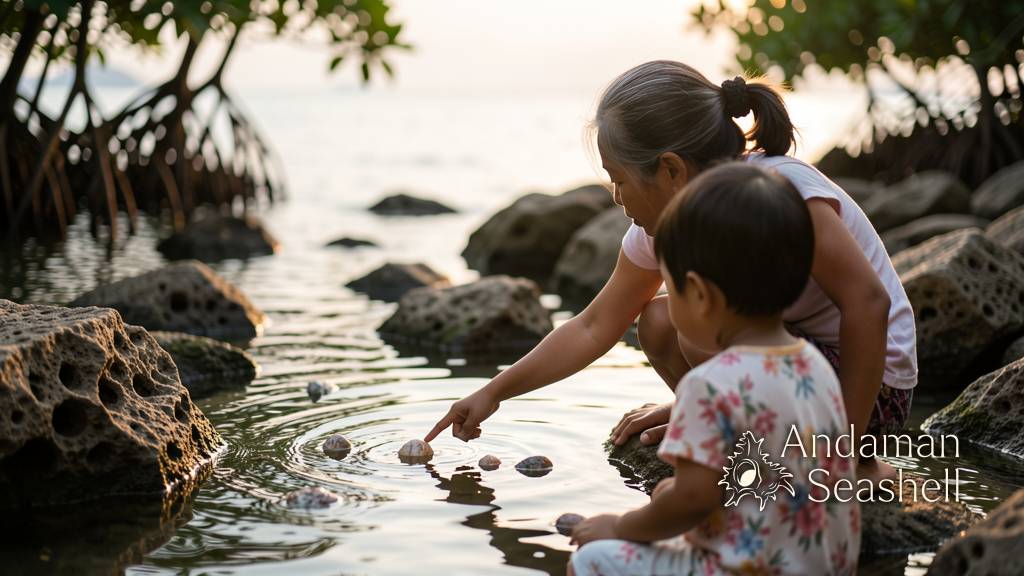
That is good news for travellers, makers, students and shell lovers. It means curiosity is never finished. A polished mother-of-pearl pendant, a tide-smoothed cowrie, a mangrove root full of tiny life — each can be a doorway into the bigger ocean story.
So the next time the tide pulls back from an Andaman beach, pause for one extra minute. The sea may not hand you a brand-new species. But it can still give you the best beginning in science: a beautiful question.


No comments yet. Be the first to share a thought.