



A Ghost Drifting at 800 Metres
Somewhere in the Coral Sea off northeastern Australia, at a depth where sunlight has long surrendered to permanent darkness, a pale creature with oversized reflective eyes glided past a submersible camera in late 2025. It was a chimaera — a "ghost shark" — and it belonged to a lineage that split from true sharks and rays roughly 400 million years ago, before trees existed on land [ref:1]. The species had never been recorded by science.
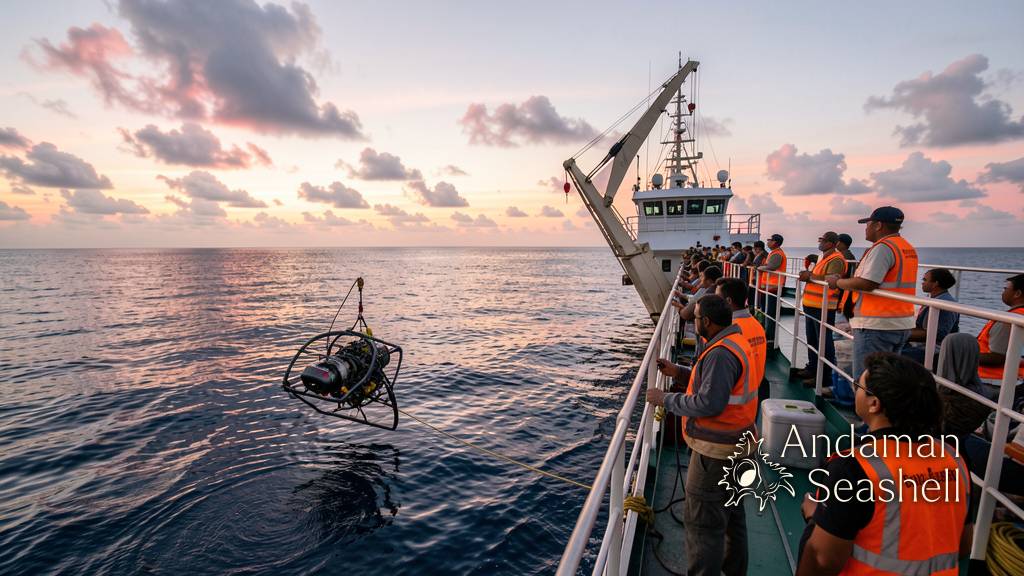
That single discovery was one of 1,121 new marine species announced by the Nippon Foundation–Nekton Ocean Census on 19 May 2026 — a 54% jump over the previous year's count [ref:1]. The finds came from 13 expeditions and nine taxonomy workshops spanning every major ocean basin, from depths as shallow as one metre to as deep as 6,575 metres.
Inside the Glass Castle
Not every new species lurks in the abyss. Off Japan's Shichiyo Seamount Chain, at 791 metres, researchers found a polychaete bristle worm named Dalhousiella yabukii living inside the chambers of a glass sponge — a structure whose skeleton is made of crystalline silica, essentially natural glass [ref:1]. The worm had built its entire life around a host that most marine biologists walk past in museum displays without a second glance.
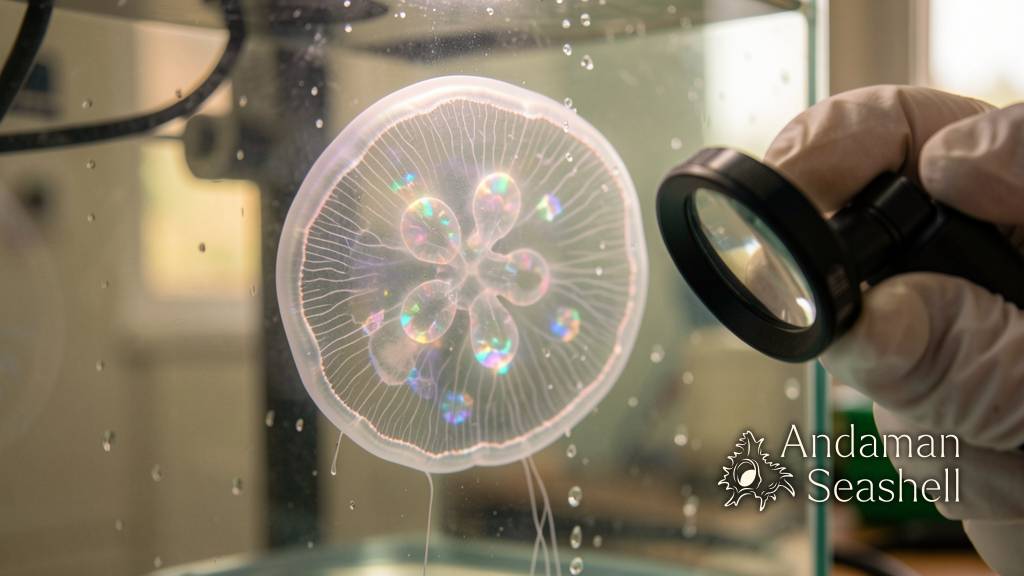
Meanwhile, in the tropical South Atlantic off Brazil, a separate Schmidt Ocean Institute expedition aboard the research vessel Falkor (too) added 31 more new species in just two weeks — nine jellyfish, seven siphonophores, seven comb jellies, and an assortment of larvaceans, giant single-celled organisms, and one surprisingly fast gossamer worm [ref:2]. In the central Pacific's Clarion-Clipperton Zone, taxonomists from the National Oceanography Centre described 24 new amphipod species, including an entirely new superfamily — Mirabestioidea — a fresh branch on the tree of life [ref:3].
Why 90 Percent Still Hides
The numbers sound enormous, yet Ocean Census scientists estimate that up to 90% of all marine species remain undiscovered [ref:1]. The bottleneck is not wonder — it is workflow. Historically, the average time between collecting a specimen and formally describing it in a scientific journal has been 13.5 years. Ocean Census is attacking that gap with NOVA, an open-access data platform that records a species as "discovered" the moment it is identified, making data available within days rather than decades [ref:1].
The technology is catching up too. On the Brazil expedition, engineers deployed DeepPIV laser scanners and a Stanford-built "squid microscope" that achieved a scientific first: imaging the living internal cellular structure of a deep-sea organism in 3D while still at sea [ref:2]. That means faster identification, fewer damaged specimens, and more time exploring.
What This Means for the Andaman Sea
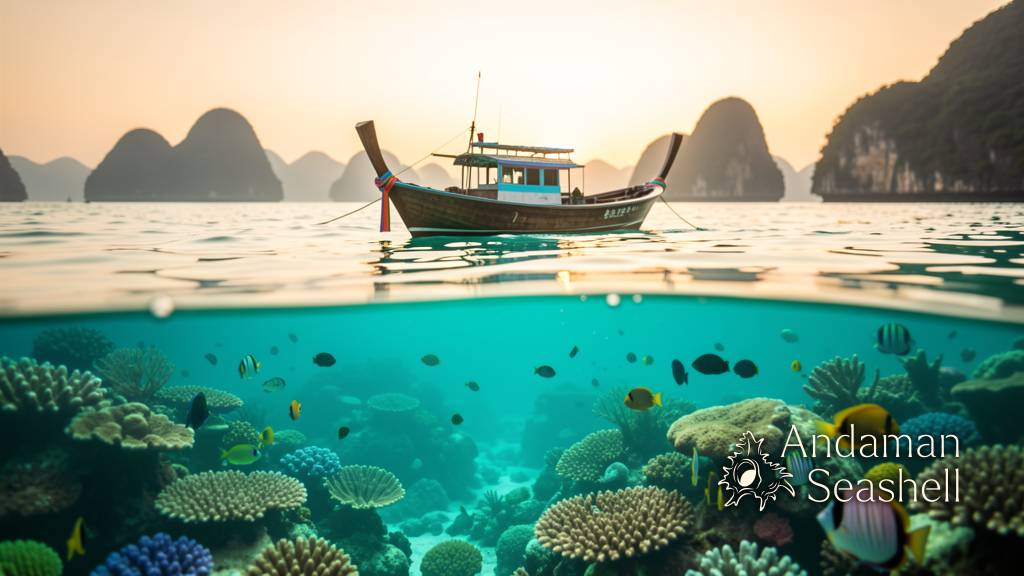
Thailand's Andaman coast sits on one of the richest marine corridors in the Indian Ocean. UNESCO's tentative list for the Andaman Sea Nature Reserves documents over 700 fish species, 140 crustacean species, and 160 hard coral species in surveyed shallow waters [ref:4]. But the keyword is shallow. The Andaman Sea reaches depths of over 4,000 metres in its central basin, and systematic deep-water biological surveys off Thailand's west coast remain rare.
A 2021 study from Koh Tachai in the southeastern Andaman Sea provided the first deep-water microbial database for the region at just 150 metres — barely scratching the surface of what lies below [ref:5]. If a two-week expedition off Brazil can turn up 31 new species in midwater alone, imagine what a dedicated survey of the Andaman basin's trenches, seamounts, and deep channels might reveal.
For now, the ghost shark drifts on in the dark, newly named, carrying 400 million years of evolutionary memory. Somewhere off the Andaman coast, in water no submersible has yet visited, its distant cousins may be doing the same — waiting, like 90% of ocean life, to be seen for the first time.
References
- Ocean Census — Over 1,100 New Marine Species Discovered
- Bigelow Laboratory — 31 New Species in Two Weeks of Deep-Sea Exploration
- National Oceanography Centre — 24 New Deep-Sea Species in Pacific
- UNESCO — Andaman Sea Nature Reserves of Thailand (Tentative List)
- Frontiers in Marine Science — Marine Bacteria at 150m Depth, Tachai Island, Andaman Sea


No comments yet. Be the first to share a thought.