



A polished shell on a Phang Nga craft table can catch the afternoon light like a small rainbow. Tilt it once, and the inside glows blue, rose, cream, and green; tilt it again, and the colors move as if the sea has learned to shimmer in slow motion.
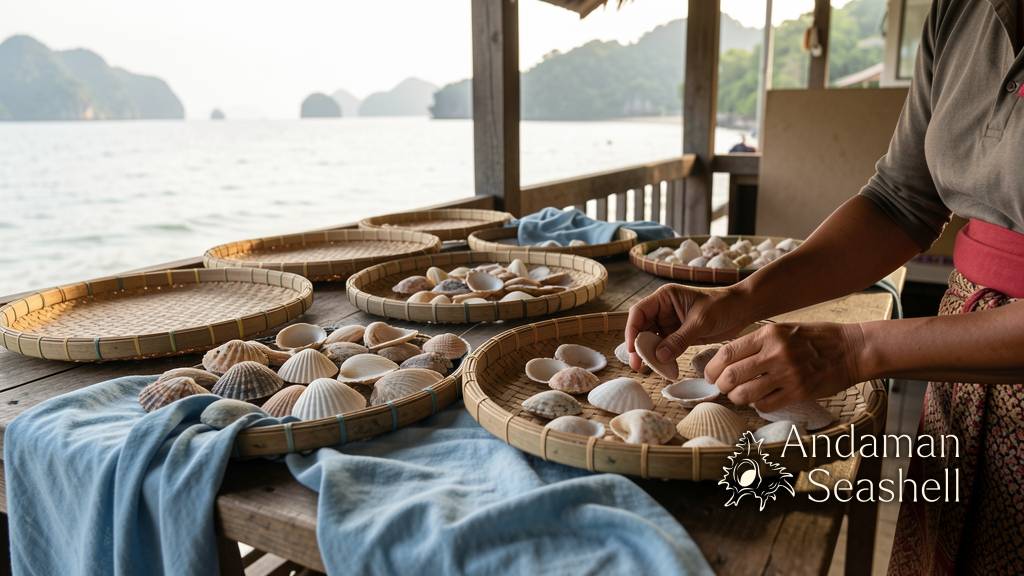
That glow is mother-of-pearl, also called nacre. It lines the inside of some mollusk shells and forms the outer layer of pearls. For anyone choosing a shell keepsake on the Andaman coast, nacre is the quiet detail that turns a natural object into a little lesson in patience, chemistry, and craft. Britannica describes mother-of-pearl as an iridescent inner layer made mainly by mollusks such as oysters, mussels, and abalones, prized for both beauty and strength [ref:1].
A shell builds with tiny tiles
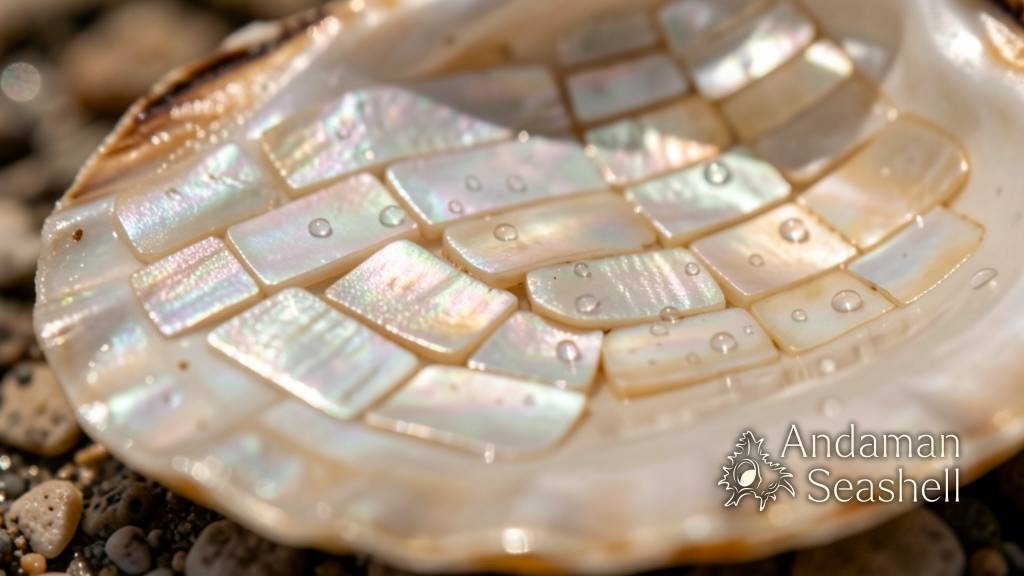
The lovely surprise is that nacre is not a simple smooth coating. It is closer to a miniature wall. Scientists often describe its structure as “brick and mortar”: very thin mineral plates stacked in layers, held together by organic material. The mineral part is aragonite, a crystalline form of calcium carbonate, while the organic part includes natural proteins and other compounds that help guide the structure [ref:1].
Under a microscope, that means a shell interior is less like paint and more like careful masonry. The mollusk’s mantle, the soft tissue inside the shell, secretes the ingredients. Layer by layer, the surface becomes pearly, tough, and luminous. A 2026 review in Biomimetics describes nacre and nacre-inspired materials as a continuing field of interest because this natural architecture combines beauty, resilience, and efficient design [ref:2].
For a coastal shop, that science makes the object feel even warmer. A shell pendant or inlay is not only “pretty.” It carries a record of patient growth, repeated thousands and thousands of times at a scale too small for the eye to follow.
Why the rainbow moves
Mother-of-pearl’s color comes from light meeting layers. When light enters the nacre, it reflects from many thin surfaces. Some waves strengthen one another; others soften one another. The result is iridescence: color that changes with angle, thickness, and viewpoint [ref:1].
That is why two people can stand beside the same shell and see slightly different moods in it. One angle may look creamy and calm. Another may flash pink or sea-green. The shell is not changing; the conversation between light and layers is.
This is a beautiful way to understand Andaman shell craft. Good craft often rewards a second look. A woven basket reveals its pattern when you turn it. A polished shell reveals its glow when the light shifts. A small souvenir becomes more meaningful when the buyer understands the process hiding inside it.
The science is still wonderfully alive
Researchers have also looked closely at how nacre begins. A University of Wisconsin–Madison team reported direct observations of early nacre formation in red abalone, describing a rapid transformation from amorphous calcium carbonate into crystalline aragonite tablets. Professor Pupa Gilbert called the process “amazing chemistry” at the surface of forming nacre [ref:3].
That detail is delightful because the material keeps its ingredients simple while changing its structure. Calcium carbonate becomes something stronger and more luminous because of how its atoms and layers are arranged. In design language, the pattern matters as much as the material.
Scientists study nacre partly because it offers ideas for human-made materials. The 2026 review notes interest in nacre-inspired composites and fabrication techniques, while Britannica summarizes modern applications in areas such as biomimetic materials, coatings, lightweight composites, and medical research [ref:1][ref:2]. The point is not that every shell becomes a laboratory product. The point is kinder: the sea has been practicing elegant design for a very long time, and humans are still learning how to look.
How to look at mother-of-pearl on the Andaman coast
Next time a shell catches your eye, try this tiny observation ritual:
- Hold it near natural light, not harsh direct glare.
- Tilt it slowly and watch where blue, green, cream, or pink appears.
- Look for fine bands and soft patches rather than one flat color.
- Notice whether the glow feels deep, as if it comes from inside the shell.
- Remember that the surface is built, not painted.
This kind of looking makes souvenirs feel personal. It also encourages respect. Shell beauty is part of a living marine story, so the most thoughtful keepsakes are chosen with care, curiosity, and appreciation for the coast that shaped them.
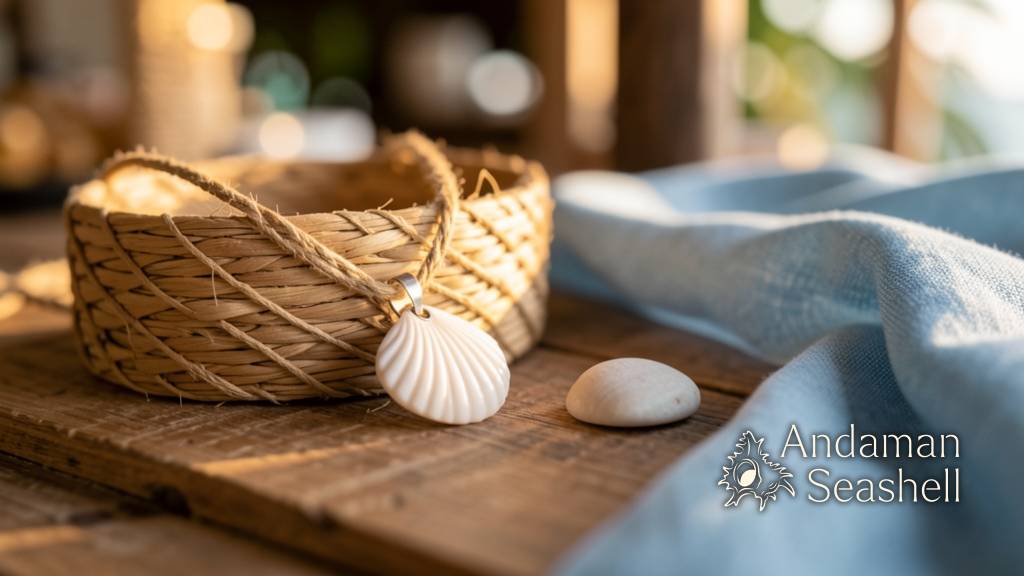
A mother-of-pearl shell is small enough to rest in your palm, yet it holds a generous idea: beauty can be built slowly, one layer at a time. On the Andaman coast, where sea, craft, and community meet every day, that little rainbow is more than shine. It is architecture made by the ocean.


No comments yet. Be the first to share a thought.