



Look up at the Moon tonight and you'll meet the same face humanity has always known — dark blotches, bright highlands, a familiar companion on every night walk. But turn that Moon around, and it becomes a stranger. The far side — the half our planet never sees — is pale grey, crowded with overlapping craters, and almost empty of the dark volcanic plains that decorate the face we love. One Moon, two completely different faces. And this month, scientists announced they can finally explain why [ref:2].
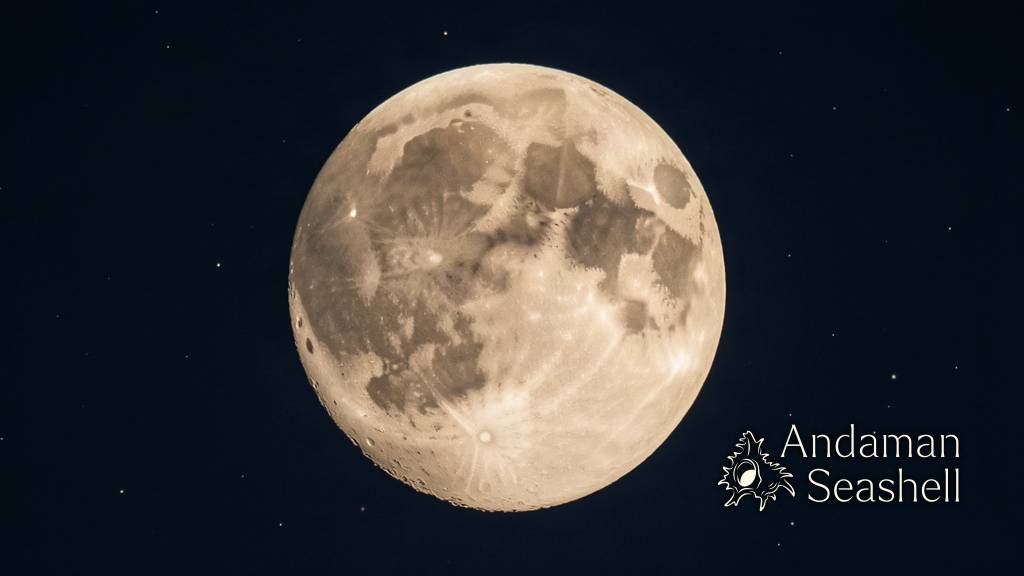
A mystery with two halves
The contrast is one of the oldest puzzles in planetary science. The near side wears vast dark plains — the lunar maria — ancient lava frozen into oceans of stone. The far side, mapped by orbiters since the 1960s, is almost entirely bright, battered highland crust. It is also noticeably thicker and richer in magnesium, while the near side carries high concentrations of potassium, rare-earth elements and phosphorus — a cocktail scientists nickname KREEP — of which the far side keeps only thin traces [ref:2].
For decades, rival explanations competed: uneven circulation in the Moon's original molten ocean, a colossal ancient collision, uneven crustal growth. None could gather enough evidence to win.
The clue on the side no one had ever touched
The breakthrough became possible in 2024, when China's Chang'e-6 lander touched down inside the South Pole–Aitken basin — an impact scar more than 2,500 kilometres across, one of the largest in the solar system — and flew home carrying the first samples ever collected from the far side [ref:4].
A team led by Professor Hejiu Hui of Nanjing University measured three rock types in those precious grains — anorthosites, Mg-suite rocks and mare basalts — and compared them, type by type, with near-side rocks collected by the Apollo astronauts and China's Chang'e-5 mission [ref:1].
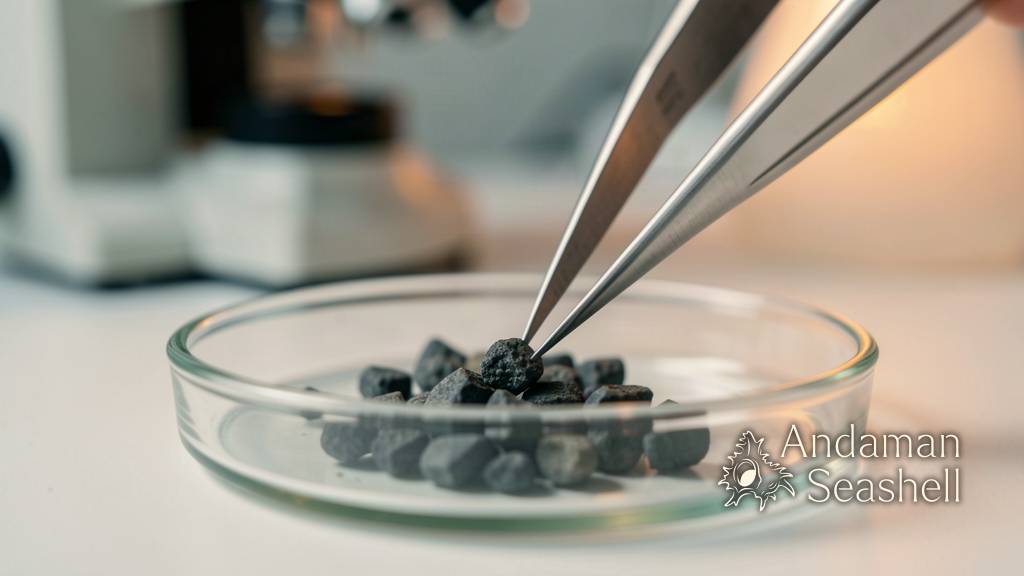
The result was a beautiful surprise. Deep down, the two halves match: the far-side basalts carry the same "depleted mantle" chemical signature as Apollo's low-titanium basalts, which means the Moon's interior is essentially the same on both sides [ref:2]. The divide lives only in the crust. Far-side anorthosites show higher peak magnesium numbers, and far-side Mg-suite rocks contain extremely low concentrations of rare-earth elements [ref:2].
An ocean of fire, stirred by Earth
From that clue, the team built a new model, published in the journal National Science Review [ref:1]. In the beginning, the newborn Moon was a globe of molten rock — a lunar magma ocean — that cooled evenly and grew its first crust. Then came the moment the Moon became tidally locked, keeping one face forever toward Earth, exactly as it does today. Back then, Earth and Moon orbited much closer together, and Earth's gravity kneaded the near side harder than the far side, heating it more [ref:3].
That temperature difference set the entire ocean of fire moving. Hot magma flowed from the near side toward the far side, carrying buoyant magnesium-rich anorthosite with it and piling the far side's crust thicker and more magnesian. Meanwhile the last dregs of the cooling ocean — the KREEP layer and titanium-rich cumulates — drifted the other way and pooled on the near side, where they would later help feed the great dark maria [ref:2][ref:3].
In short: Earth's own gravity signed its name across the Moon, four billion years ago, and gave it two unforgettable faces.
Small grains, long memories
The far-side pebbles keep giving. A second research team, at the Chinese Academy of Geological Sciences, picked ten impact-melt rock fragments — each barely half a millimetre across, smaller than a grain of millet — and read their atomic clocks. The grains clustered into two ages: around 4.25 billion years and around 3.88 billion years, recording major remelting events in the Moon's hidden hemisphere [ref:4].
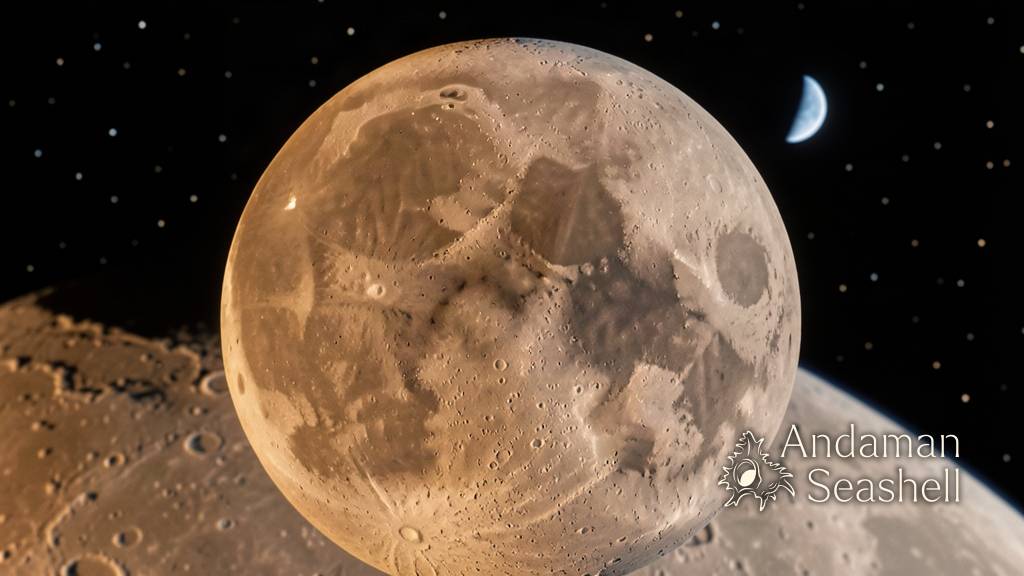
So tonight, when the Moon's gentle pull slides the tide up the shoreline, remember what else that pull once did. The same quiet force that moves the sea once stirred an entire world of magma — slowly, patiently, over millions of years — until our companion in the sky wore one face for us and kept another for itself.
References
- Gu, Y., Hui, H. et al. — National Science Review (2026), DOI 10.1093/nsr/nwag424
- EurekAlert! / Science China Press — Chang'e-6 farside samples unravel the origin of the Moon's nearside-farside dichotomy (2026-08-22)
- ScienceDaily / Science China Press — Scientists may have finally solved the mystery of the Moon's two faces (2026-10-14)
- Global Times — Chang'e-6 farside samples unlock secret behind the Moon's 'two faces' (2026-09-02)


No comments yet. Be the first to share a thought.