



The Forest That Refused to Disappear
In the early 1990s, satellite images of Phang Nga Bay told a familiar and depressing story: the dark green fringe of mangrove forest along the coast was shrinking. Shrimp farms, charcoal production, and coastal development were eating into one of Earth's most productive ecosystems. Scientists warned that if trends continued, the mangroves — and the fish, crabs, and coastal protection they provide — would soon be gone.
They were wrong. The mangroves came back.
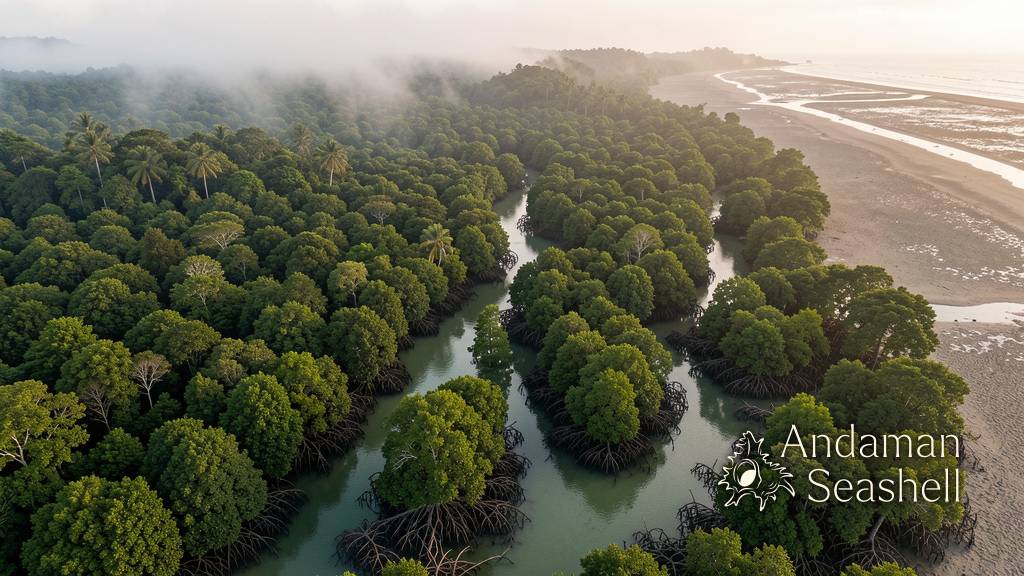
In June 2026, a landmark study published in the journal Science confirmed what local communities in Phang Nga had been seeing for years: mangrove forests worldwide are no longer in decline. After analysing four decades of satellite data, the research team — led by Dr Zhen Zhang of Tulane University, with collaborators at the University of Cambridge — found that gains have outpaced losses over the past sixteen years. The net decline over the entire 40-year period? Just one percent. [ref:1]
What the Satellites Saw
The study, published on 10 June 2026, used satellite imagery spanning from the 1980s to 2023 to track every mangrove forest on Earth. What it found overturned decades of pessimism.
Between the 1980s and 2010, roughly 2,900 square kilometres of mangrove forest were lost globally — an area larger than Luxembourg. But over the last 16 years, natural regeneration and active restoration have reversed that trend. Mangroves have recolonised abandoned aquaculture ponds. They have expanded into newly formed mudflats in river deltas. And critically, the forests that survived have been getting denser and healthier. [ref:2]
Professor Daniel Friess, a co-author and director of The Mangrove Lab at Tulane, put it simply: "What we're seeing now is a real shift. Mangroves are now showing a net increase globally, and the rate of degradation is slowing." [ref:2]
Why Phang Nga Bay Matters
Here on the Andaman coast, this global story has a local face. Phang Nga Bay shelters some of Thailand's largest and most intact mangrove forests — an emerald labyrinth of Rhizophora mucronata, the red mangrove with its distinctive arching stilt roots, and Avicennia alba, the grey mangrove whose pencil-like pneumatophores poke up through the mud like thousands of tiny breathing tubes.
These forests are not decorative. A single square kilometre of healthy mangrove can support hundreds of fish species, dozens of crab varieties, and nesting sites for kingfishers, egrets, and sea eagles. Juvenile fish shelter among the roots before venturing to the open sea — which means the mangroves are, in effect, the nursery for the Andaman Sea's entire fishery.
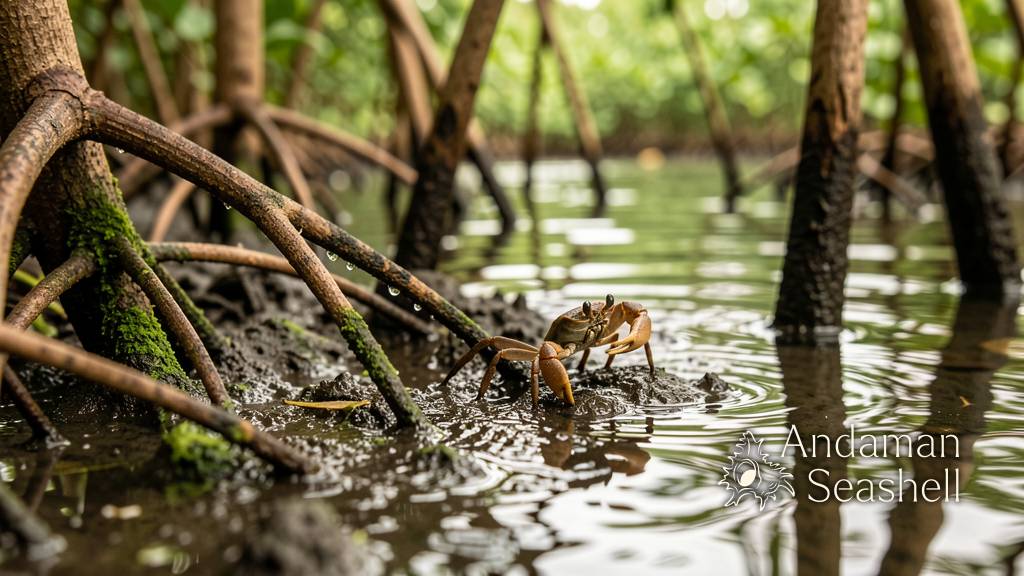
They also protect the coast. Every kilometre of mangrove forest reduces storm wave height significantly. When the 2004 Indian Ocean tsunami struck, coastlines fronted by thick mangrove forest suffered measurably less damage than those where the trees had been cleared.
A Community Effort
The global recovery is driven partly by nature's own resilience and partly by people who decided to act. Here on the Andaman coast, that effort is visible everywhere.
In Ban Sam Chong, a fishing community on the eastern shore of Phang Nga Bay, residents have been running a crab bank programme — protecting female crabs carrying eggs, and releasing hatchlings back into the mangrove channels where they have the best chance of survival. The GEC (Global Environment Centre) has been working with Andaman coast communities since 2025 on mangrove restoration projects, planting native species and monitoring regrowth. [ref:3]
This is the kind of ground-level work that the satellites see from above: each sapling planted, each pond restored, each mudflat reforested adds up to the green pixels that Dr Zhang's team counted from orbit.
What Happens Next
The study is careful to note that the recovery is fragile. Newly established forests are often young and lack the full ecological function of mature stands. Climate extremes — like the 2021 freeze that devastated mangroves in Texas — can reverse years of progress overnight. And deforestation continues in some parts of the world.
But the headline is genuinely good news, and it deserves to be celebrated. As Dr Zhang noted: "As countries invest in nature-based solutions to climate change, mangroves stand out as a rare example of an ecosystem where global trends are beginning to move in the right direction." [ref:2]
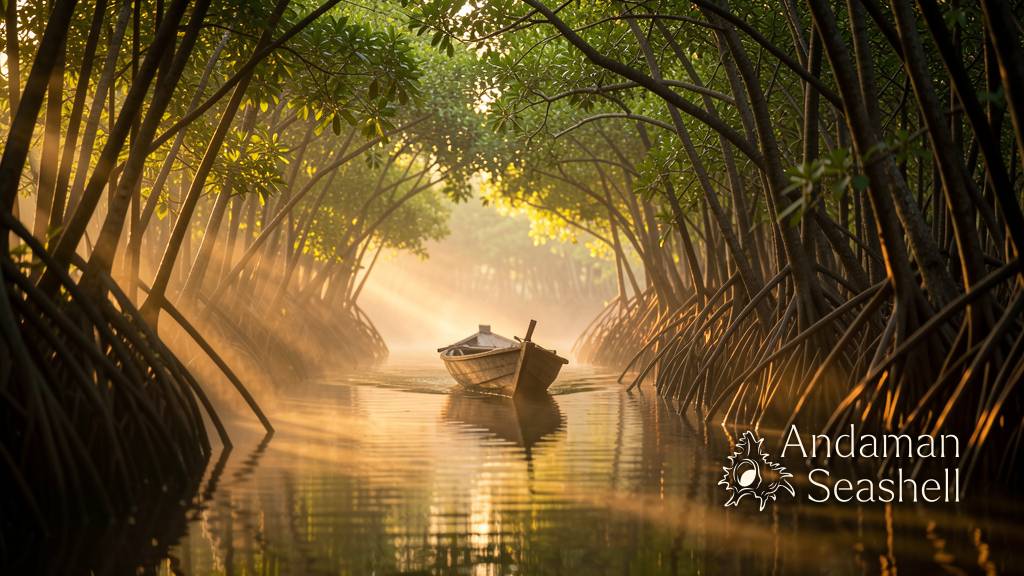
Next time you take a longtail boat through the mangrove channels of Phang Nga Bay, look at the roots reaching into the water, the crabs scuttling across the mud, the kingfisher perched on a low branch. You are looking at a forest that the world nearly lost — and that communities, scientists, and nature itself brought back. That is not just a beautiful sight. It is proof that when we give ecosystems a chance, they have an astonishing capacity to heal.
References
- Zhang, Z. et al. (2026). 'Unexpected expansion and regrowth in Earth's mangrove forests.' Science.
- University of Cambridge Conservation Research Institute (2026). 'Global mangrove forests recovering, offering hopeful sign for climate and coastal resilience.'
- Responsible Seafood Advocate (2026). 'After decades of decline, mangrove forests are recovering worldwide.'


No comments yet. Be the first to share a thought.