



A star does not need to be young to put on a dazzling show. In NASA and ESA’s newly released Webb view of NGC 2392, the Lion Nebula looks almost playful: a bright face, a soft mane, and a glow that seems to hover in the dark like it knows we are staring back.[ref:1][ref:2]
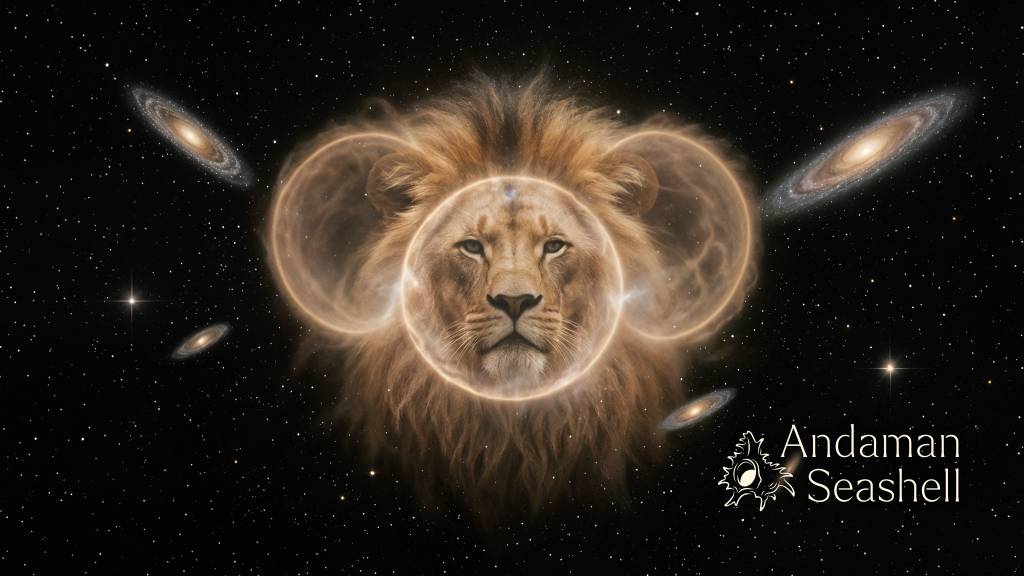
The timing makes it even sweeter. NASA published the new Lion Nebula feature on 2026-08-10, and STScI released the matching press note the same day, turning a well-known object into a fresh August sky story for curious readers everywhere.[ref:1][ref:2] This is NGC 2392, a planetary nebula in Gemini about 5,000 light-years from Earth, and it is a reminder that the universe does some of its most beautiful design work near the end of a star’s life.[ref:3]
Why this “lion” looks so vivid
A planetary nebula has nothing to do with planets. It forms when a Sun-like star reaches its later years and throws its outer material into space. NASA’s Caldwell 39 guide says NGC 2392 contains the glowing remains of a dying Sun-like star, and the nebula began forming about 10,000 years ago.[ref:3] That is ancient on a human scale, but brief in astronomy.
Webb’s new image is special because it combines data from two instruments: NIRCam, which works in near-infrared, and MIRI, which works in mid-infrared.[ref:1] Together they make the nebula’s structure easier to read. The central stellar remnant lights up a face-shaped bubble of ionized gas, while a broader ring of dust and gas gives the object its mane-like outline.[ref:1][ref:4]
The result is not just pretty. It is informative. NASA notes that the mid-infrared view highlights varying dust structures: some dust is being destroyed by radiation from the dying central star, while some filaments survive and trail outward like tiny comet tails.[ref:4] In other words, the picture is showing a tug-of-war between harsh starlight and stubborn dust.
A short, bright chapter in stellar life
One of my favorite details is how temporary this shape really is. STScI says the Lion Nebula took several thousand years to build and will eventually disperse in about 10,000 years.[ref:2] That makes this famous face a brief sculpture in cosmic terms — a glowing in-between moment rather than a permanent monument.
Hubble already photographed NGC 2392 in 2000, revealing the lion-face target in visible light and the hazy, comet-shaped objects around its mane.[ref:1] Webb now gives a sharper infrared view, so astronomers can trace the gas and dust with more clarity.[ref:1][ref:2] It is like seeing the same performance from a better seat: the main character is familiar, but the textures suddenly become richer.
The nebula also carries a nice layer of skywatching history. NASA’s Caldwell 39 page notes that William Herschel discovered NGC 2392 in 1787.[ref:3] More than two centuries later, it is still rewarding new instruments with new details. That kind of long scientific friendship is part of the charm of astronomy: the object stays in the sky, but our eyes keep improving.
What astronomers are learning from it
Planetary nebulae help astronomers study what happens when stars similar to our Sun shed material back into space. The gas and dust do not vanish; they become part of the galaxy’s ongoing recycling system. The Lion Nebula is especially useful because its shells, dust arcs, and bright center are so clearly structured in current imagery.[ref:1][ref:4]
Older X-ray work from Chandra added another intriguing clue. Researchers reported unusually high X-ray emission from NGC 2392, suggesting there may be an unseen companion near the central star.[ref:5] That means the nebula may be not only beautiful, but also more complicated than a single-star farewell.
For readers who love numbers, here are the headline facts to keep: Gemini; about 5,000 light-years away; first spotted in 1787; nebula-building underway for roughly 10,000 years; and a fresh Webb release on 2026-08-10 using NIRCam and MIRI.[ref:1][ref:3][ref:4] That is a lot of story packed into one glowing face in space.
A friendly way to look at stellar change
What I love most is the mood of this object. Space stories sometimes feel distant because the scale is so huge, but the Lion Nebula feels surprisingly welcoming. It gives us shape, color, pattern, and a timeline we can hold onto. A dying star becomes not a gloomy ending, but a generous act of release — light, dust, structure, and future material drifting back into the galaxy.[ref:1][ref:2]
If you need one joyful science image this week, this is a good one to keep. The Lion Nebula shows that even a short-lived cosmic moment can be full of character, and that better tools do more than sharpen pictures — they deepen wonder.


No comments yet. Be the first to share a thought.