



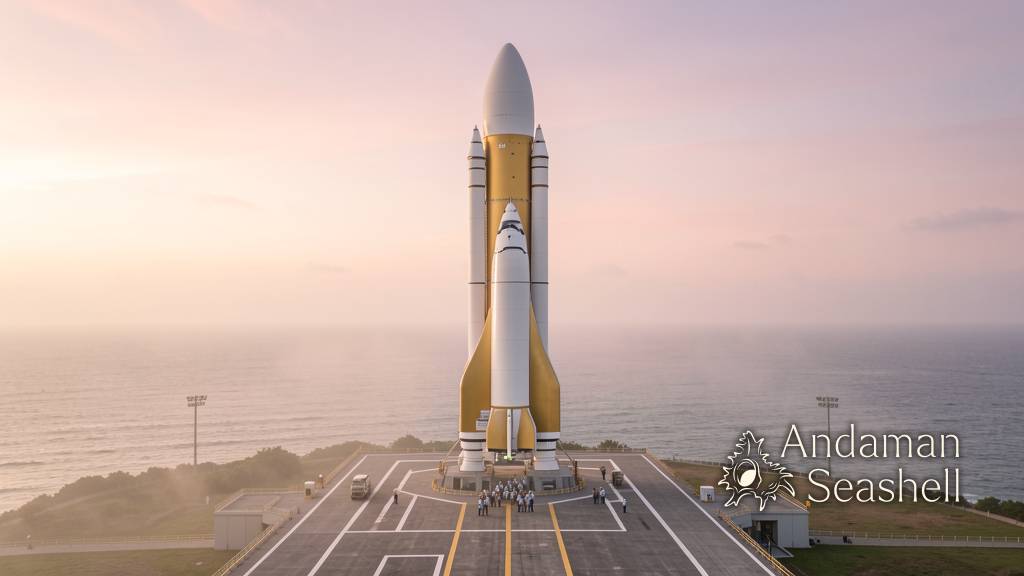
On March 31, 2026, a spacecraft arrived at a launch pad on Tanegashima, a small island in southern Japan. It had no famous name yet in the public imagination — just the letters MMX — but it carried an audacious promise: to travel to Mars, land on its largest moon, and bring a piece of it home. If it succeeds, humanity will hold, for the first time ever, a fragment of another planet's moon [ref:1].
The moons in question are Phobos and Deimos, and they are among the strangest objects in our solar system. Phobos measures just 22.2 kilometres across — roughly the distance from Khao Lak to Phuket Town. Deimos is even smaller, at 12.6 kilometres [ref:3]. Both are lumpy, dark, and potato-shaped, nothing like our own elegant Moon. If you stood on Phobos and looked up, Mars would fill nearly half the sky — a view no human eyes have ever seen.
A Mystery Half a Century Old
Here is the puzzle that has kept planetary scientists awake since the 1970s: nobody knows where these moons came from [ref:4].
There are two leading theories, and they tell very different stories about the early solar system. The first says Phobos and Deimos are captured asteroids — wandering rocks from the belt between Mars and Jupiter that drifted too close and got trapped by Martian gravity. The second theory is more dramatic: a giant object smashed into young Mars billions of years ago, blasting debris into orbit that eventually clumped together to form the two moons [ref:3].
Both ideas explain some observations but not others. The moons' neat, circular orbits hint at impact debris. Their dark, carbon-rich surfaces look like asteroids. For fifty years, telescopes and orbiters have looked — and could not decide.
Enter MMX: The Detective Arrives
MMX — short for Martian Moons eXploration — is JAXA's answer. The spacecraft will launch from Tanegashima Space Center in late 2026, arrive at Mars in 2027, and spend months observing both Phobos and Deimos from orbit [ref:2]. But the real magic happens when it lands.
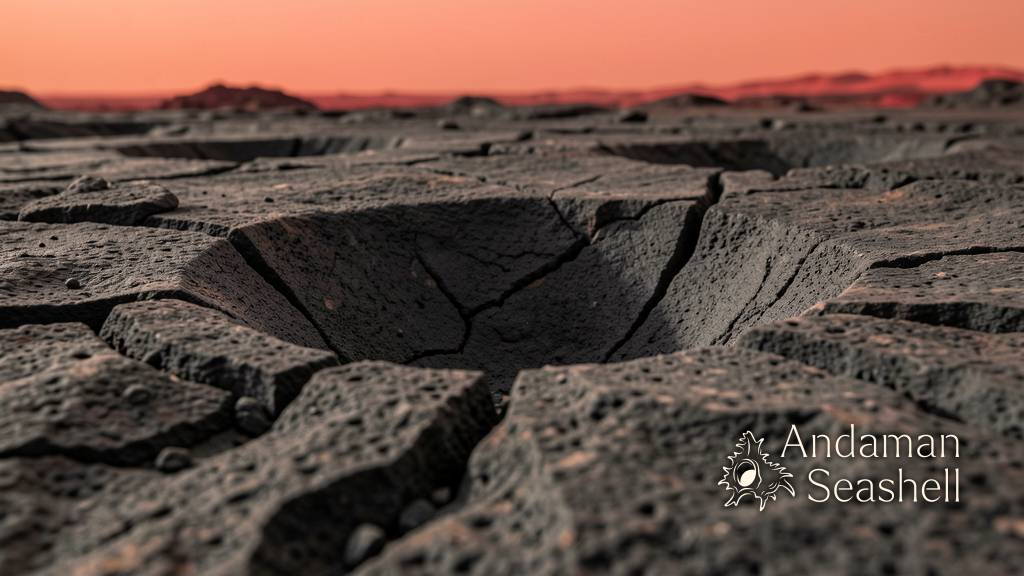
MMX will touch down on the surface of Phobos, collect at least 10 grams of surface material, and carry it back to Earth — a round trip of roughly five years [ref:5]. Riding along is IDEFIX, a small rover built jointly by the French and German space agencies (CNES and DLR), which will roll across the surface and examine the terrain up close [ref:2].
Why does a pinch of rock matter so much? Because the chemical fingerprint of Phobos will settle the debate. If the sample matches a specific family of asteroids, the capture theory wins. If it resembles Martian crust material, the giant impact theory is confirmed. Either answer rewrites what we know about the early solar system [ref:4].
From Phobos to Phang Nga
You do not need a spacecraft to feel connected to this story. Mars is one of the brightest objects in our night sky, and from the dark beaches of the Andaman coast — away from Phuket's city lights — it appears as a steady, warm amber point of light that does not twinkle like the stars around it.
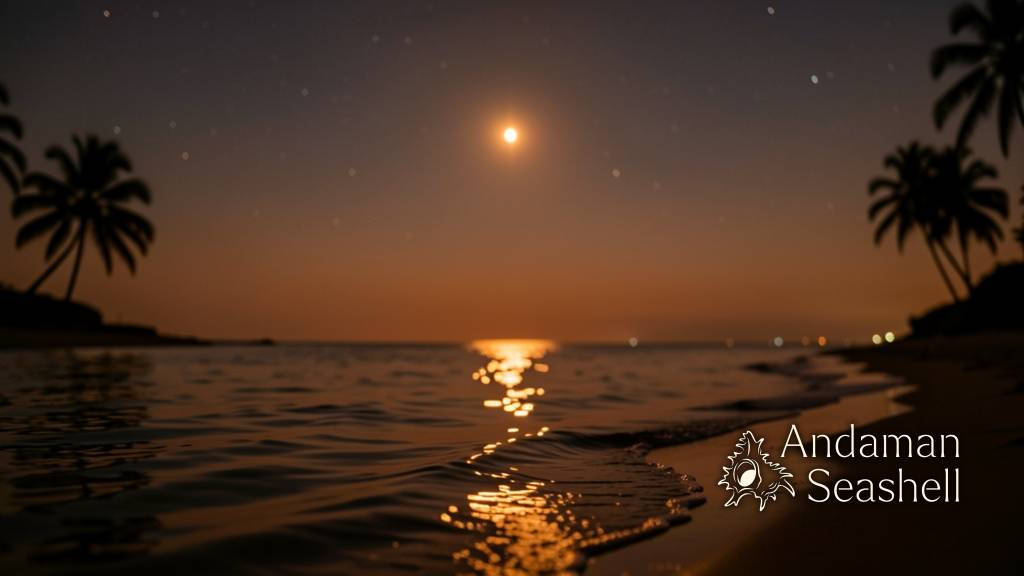
Try this: on a clear evening, face west after sunset and look for the brightest reddish-orange dot low on the horizon. That is Mars. Every photon of light reaching your eye has travelled from the Sun to that planet and back to you — about 12 minutes in transit. And somewhere in your line of sight, invisible to the naked eye, two tiny moons are orbiting that amber dot, waiting to tell us their story [ref:1].
When MMX brings its sample home, we will finally know what those moons are made of — and perhaps where they came from. Until then, the mystery is yours to wonder about, right there above the Andaman Sea.


No comments yet. Be the first to share a thought.