



A beam from the submersible Fendouzhe swept across the seafloor in the southeastern Indian Ocean and picked out something extraordinary: whale bones, then more bones, then an entire deep-ocean landscape shaped by them. What looked at first like a single dramatic find turned into a 1,200-kilometre story about life, time, and the strange generosity of the deep sea. [ref:1]
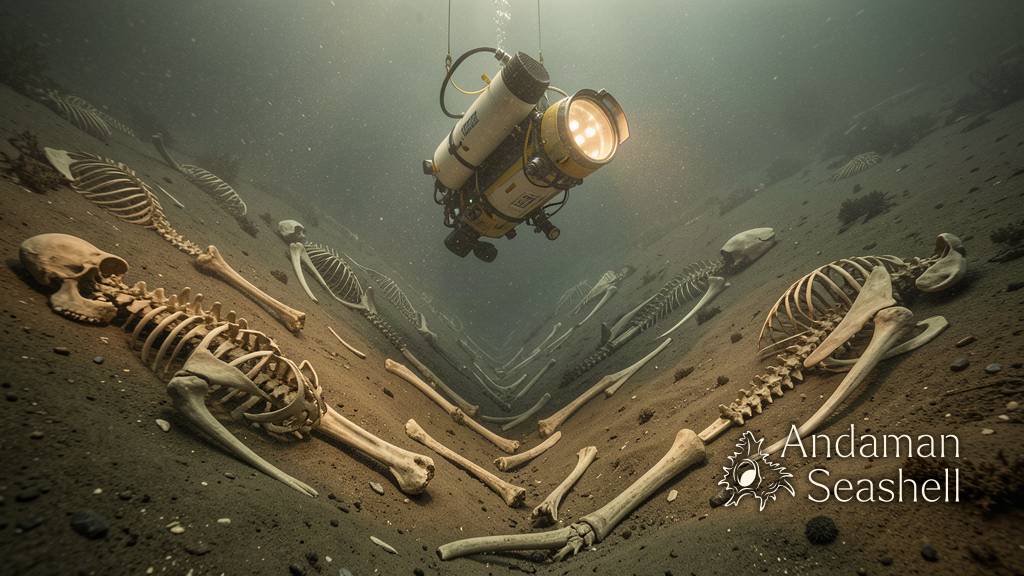
Researchers now say the Diamantina Zone hosts the world’s deepest and largest known aggregation of whale fossils and active whale-fall ecosystems. Across 32 dives in 2023, the team recorded five active whale falls and 476 fossil whale sites at depths from 4,616 to 7,001 metres — far deeper than the previously known active record of 4,204 metres. [ref:1][ref:2]
What the team actually found
The survey took place aboard the research vessel Tansuoyihao, with the human-occupied vehicle Fendouzhe working along the trench axis from February into March 2023. The trench-floor survey stretched for more than 1,200 kilometres, and the deepest measured point in the area, Dordrecht Deep, reached 7,079 metres. [ref:1]
That scale matters because whale falls are normally documented as scattered, hard-to-find events. Here, the remains were concentrated. One part of the study estimated densities reaching 759.5 whale individuals per square kilometre, and the authors say the wider zone may contain more than 10 million whale carcasses when the sampled area is extrapolated across the full necropolis. [ref:2]
The active sites were just as fascinating as the fossil field. At one site, three beaked-whale vertebrae lying 6,789 metres down formed the deepest active whale-fall ecosystem yet recorded. Another site held a five-metre Antarctic minke whale at 5,610 metres depth, identified through bone shape and genetic analysis. [ref:2][ref:4]
Why the bones became a neighbourhood
A whale fall is not just a skeleton on the seabed. It becomes a food source, a habitat, and eventually a kind of miniature city for specialist life. In the Diamantina Zone, researchers found communities dominated by brittle stars, bone-boring worms from the genus Osedax, and chemosymbiotic bivalves that live with microbes able to use chemicals released as the bones break down. [ref:1][ref:2]
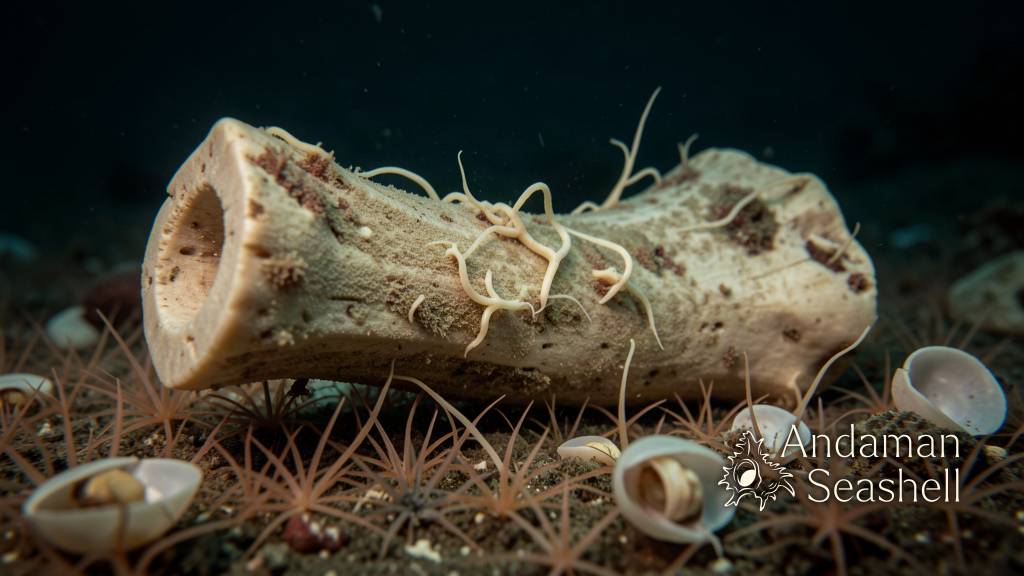
One especially lovely detail is that the team recorded Xyloplax — a sea daisy usually associated with wood falls and hydrothermal vents — on a whale fall for the first time, and at the deepest known occurrence of the genus. They also noted three brittle-star species that appeared to live exclusively on whale bones in this setting. That suggests these bones are not accidental resting places; they are a real substrate with their own specialists. [ref:2]
Why so many whales ended up here
The researchers propose a three-part explanation. First, the Diamantina Zone is a good foraging ground for deep-diving beaked whales because it offers extreme depths, V-shaped topography, and abundant squid and fish. Second, the trench shape may funnel sinking carcasses toward the seafloor in the same corridor. Third, sedimentation in the nearby region is exceptionally slow — roughly 0.05 to 0.55 centimetres per thousand years — so bones can remain exposed for extraordinarily long periods instead of disappearing quickly under mud. [ref:1][ref:3]
That helps explain why the fossil archive reaches so far back. Strontium isotope dating showed whale falls have been occurring here for at least 5.3 million years, since the Early Pliocene. Among the recovered fossils were both living and extinct deep-diving beaked whales, and the team described a new extinct species, Pterocetus diamantinae. [ref:1][ref:2]
A deep-sea archive, not just a curiosity
This discovery is exciting because it connects ecology and history in one place. The bones appear to store an estimated 6.7 million tons of carbon, according to the EurekAlert summary, while also preserving an evolutionary record of whales and a modern map of life that thrives on organic islands in the dark. The authors even suggest the zone could represent a “whale-fall chemosynthetic life corridor” across the southeastern Indian Ocean. [ref:2]
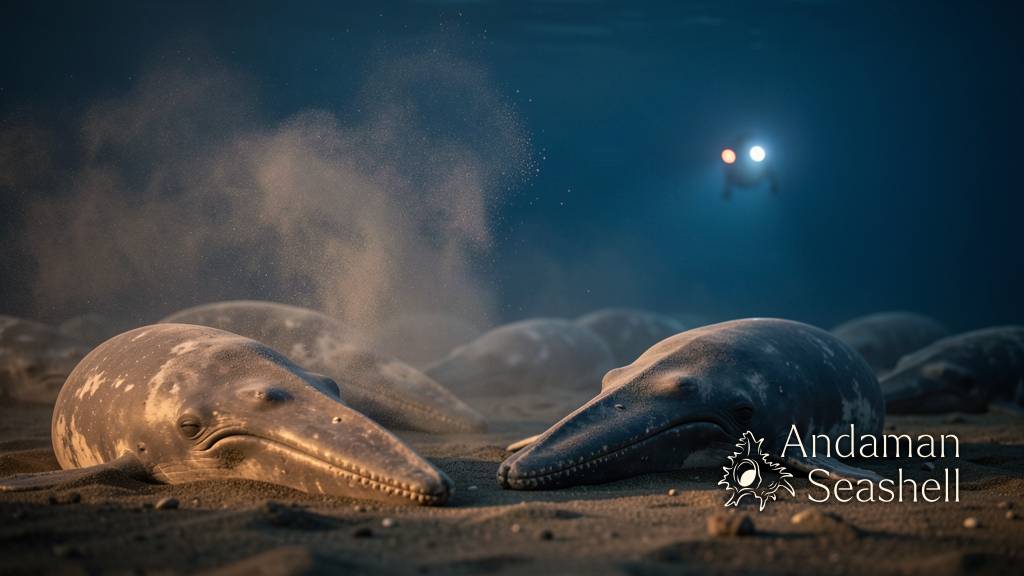
For readers who love the ocean, that idea is hard to resist: nearly seven kilometres down, the deep sea is not empty at all. It is patient, crowded in surprising places, and still capable of opening a completely new chapter when one sweep of light lands on the right piece of bone.


No comments yet. Be the first to share a thought.