



A young green turtle reached the wet sand first, lifted one flipper like a tiny paddle, and slid toward the Andaman Sea while everyone behind it stayed still enough to let the moment belong to the turtle.
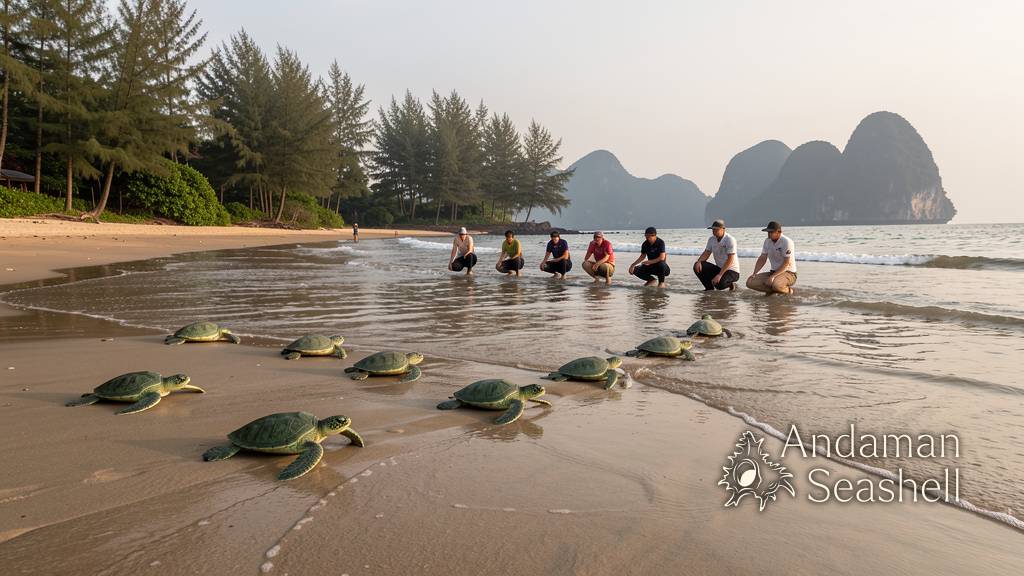
Authorities in southern Thailand recently released fourteen green sea turtles into the Andaman Sea, a simple shoreline scene with a big teaching value: when a turtle goes home, it carries a whole coastal story with it [ref:1].
Why a green turtle is more than a beautiful shell
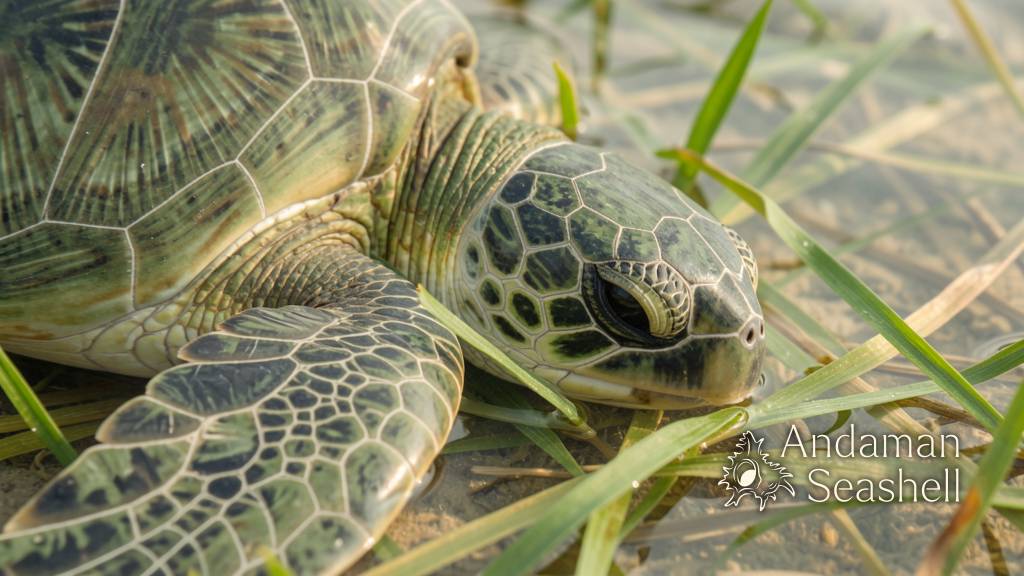
The green turtle, Chelonia mydas, is one of the great ocean travellers of Southeast Asia. A regional sea turtle overview notes that six of the planet’s seven sea turtle species are found along Southeast Asian coasts and nearby waters, with green turtles among the most prevalent species in the region [ref:2]. That means the Andaman coast sits inside a living classroom where migration, nesting beaches, reef edges, seagrass beds, and human care all meet.
Green turtles are especially interesting because adults feed mainly on seagrass and algae. Think of them as calm marine gardeners. By grazing, they help keep seagrass beds productive, and those meadows shelter juvenile fish, small crabs, mollusks, and the tiny lives that make shallow seas feel wonderfully busy. A turtle release is not only a sweet photograph; it is a reminder that coastal ecosystems are connected from the beach grain under your toes to the green blades moving under clear water.
What a careful release teaches visitors
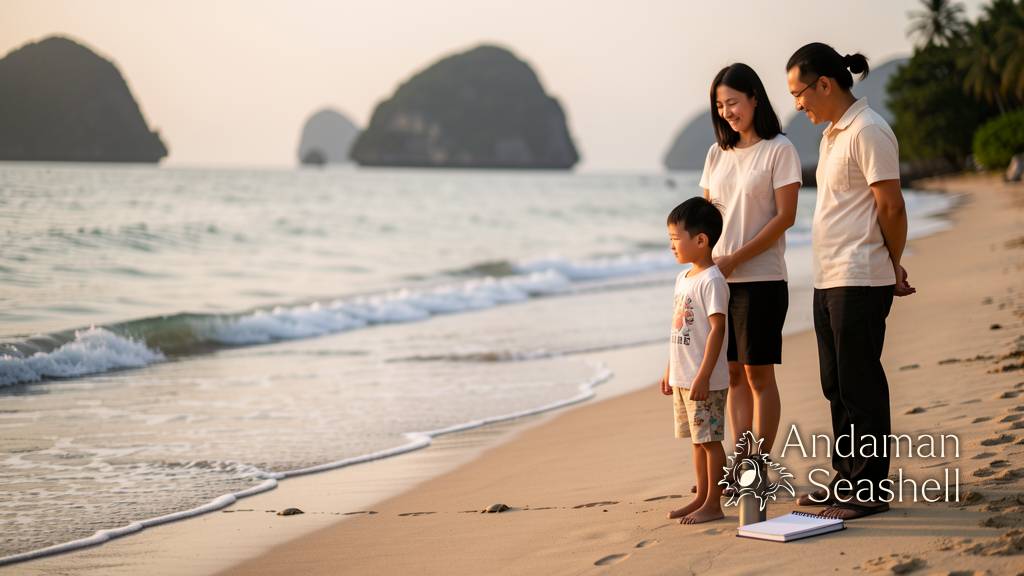
The best part of a turtle release is the quiet. People often imagine conservation as dramatic, but on a good beach the most respectful action is restraint: step back, keep the path clear, avoid flash, and let the animal choose the sea. That patience is easy to understand, even for children. The turtle does not need applause. It needs space, clean water, and beaches where the rhythm of nature can continue.
The international IOSEA Marine Turtle Memorandum of Understanding, coordinated under the Convention on Migratory Species, describes a shared regional aim to maintain and recover marine turtle populations through cooperation among governments and organisations [ref:3]. That is the practical science behind a soft-looking scene. Marine turtles move across borders; their care has to move across borders too.
For Andaman visitors, this creates a beautiful travel habit: enjoy the shore as a guest in someone else’s nursery. Choose reef-safe behaviour, keep plastic out of the sand, leave shells and living creatures where they are, and follow local marine-park guidance. If you see a turtle, give it room and let trained staff manage the moment. The souvenir you take home can be a story, a photo from a respectful distance, or a handcrafted keepsake inspired by the sea rather than taken from a living habitat.
The Andaman connection: care you can feel
At Andaman Seashell, shells are admired as maps of growth — spirals, ridges, and pearly layers made slowly by living animals. A turtle shell tells a related story, though it belongs to a reptile rather than a mollusk: pattern, protection, movement, and time. When visitors learn to look closely, the coast becomes richer. A piece of seagrass is no longer “just grass.” Wet sand is no longer “just beach.” It is a passageway.
That is why fourteen small turtles can brighten a whole coastline. They make marine science feel close enough to kneel beside, simple enough to explain to a child, and generous enough to carry into everyday choices.
Next time the Andaman water glows green-blue under the afternoon sun, imagine one turtle moving somewhere beyond the shallows, reading the sea with senses older than any map. The lesson is gentle: when we give the ocean room, it gives wonder back.


No comments yet. Be the first to share a thought.