



A summer evening in Spain is about to do something unforgettable: just before sunset on 12 August 2026, the Sun will slip behind the Moon and the sky will briefly trade bright gold for a dark, glowing corona. It is the kind of moment that makes whole hillsides go quiet at once — not because anything is wrong, but because the universe has perfect timing.[ref:1][ref:4]
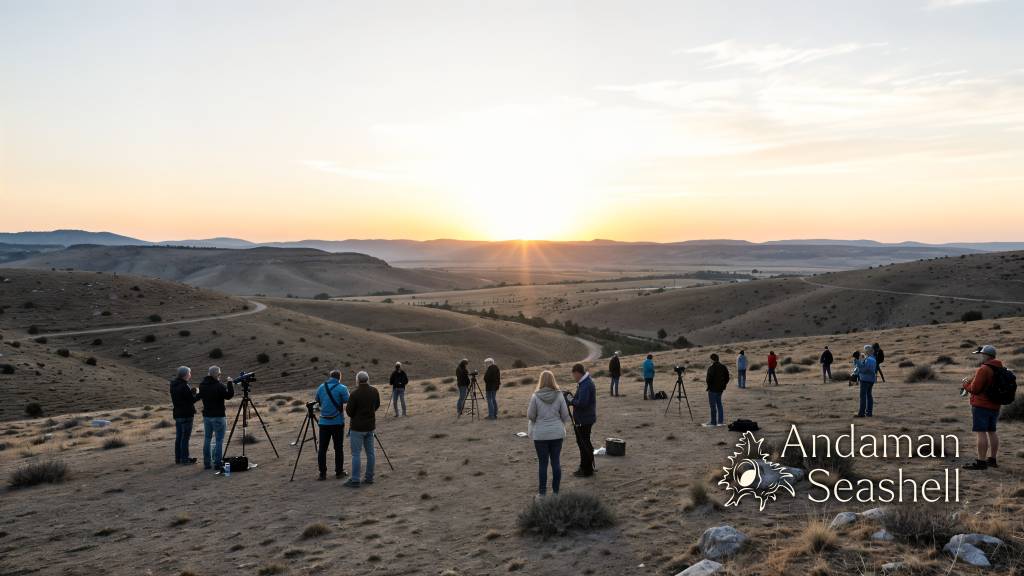
This eclipse is special because it is both precise and surprisingly social. NASA’s eclipse data puts the greatest eclipse at 17:46 UT, with a maximum central duration of 2 minutes 18 seconds and a path width of 294 kilometres.[ref:1] That narrow band of totality will cross northern Russia, Greenland, Iceland, northern Spain, and a small corner of Portugal, while a much broader partial eclipse will be visible across much of Europe, northwestern Africa, and parts of North America.[ref:1][ref:5]
Where the darkness will land
If you are lucky enough to stand in the path of totality, the change will be fast and theatrical. NASA notes that most places in the path will get less than two minutes of full totality, though areas near the center line in Greenland, Russia, and the North Atlantic stretch slightly longer.[ref:5] PBS, citing eclipse mapmakers and scientists, adds that the Moon’s umbra will race along a 5,130-mile (8,260-kilometre) track in about 1½ hours, with maximum totality occurring off Iceland’s west coast.[ref:4]
Spain gets an especially beautiful version of the show. ESA says this will be the first total solar eclipse visible from mainland Spain since 1905, and the first in a trio of Spanish eclipses between 2026 and 2028.[ref:3] Because the eclipse crosses Spain late in the day, many viewers there will see a rare sunset eclipse feeling — the Sun low, the air warm, and daylight dimming in a way that feels almost staged for a film ending.[ref:3][ref:5]
Even people outside the total path still have a good reason to step outdoors. In the UK and Ireland, the Royal Observatory Greenwich says around 90% to 96% of the Sun will be covered, with London reaching maximum eclipse at about 7:13 p.m. BST.[ref:6] That makes this one of those rare astronomy days where “partial” still feels wonderfully dramatic.
Science gets front-row seats too
A total solar eclipse is beautiful for the rest of us, but for scientists it is also a very short research window. NASA is sending a WB-57 high-altitude jet with a four-camera instrument package to chase the Moon’s shadow at 460 miles per hour (740 kph).[ref:2] Flying at 50,000 feet, the aircraft can stay above clouds and extend its view of the corona to nearly three minutes, longer than anyone standing on the ground can manage.[ref:2]
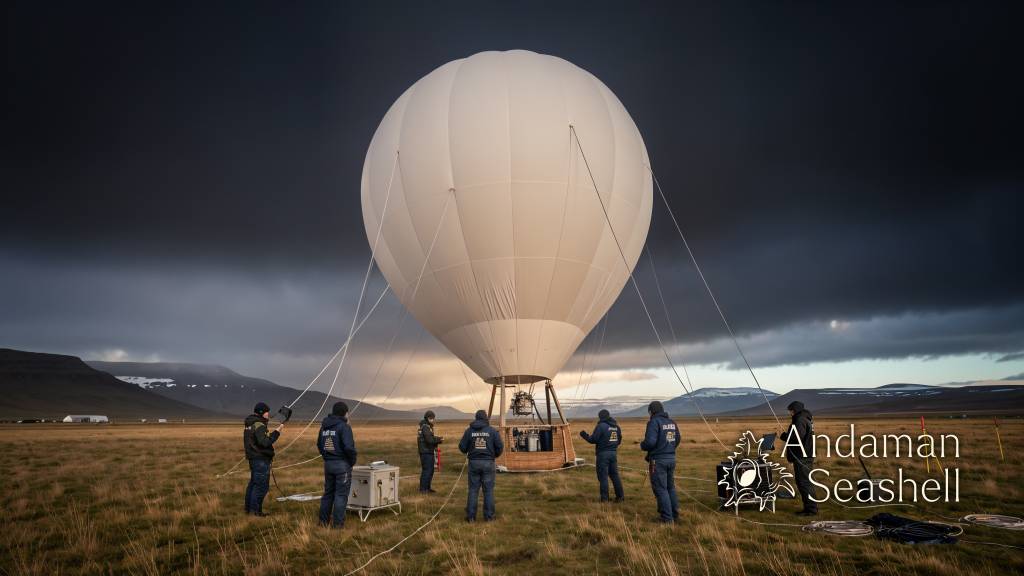
Those cameras will capture at least 20 images per second in several wavelengths, helping researchers study solar prominences, the million-degree corona, and how solar material flows outward as the solar wind.[ref:2] At the same time, NASA-supported balloon teams in Iceland plan to launch 80 balloons from 18 hours before the eclipse until 8 hours after to study changes in the boundary layer of Earth’s atmosphere.[ref:2] In Spain, three balloon teams will send up six balloons carrying 360-degree cameras and ozone instruments.[ref:2]
ESA is also turning the eclipse into a public science celebration. Its live programme from the Observatorio Astrofísico de Javalambre in Teruel will feature expert explainers, telescope views, and coverage of 1 minute 21 seconds of totality at 20:31 CEST.[ref:3]
How to watch without missing the joy
The most important eclipse accessory is not a telescope. It is patience — and proper eye protection. NASA and ESA both give the same core rule: whenever any part of the Sun is still visible, viewers need certified eclipse glasses or a safe solar filter.[ref:3][ref:5] Regular sunglasses are not enough, and optics like binoculars or cameras need a solar filter mounted on the front.[ref:5]
If you are nowhere near Spain or Iceland, there is still a front-row seat waiting online. NASA’s livestream begins at 1:15 p.m. EDT (17:15 UTC),[ref:5] while ESA’s live home broadcast runs from 19:30 to 20:45 CEST with commentary from inside the totality zone.[ref:3]
And August has one more gift ready for the same night. NASA’s monthly skywatching guide notes that the Perseid meteor shower peaks on 12–13 August under a New Moon, giving many skywatchers a dark-sky bonus after the eclipse closes.[ref:7] One celestial performance turns naturally into another.

That is what makes this event feel bigger than a line on an astronomy calendar. For a couple of minutes, the Moon, the Sun, research aircraft, school science teams, livestream hosts, and millions of ordinary people all share the same timing. A good eclipse always reminds us that wonder can be exact.
References
- NASA Eclipse Data — Eclipses During 2026
- NASA Science Soars During August Total Solar Eclipse
- ESA — Join ESA for a total solar eclipse on 12 August 2026
- PBS / AP — Total solar eclipse will sweep over Spain, Iceland and Greenland in August
- NASA Science — Total Solar Eclipse on August 12, 2026
- Royal Observatory Greenwich — 12 August 2026 partial solar eclipse
- NASA — What’s Up: August 2026 Skywatching Tips


No comments yet. Be the first to share a thought.