



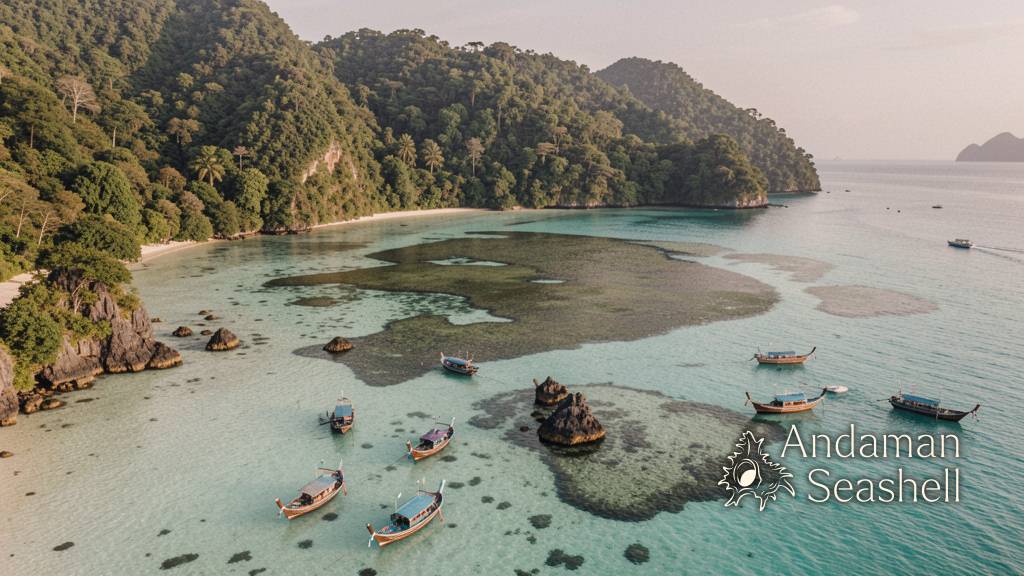
In the shallows off Tangkhen Bay, on Phuket's quieter eastern shore, a dugong surfaces to breathe. Its rounded back breaks the water for three seconds, maybe four, then slips below again to resume grazing. Marine researchers from the Department of Marine and Coastal Resources (DMCR) have been tracking this individual — and at least two others — since January 2025, when an international survey team confirmed what local fisherfolk had suspected: the dugongs are moving north [ref:1].
Voting with their flippers
Dugongs (Dugong dugon) are obligate seagrass feeders. An adult consumes up to 30 kilograms of seagrass daily, cropping the leaves and exposing the sediment in distinctive feeding trails [ref:2]. Where seagrass disappears, so do they — or they die trying to stay.
In Trang Province, once Thailand's "Dugong Capital," seagrass beds around Koh Libong have declined by as much as 50 percent between 2020 and 2024. The causes are complex: marine heat stress, river-mouth dredging, agricultural runoff, and unusual tidal exposure all contributed. Dugong strandings spiked to 42 per year in 2023–2024 — more than double the 2019–2022 average — and 40 percent of necropsied animals showed signs of starvation [ref:1].
But 150 kilometres north, the story is different. A January 2025 fact-finding mission led by Helene Marsh (IUCN Sirenia Specialist Group) and Len McKenzie (Seagrass-Watch) assessed seagrass condition from Trang to Phuket. Their verdict: while Trang's meadows are in "severe dieback," seagrass in Krabi and Phang Nga–Phuket remains in "fair to good" condition. Dugongs are still present, some in good body condition, and breeding is occurring [ref:1].
Tangkhen Bay: a grazing hotspot
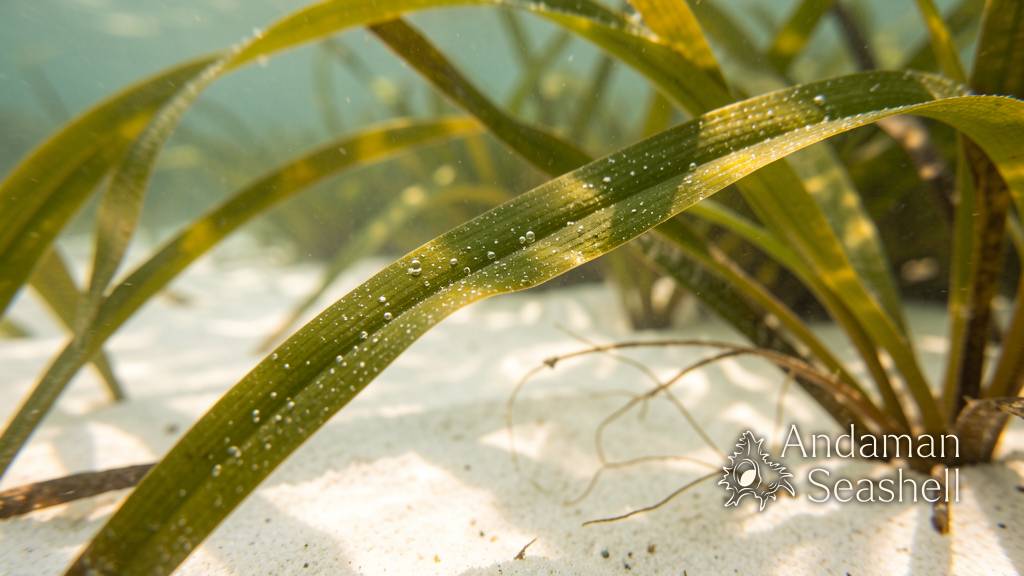
Tangkhen Bay, tucked behind Cape Panwa on Phuket's southeastern tip, has become one of the most closely monitored seagrass sites on the Andaman coast. Research by Prince of Songkhla University and DMCR has documented at least ten of Thailand's thirteen seagrass species here, including Halophila ovalis, the small-leafed species dugongs prefer [ref:3].
Unlike the more exposed meadows in Trang, Tangkhen Bay benefits from sheltered waters and relatively low boat traffic. That matters: boat propellers are a major threat in new migration areas, where vessels don't expect to encounter dugongs. Across Thailand's Andaman coast, boats and fishing nets account for roughly 25 percent of recorded dugong deaths [ref:2].
The bay's seagrass also stores carbon. Seagrass meadows are among the planet's most efficient blue carbon sinks, sequestering organic carbon in their root systems and the sediments below. Protecting what remains here isn't only about dugongs — it's about coastal resilience and climate mitigation.
800,000 square metres
In late 2025, World Animal Protection (WAP) launched a three-year seagrass restoration initiative targeting four key sites in Phuket and Phang Nga. The goal: restore up to 800,000 square metres of seagrass meadow — an area roughly the size of 110 football pitches [ref:2].
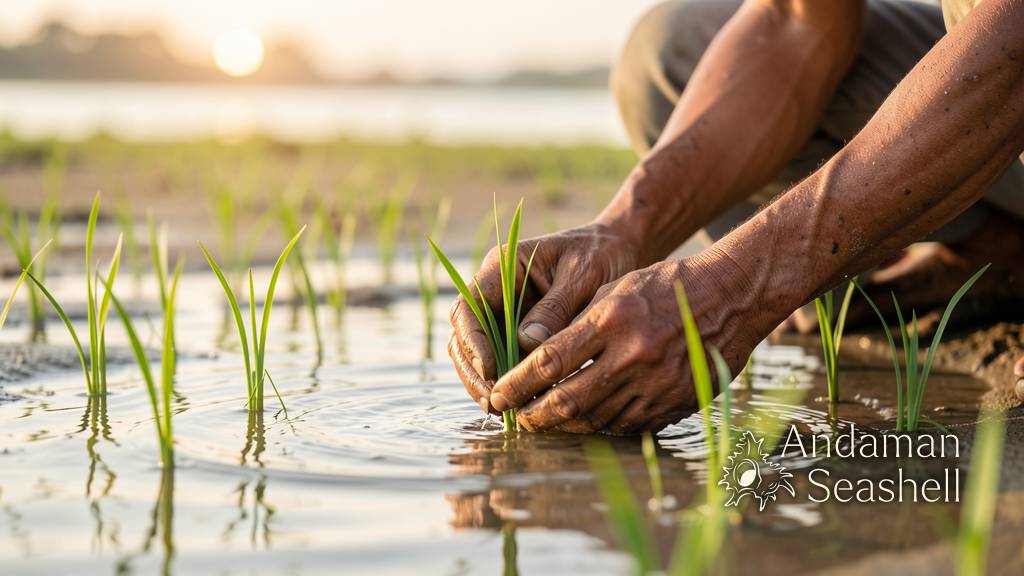
The project works on two fronts. Researchers from Phuket Rajabhat University and Rajamangala University of Technology are mapping dugong migration corridors and monitoring seagrass health with drone surveys. Meanwhile, local fisherfolk propagate seagrass on land before transplanting seedlings underwater — a technique that gives young plants a stronger start in turbid conditions.
It's painstaking work. Seagrass transplanting has a mixed track record globally; success depends on addressing the root causes of decline, not just replanting into degraded habitat. The Marsh-McKenzie report cautioned that full recovery could take five to ten years — and only if the stressors are controlled [ref:1].
Reason for hope
In April 2026, drone footage off Trang's coast captured something rare: two dugongs mating. Surveys the same month counted 33 individuals — a small number, but a recovery from the near-crash of early 2025, when counts dropped as low as ten [ref:3]. Several mother-calf pairs were observed.
The dugongs haven't abandoned the Andaman coast. They are moving, adapting, following the food. Whether they can find enough of it depends on what happens in places like Tangkhen Bay over the next decade.
For now, the bay's seagrass still sways in the current, and a dugong's back still breaks the surface to breathe.


No comments yet. Be the first to share a thought.