



A cone of ROV light sweeps across the Alaskan deep and suddenly the seafloor stops looking empty. Pale sponges stand upright like a miniature forest, corals branch out between them, and a place once known mostly as darkness starts to read like a living neighborhood. That shift in perspective is the real delight of a new NOAA-backed study: it turns hidden habitat into something we can describe, compare, and protect with much greater clarity [ref:1][ref:2].
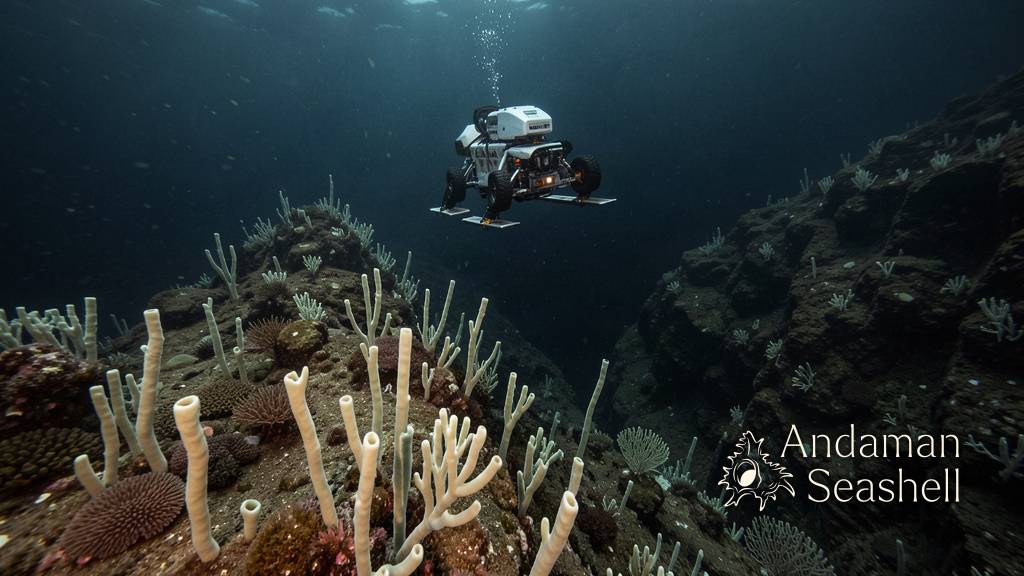
Using footage and data from NOAA Ocean Exploration’s 2023 Seascape Alaska 3 and 5 expeditions, researchers carried out a quantitative survey across 15 previously unvisited sites between 380 and 3,200 metres deep. From 75 hours of video, they logged 15,531 observations and identified 164 distinct morphotypes — 90 sponges in Porifera and 74 corals and related cnidarians in Cnidaria [ref:1][ref:3]. For a general reader, that means this was not a quick glimpse. It was a serious close look at how rich the deep North Pacific can be when someone finally stays long enough to count.
A bigger cast than expected
One of the happiest surprises in the paper is how much variety was packed into those dives. The team substantially extended known ranges for multiple taxa, recorded five sponge genera that were new to Alaska, and documented the northernmost Pacific record of the coral genus Umbellapathes [ref:3]. Just as striking, 63% of the coral and sponge types the researchers recorded appeared at only one dive site [ref:2]. In other words, each site was not just another version of the last one. Many were carrying their own local character.
That finding helps explain why the study feels so vivid. Deep-sea habitats are often discussed as if they were broad zones on a map, but this work shows a patchier and more expressive world. A slope here, a current there, a shift in oxygen or temperature, and the community can look very different. The result is less like one continuous carpet and more like a chain of distinct underwater rooms [ref:2][ref:3].
Where the densest gardens gathered
The authors identified eight sites that met quantitative criteria for high-density Vulnerable Marine Ecosystems, or VMEs [ref:1][ref:3]. At some of those sites, sponge densities climbed above 20 individuals per square metre, with the paper giving a peak value of 20.68 individuals per square metre [ref:2][ref:3]. For a habitat hundreds or even thousands of metres below the surface, that is an impressively crowded scene.
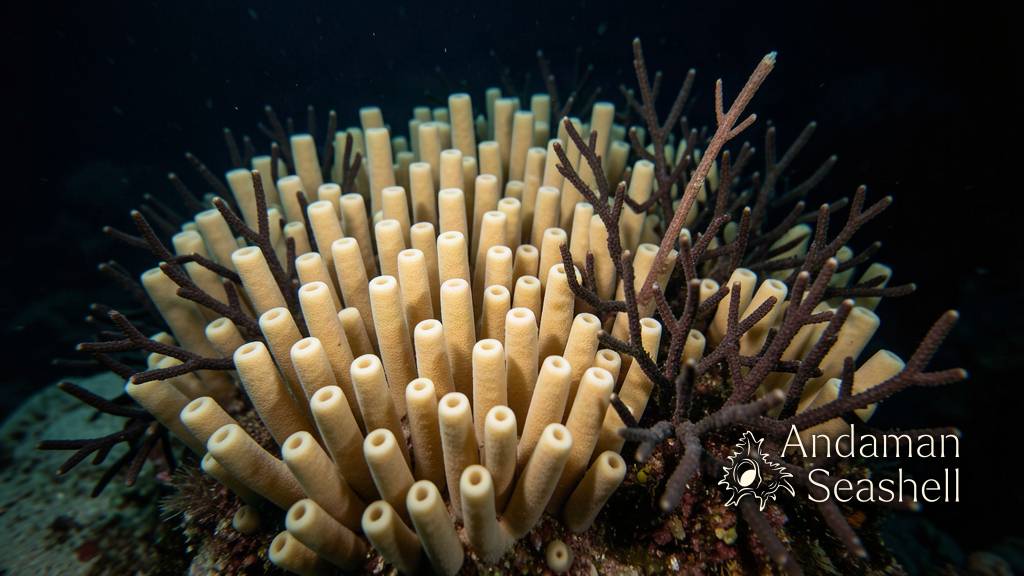
The study also found that density and diversity peaked around the margins of the oxygen minimum zone, roughly 500 to 1,800 metres deep, where dissolved oxygen was at or below 1.43 milligrams per litre [ref:3]. That detail matters because it shows these communities are not arranged randomly. They gather where the physical structure of the ocean gives them the right conditions to thrive.
Currents, not just depth, are drawing the lines
Many people would guess that depth is the main thing that organizes deep-sea life. This study found something more interesting. Community composition was most strongly associated with oceanographic setting — especially currents and water masses with similar temperature and oxygen properties — rather than simple depth or distance between sites [ref:2][ref:3]. Sites inside the same current system tended to host similar assemblages even when they sat at different depths [ref:2].
That makes the ocean feel wonderfully architectural. Water masses are invisible, but they can behave like walls, corridors, and climate zones for life on the seafloor. Once you see the study through that lens, the map becomes easier to imagine: currents are not just passing through these habitats; they are helping shape the neighborhoods themselves.
Why this brighter map matters
Sponges and corals do more than look beautiful on a monitor. They create habitat for other animals, including rockfish, king crabs, and cod [ref:1][ref:2]. Knowing where these communities cluster gives scientists and managers a better ecological baseline for future research, fisheries stewardship, and conservation planning [ref:1]. It also improves our ability to predict what researchers might find at similar sites elsewhere in the North Pacific [ref:2].
Another lovely part of the story is that the work grew from exploration footage that is publicly available through NOAA [ref:1][ref:2]. A dive that begins as discovery can keep generating value years later through fresh analysis, new range records, and better habitat models. That is a hopeful way to think about ocean science: every careful look can become a gift that keeps teaching us.
The deep sea still holds plenty of quiet mysteries, but this study shows how quickly it becomes more legible when observation, taxonomy, and ocean physics work together. Alaska’s coral and sponge gardens are no longer just remote wonders. They are becoming one of the clearest examples yet of how the ocean’s hidden structure helps life find its place.


No comments yet. Be the first to share a thought.