



A visitor lifts one white cowrie from a woven tray on the Andaman coast, and the shell answers with a small shine: smooth as porcelain, light as a button, shaped by the sea into something your fingers immediately understand.
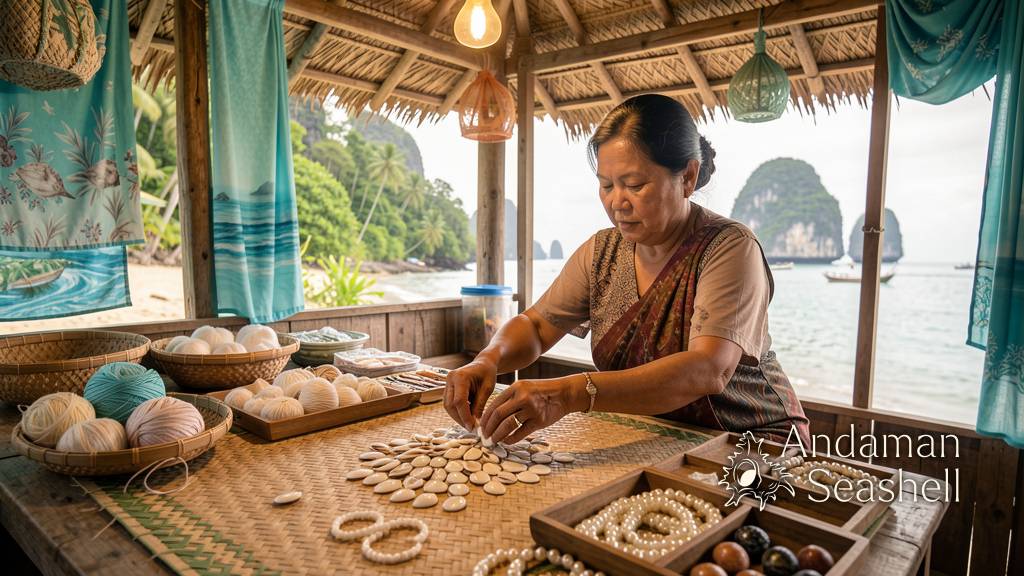
That is the first charm of cowries. Before they became earrings, bracelets, blessings, counting objects, or museum pieces, they were simply excellent little things to hold. The Smithsonian’s National Museum of American History describes small seashells as durable, portable, and difficult to imitate — exactly the qualities that made them useful as monetary objects in many places [ref:2].
A shell that feels designed for travel
Cowries do not look accidental. Their backs are glossy and rounded, while the narrow opening underneath has fine tooth-like ridges. This natural shape made them easy to string, carry, sort, and count. One well-known species is even commonly called the money shell because of its wide use in exchange [ref:2].
In a souvenir shop, that same design becomes emotional rather than financial. A cowrie can sit neatly on a cord, frame a pearl bead, or become the bright center of a handmade bracelet. It is small enough to travel home in a pocket, but distinctive enough to bring back the memory of sea air, afternoon light, and a friendly conversation at the counter.
From ocean object to world traveller
The National Museum of African American History and Culture notes that cowrie shells were traded for goods and services across Africa, Asia, Europe, and Oceania, and that they were used as money on Africa’s western coast as early as the 14th century [ref:1]. The same museum highlights why they worked so well: they were small, portable, durable, and almost impossible to counterfeit.
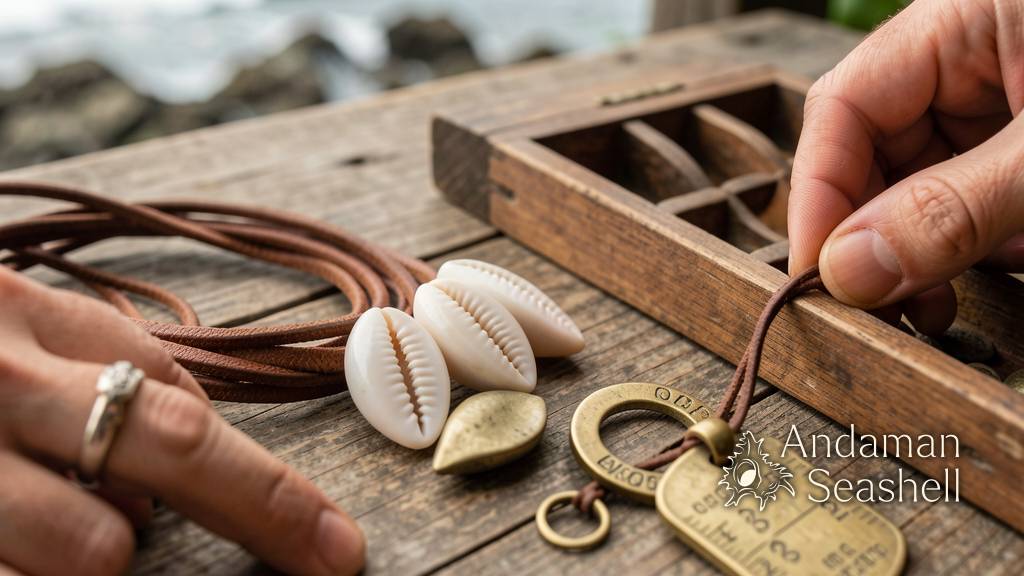
That practical beauty is easy to imagine from the Andaman coast. Maritime routes connected beaches, ports, islands, and inland markets long before modern travel made the world feel close. A shell gathered in one warm sea could become a counted object in another community, a decorative charm in a family bundle, or a sign of prosperity sewn into cloth.
The MoneyMuseum’s overview of cowries describes their unusually long life as a money object, with cowries used in Asia, Africa, and Oceania over thousands of years [ref:3]. The details vary across cultures, but the shared logic is wonderfully simple: when many people recognize the same small object as beautiful, durable, and countable, that object can carry meaning far beyond its shoreline.
Why cowries still make good keepsakes
Today, an Andaman cowrie souvenir does not need to “be money” to feel valuable. Its worth is quieter and warmer. It is the value of a well-chosen object, the pleasure of natural pattern, and the story you can tell when someone asks, “Where did you get that?”
For travellers, cowries also invite a kinder way to shop. Look for pieces that are thoughtfully made, cleanly finished, and clearly chosen for beauty rather than excess. A single shell on cotton cord can feel more personal than a crowded display. A bracelet that leaves space around the cowrie lets the shell’s own architecture do the talking.
For children, cowries are a perfect “tiny museum” object. Turn one over and ask: Why is the top shiny? Why is the opening narrow? How would you count them? Why might a shell be easier to trust than a painted token? Suddenly a souvenir becomes a conversation about design, trade, nature, and memory.
A small shell, a generous story
The loveliest thing about a cowrie is that it keeps both scales at once. Up close, it is a tactile treasure: cool, curved, bright. From far away, it is a reminder that the ocean has always connected people through objects, skills, routes, and shared ideas.
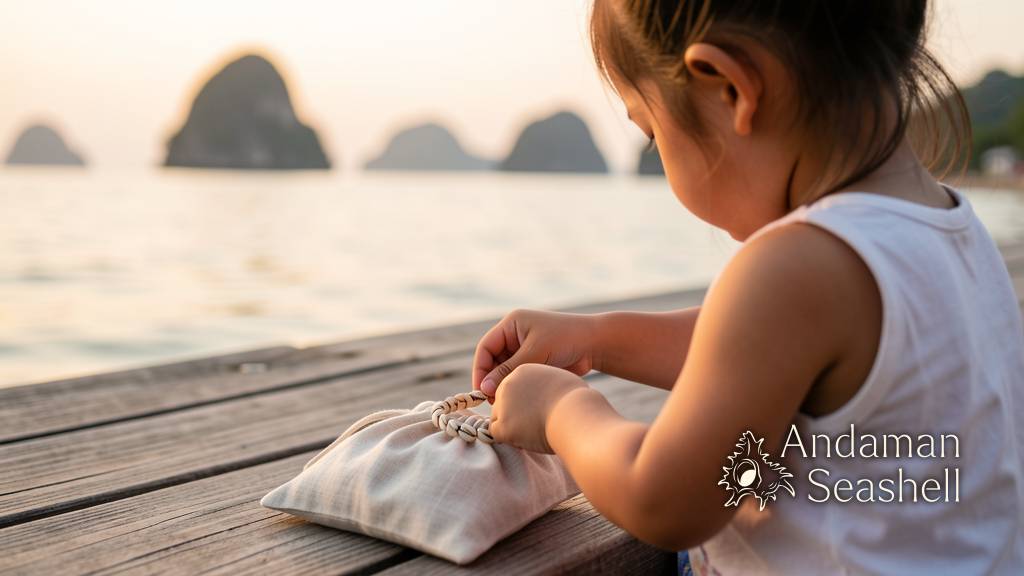
So the next time a cowrie catches your eye on the Andaman coast, pause before choosing. Let your thumb find the ridges. Notice the shine. Then enjoy the thought that this little shell, resting quietly in your hand, belongs to a very big sea story.


No comments yet. Be the first to share a thought.