



In a quiet museum drawer, a glass sponge collected from Sagami Bay, Japan in 1914 has been resting for more than a century. It is beautiful on its own — a delicate lattice of silica, translucent as frosted glass. But when researchers recently placed it inside a microCT scanner and took a three-dimensional X-ray, something wonderful appeared coiled inside: a branching worm, still there, still whole, waiting through two world wars and the entire computer age to be noticed. [ref:2]
That patience has just been rewarded on a grand scale. An international team led by Professor Maria Teresa Aguado, scientific curator of the Biodiversity Museum at the University of Göttingen, has discovered ten new species of branching worms — some of the strangest animals in the ocean — and solved a zoological puzzle that has lingered since the 1870s. The results were published in the Zoological Journal of the Linnean Society. [ref:1]
One head, a living tree
Branching worms are annelids — relatives of earthworms and leeches — but they grow by a rule no worm is supposed to follow. Instead of simply adding length, a single head gives rise to a body that splits, and splits again, into a tree-like network of branches ending in dozens of crowns. The animal threads this living bush through the labyrinth of canals inside its host sponge, spreading through its home without ever showing itself to open water. [ref:1]
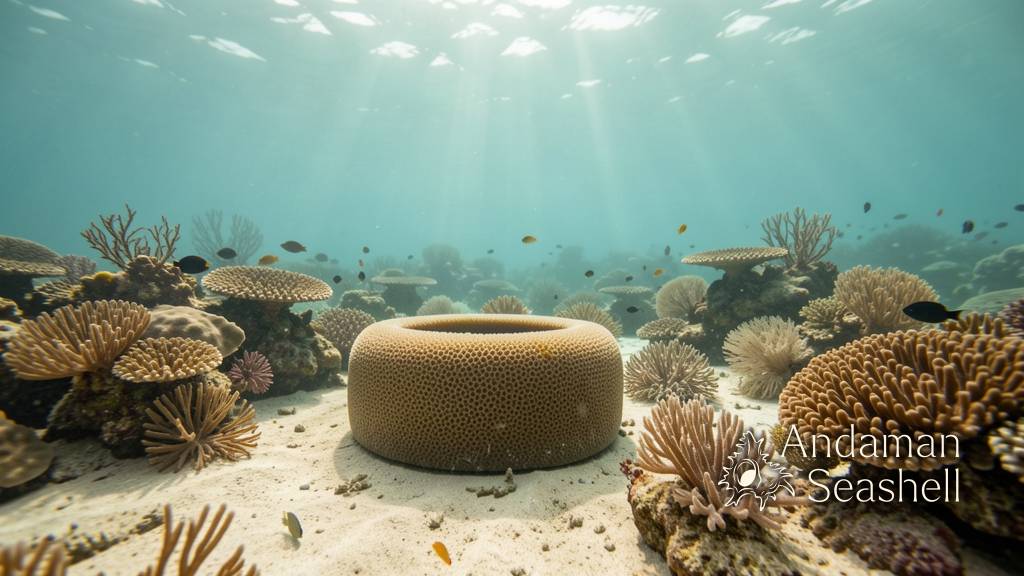
For nearly 150 years, science knew of only three such species. The first, Syllis ramosa, turned up in 1875 inside a sponge collected in the Philippines during the HMS Challenger expedition — the voyage that essentially invented modern oceanography. The most famous, Ramisyllis multicaudata, was found in Australia in 2006 and formally announced in 2012. Three species, scattered across the globe, each an evolutionary oddity. [ref:2]
The answer was in the drawer
The Göttingen team combined freshly collected worms from the Indo-Pacific, the Red Sea and New Zealand with decades-old museum material, extracting DNA from century-old specimens in a young field researchers call "museomics". The yield was extraordinary: thirteen distinct forms of branching worm, at least ten of them likely new to science. [ref:1]
Even better, the family tree now has a satisfying shape. Branching worms form one coherent evolutionary group with two great limbs — mirroring the branching bodies of the worms themselves. One lineage keeps the name Ramisyllis. The other is so distinct that it earned an entirely new genus, Cladosyllis, described in the same study. [ref:1]
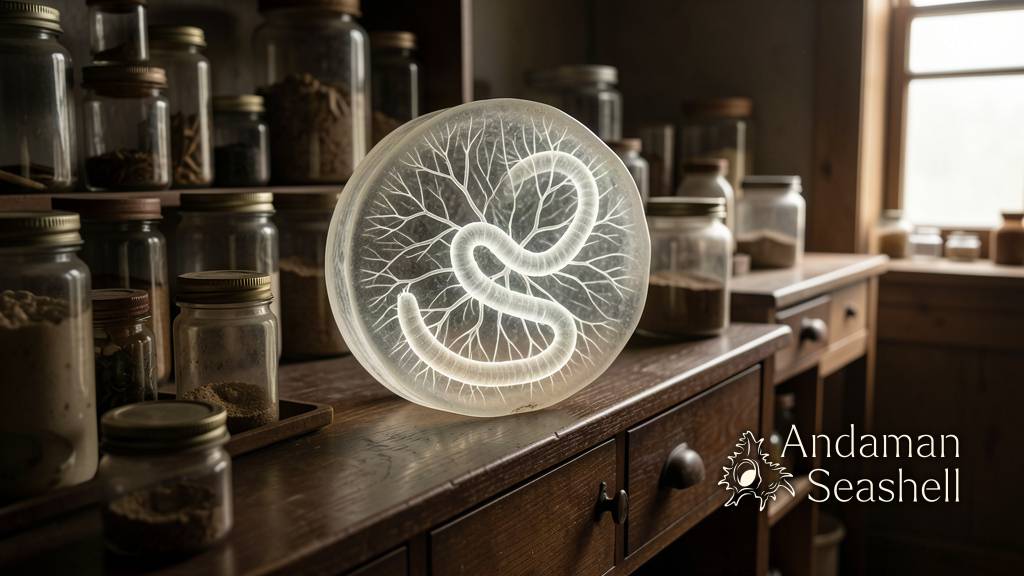
Some of the historical hosts came from the Senckenberg collection, including that 1914 Sagami Bay glass sponge. Because the sponges are too precious to cut open, the team used microCT imaging — the same technology that lets doctors scan a body without surgery — to confirm worms coiled inside, undamaged and undisturbed. [ref:2]
Deeper, weirder, more wonderful
The new species range far and wide. Some live in shallow-water sponges a diver could visit; others occupy deep-sea glass sponges at depths of up to 1,000 metres. In one deep host, Crateromorpha meyeri, the sponge's translucent silica skeleton is clear enough that the pale threads of a resident Cladosyllis worm can be glimpsed at its main opening — a ghost in a glass house. [ref:2]
The study suggests that specializing on different sponge hosts was a key engine of diversity: each close pairing of worm and sponge, repeated across oceans and epochs, nudged the lineage into new species. And the family keeps its sense of humour. A Japanese branching worm described a few years ago was christened Ramisyllis kingghidorahi, after King Ghidorah, Godzilla's three-headed golden nemesis — a monster with a branching body plan of its own. [ref:3] [ref:4]
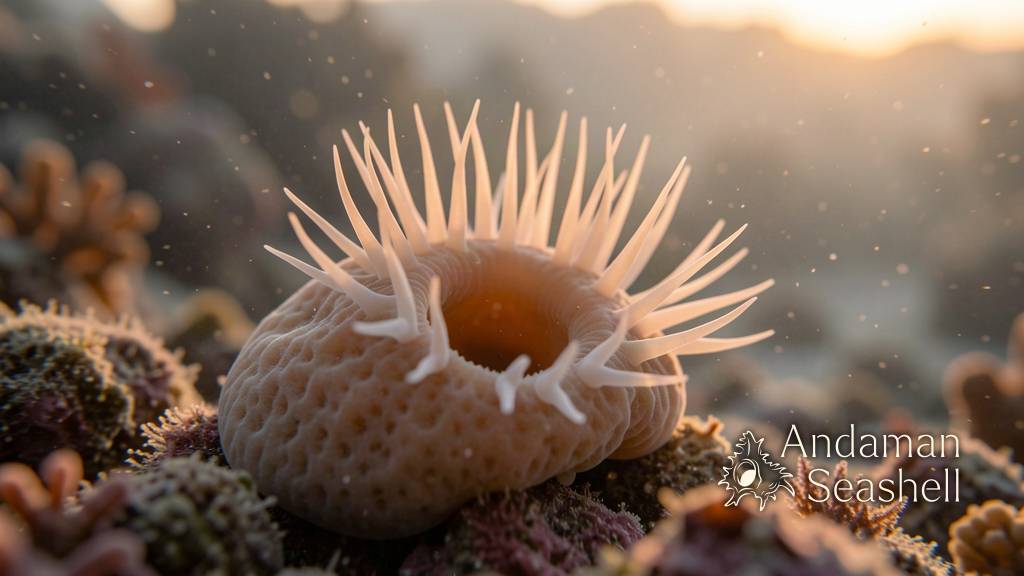
The researchers believe many more species remain undiscovered, and that museum cabinets around the world may hold further hidden guests. It is a hopeful thought: the ocean's great age of discovery is not behind us. Sometimes it is sitting in a drawer, one X-ray away from introducing itself — one head, a thousand branches, and a century of good manners.


No comments yet. Be the first to share a thought.