



A silver ribbon as long as a fishing boat washes ashore, and a coastal town starts telling a story that will outlive everyone who heard it. For centuries, that story kept repeating on coastlines around the world — the sea has a serpent. On September 30, 2026, a team at Cornell University finally opened the serpent's hood, and what they found inside is better than any legend: a steering system made of hundreds of tiny joysticks [ref:1][ref:2].
The legend fish, caught up with by science
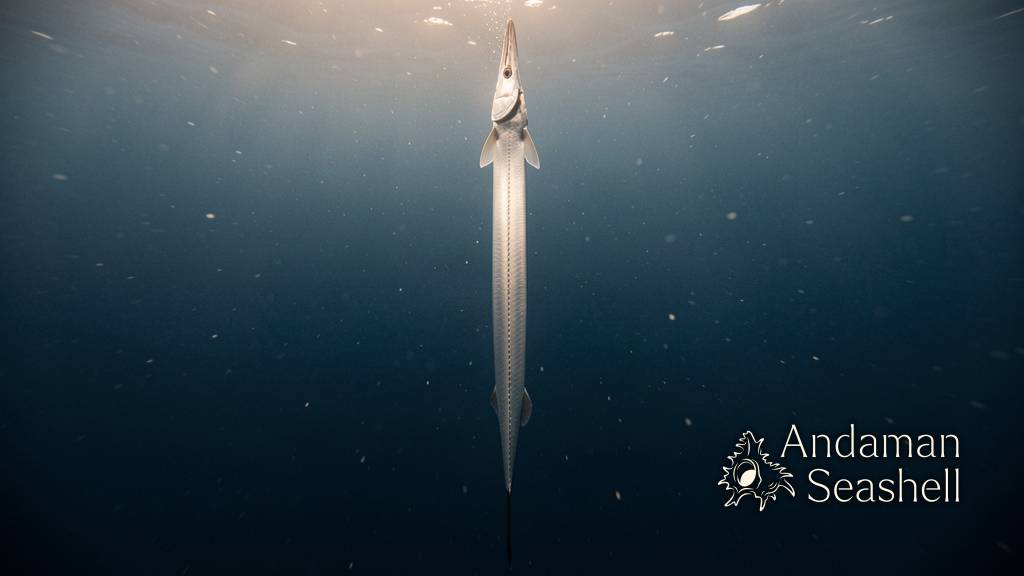
The oarfish is the real animal behind a remarkable share of the world's sea-serpent tales — a ribbon-shaped giant that has been drifting onto beaches for centuries, each arrival adding another chapter to the folklore [ref:3]. The truth turns out to be even better than the myth. There are only two recognized species of oarfish, found in oceans worldwide at depths of up to 1,000 feet, and the largest specimens are estimated to reach up to 8 metres — about 26 feet — which makes the giant oarfish the longest bony fish alive on Earth [ref:1].
Despite that size, they eat tiny crustaceans, and they feed while hovering in a calm, head-up vertical posture, held in place partly by that extraordinary dorsal fin running the entire length of their backs [ref:1].
Hundreds of joysticks, one quiet giant
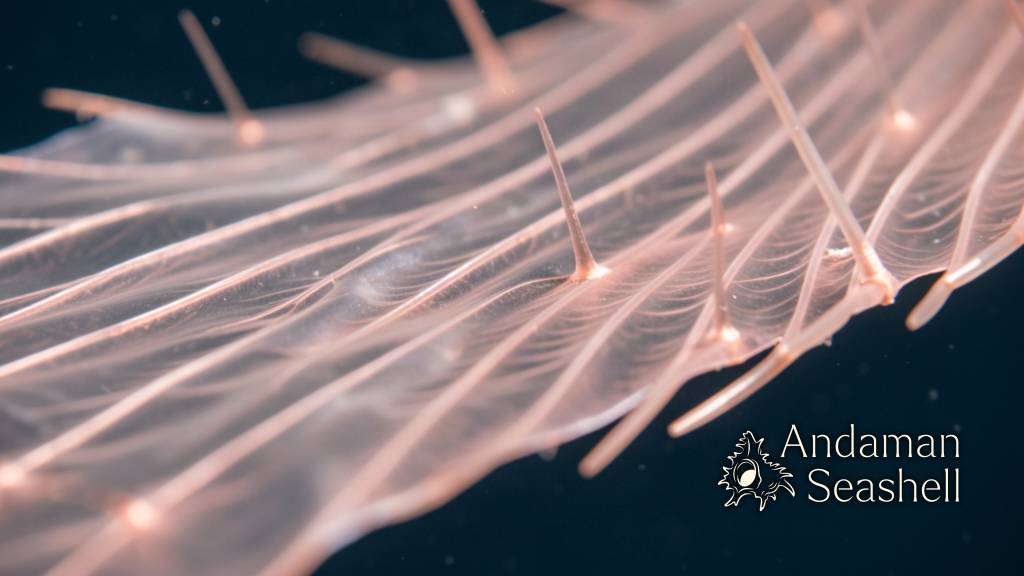
Here is the heart of the new study, published September 30 in the journal Ichthyology and Herpetology [ref:1]. Along the oarfish's back run hundreds of bone-like fin rays, connected by a thin webbed membrane. When the fish swims, those rays move in coordinated patterns, sending travelling waves down the membrane that push against the water and drive the fish forward [ref:1].
What the Cornell team — first author Gabriel Afonso, now a doctoral student at the Virginia Institute of Marine Science, with retired Cornell ichthyologist Willy Bemis as senior author — described for the first time is the machinery underneath. Each fin ray connects to cartilage, a series of muscles, and a ball-and-socket joint. That joint lets every single ray rotate independently through a full circle — moving, in the researchers' own comparison, like a joystick at the base of each ray [ref:2][ref:3].
In effect, the oarfish's fin is not one oar but a row of hundreds of individually steerable ones. One section of the membrane can send waves toward the tail while another sends waves toward the head at the same time, letting the fish generate forward and backward thrust simultaneously — all without bending its trunk side to side at all [ref:3].
Why a giant needs a quiet engine
So why evolve such an elaborate control system? The answer appears to be stealth. "Most fishes with long bodies swim like eels," Bemis explained — pressing water back and forth in a series of undulations. "And oarfish do that but also, remarkably, they use the dorsal fin to propel themselves without moving their bodies laterally" [ref:1]. In the open ocean, where there is no cover and prey are quick to notice disturbance, gliding up to a meal on a softly rippling fin is a decisive advantage [ref:3].
That same quietness is exactly what brought a robot designer into the story. Rob Shepherd, a Cornell roboticist working on a grant from the Office of Naval Research, was designing a large underwater robot to monitor ocean health — a machine that could carry instruments without scaring off the very creatures it came to observe. The oarfish, it turned out, had already solved that problem through millions of years of evolution. "He called me and said, 'I'm interested in oarfish,' and I said, 'me too,'" Bemis recalled [ref:1]. The collaboration that followed gives engineers a brand-new template: a long fin driven by hundreds of independently rotating rays, promising vehicles that can maneuver precisely at low speed, hold position, and even travel in reverse — all with minimal disturbance [ref:1][ref:3].
A secret hiding in plain sight
Perhaps the most charming detail of the whole story is how long the secret kept itself. Oarfish are almost never seen alive, and when they die their long bodies tend to break into segments, so intact specimens are exceptionally rare [ref:1]. To reconstruct the anatomy, the team combined dissections, tissue sectioning, x-rays of a specimen held at the Smithsonian Institution, CT scans at Cornell, and frame-by-frame analysis of swimming footage [ref:3].
The sea serpent of legend, it turns out, was real all along — and it was carrying a propulsion system of astonishing sophistication in its fin. Somewhere in the deep right now, hundreds of tiny joysticks are rotating in sequence, sending a whisper of a wave down the longest bony fish on Earth. And thanks to one phone call between a robot designer and a fish scientist, we finally know the trick [ref:1].

References
- Cornell Chronicle — Mysterious oarfish's fins inspire large underwater robot design (Sept 30, 2026)
- EurekAlert! — Researchers uncover the mechanics behind the oarfish's unusual swimming style (Sept 30, 2026)
- Scienmag — Oarfish anatomy revealed: joystick-like fin rays power the giant fish's strange swimming (Sept 30, 2026)


No comments yet. Be the first to share a thought.