



Red Eyes, Hairy Feet, and a Name That Sounds Like Waves
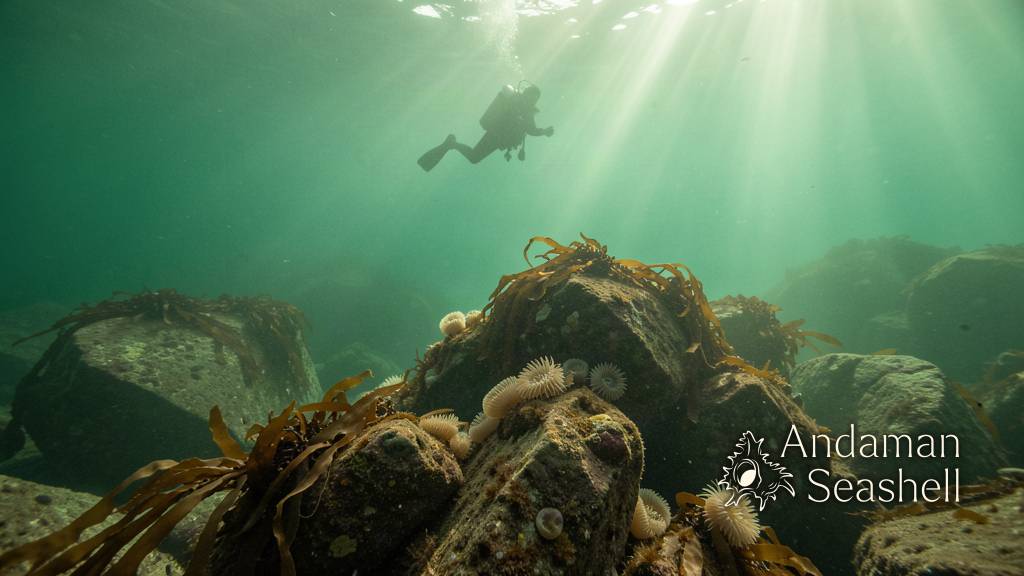
Eighteen metres down in the emerald water of the Salish Sea, a dive light sweeps across a boulder — and two little ruby-red eyes catch it and glow back. For almost a hundred years, nobody knew this tiny creature's name. Now, thanks to a patient graduate student and a microscope, it finally has one — and it brought a cousin along with it.
Researchers at the University of British Columbia have formally described two new species of sea spider from the Salish Sea, the great inland sea between Vancouver Island and the Washington coast. They are the first new sea spider species described in the region in almost a century [ref:1].
The student who asked the obvious question
The story begins with a gap. Cormac Toler-Scott, then a master's student in zoology at UBC, wanted to know how sea spiders are affected by human disturbance in the Salish Sea. He went looking for the basic field guide and found… almost nothing. "I couldn't find anything," he said — because nobody had formally studied which species actually live there [ref:1].
So he went and found them himself. Between September 2023 and August 2024, the team collected specimens on dives reaching 18 metres deep, across habitats near Quadra Island, Vancouver, Bamfield and Victoria. Their documentation and genetic analysis were published in the journal Organisms Diversity & Evolution — the first study of the region's sea spiders to combine detailed imaging with DNA analysis [ref:2].
Meet the tidy one and the messy one
The two newcomers could hardly be more different housekeepers.
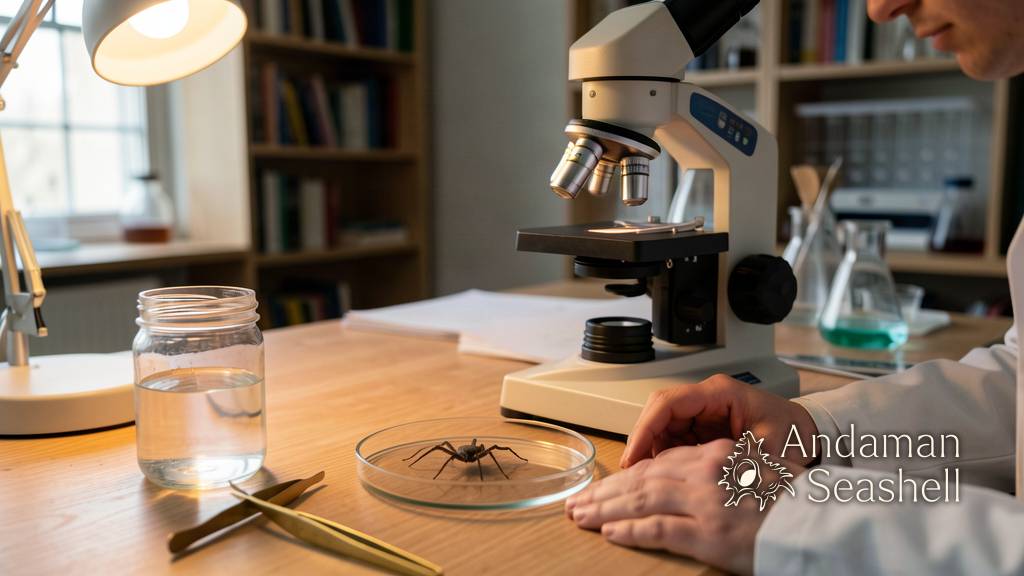
The first, Callipallene pilosuspedes, takes its name from the Latin for "hairy feet" — a tribute to the long, curved spines that fringe its lower legs like tiny boots. It has striking red eyes, a triangular mouth with three lips ringed by sensory hairs, and a short proboscis tipped with claws for gripping food. Best of all, it grooms itself: under the microscope, researchers watched it wrap specialised limbs called ovigers around its legs and comb them clean like a cat at its toilet. Only a single specimen was ever found, suggesting it may be rare, or simply very good at hiding [ref:1][ref:2].
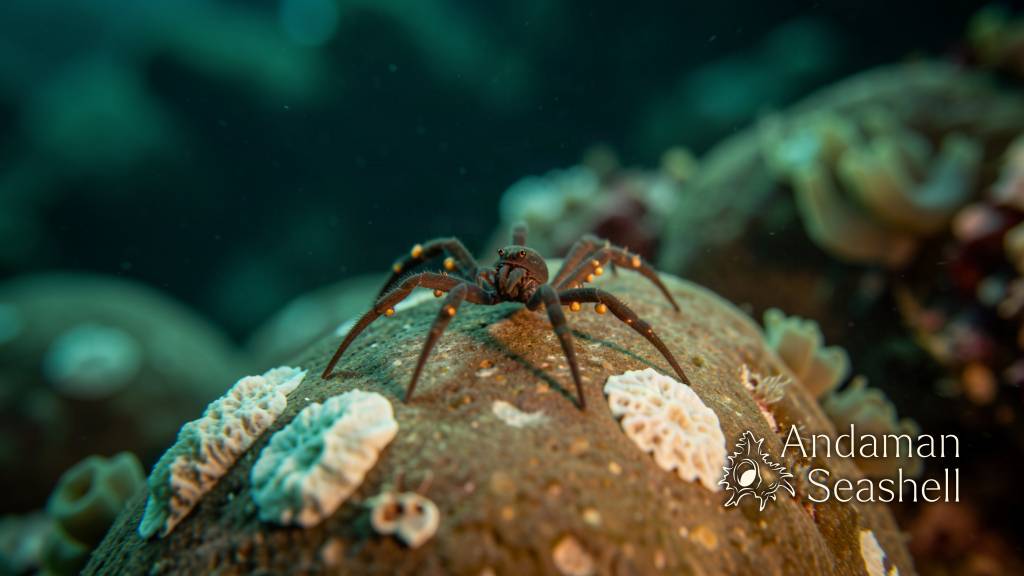
The second, Tanystylum kiixin, pronounced "kee-hin", carries one of the loveliest species names in recent memory. It honours the ancient Indigenous village site near where the specimens were first collected; in the local language, the word imitates the sound of waves crashing at the base of the village [ref:1][ref:3]. This spider is stockier, with black eyes and an hourglass-shaped abdomen — and it cannot groom itself at all. Its egg-carrying limbs are too small and stiff, so it wanders about wearing a coat of debris, which in turn shelters tiny parasites of its own. Toler-Scott called it "an ecosystem within an ecosystem within an ecosystem" [ref:2].
Older than dinosaurs, stranger than fiction
Sea spiders as a group are ancient travellers. They evolved around 500 million years ago — comfortably before the first dinosaurs — and are related to spiders, scorpions and horseshoe crabs, though they never left the ocean. They breathe directly through their skin, and in a charming reversal of roles, it is the male who carries the young: he scoops up the female's eggs, dabs them in glue secreted from his legs, and sticks them to his own body in clusters until they hatch [ref:1].
They come in a startling range of sizes, from less than a centimetre to more than 70 centimetres across in Antarctic waters [ref:1]. The two new species bring the number of known sea spider species worldwide to more than 1,300 [ref:3].
Why two little spiders matter
Both species have now been registered in a global biodiversity database, where researchers everywhere can find them [ref:1]. And this, says Toler-Scott, is only the beginning: "I only had one field season, but there's definitely more diversity out there that we haven't documented" [ref:2].
That is the quiet thrill of this discovery. One of the most-studied coastlines on Earth, fringed by two wealthy cities, was still holding undescribed species in water shallow enough to reach with an ordinary scuba tank. The sea's ledger is nowhere near finished — sometimes it just needs someone curious enough to ask, and patient enough to look.


No comments yet. Be the first to share a thought.