



At 8:28 p.m. in León, Spain, the summer Sun slipped behind the Moon and the sky turned into a live lesson in wonder. For two bright minutes on 12 August 2026, people along a narrow path across Greenland, Iceland, Spain, Portugal, and northern Russia could see the Sun’s white corona with their own eyes during totality, while millions more watched a deep partial eclipse from surrounding regions [ref:1][ref:3].
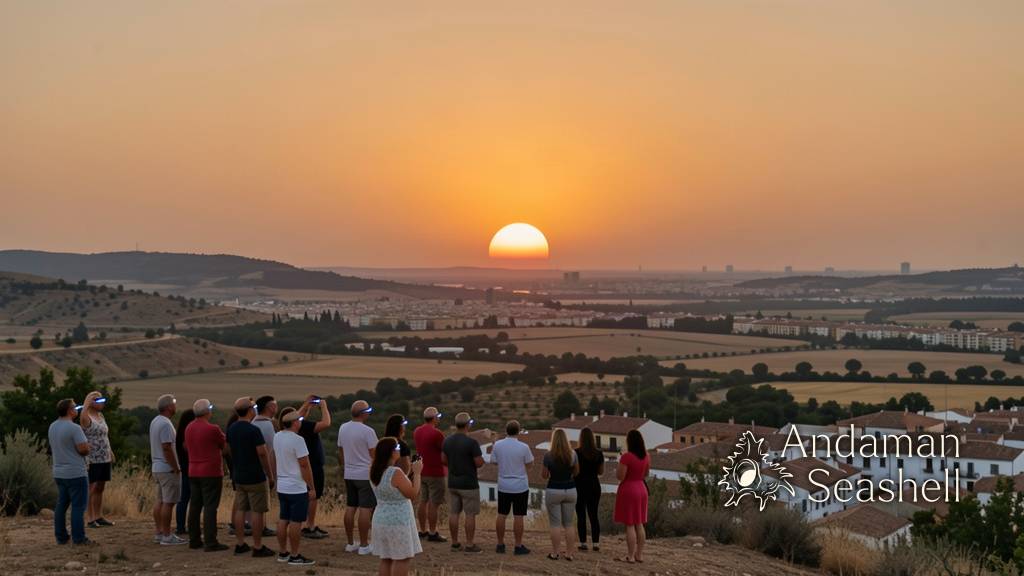
That mix of beauty and precision is what made this eclipse feel so joyful. NASA listed it as one of August’s headline skywatching events, with totality reaching Reykjavík at 5:48 p.m. and León at 8:28 p.m., while cities such as London, Paris, Lisbon, and Dublin enjoyed striking partial coverage instead of a routine sunset [ref:1][ref:2]. It was not just a rare picture in the sky; it was a shared timetable that stretched across continents.
A shadow with a map
A solar eclipse happens when the Moon moves directly between Earth and the Sun and casts its shadow onto our planet. On 12 August, the red band of totality crossed Greenland, the western tip of Iceland, the northern half of Spain, a corner of Portugal, and parts of Russia, while a much broader region saw the Sun turn into a crescent [ref:1][ref:3]. Royal Observatory Greenwich noted that the UK and Ireland saw around 90% to 96% coverage, making it the most dramatic solar eclipse there since 1999 [ref:4].
The timing helped make the event especially memorable. In London, first contact came at 6:17 p.m., maximum eclipse at 7:12 p.m., and the show ended at 8:06 p.m. as the Sun dropped lower toward the western horizon [ref:4]. In the path of totality, observers could enjoy up to 2 minutes and 18 seconds of full eclipse, with some of the longest ground-based views available from Iceland [ref:1][ref:4]. ESA also highlighted another historic detail: this was the first total solar eclipse visible from mainland Spain since 1905, and the first of three solar eclipses crossing Spain between 2026 and 2028 [ref:3].
Why scientists chased it
The eclipse was also a fast-moving science lab. NASA sent one of its WB-57 high-altitude research jets to fly at 50,000 feet above the clouds, carrying four cameras in the SCIFLI Multispectral Airborne Imager system [ref:2]. Those cameras were designed to capture at least 20 images per second in visible and infrared wavelengths, helping researchers study how the corona changes, how solar prominences rise above the Sun, and how the corona connects to the solar wind that streams across the solar system [ref:2].
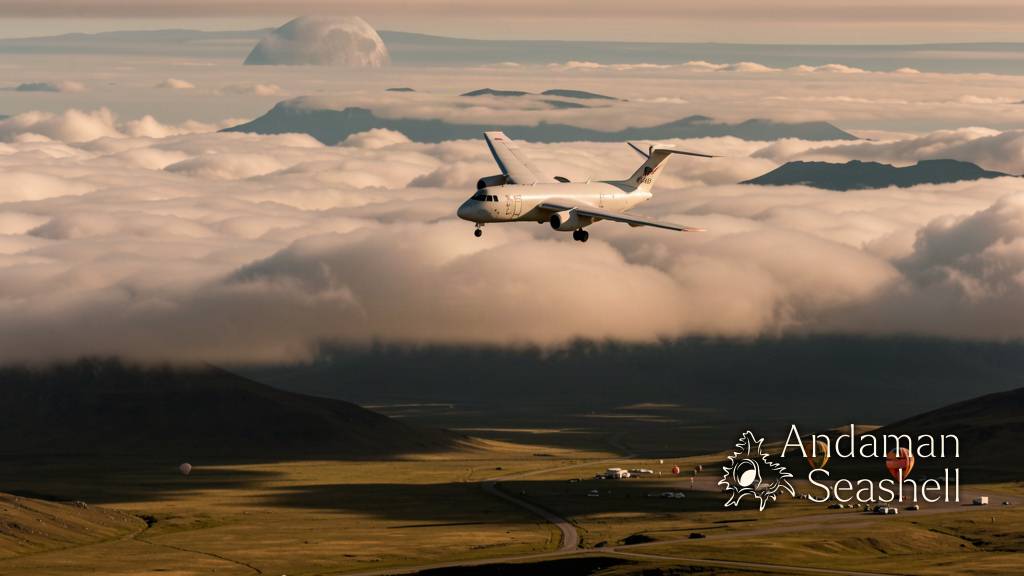
By following the Moon’s shadow at about 460 miles per hour, the jet could stretch its observing time to nearly three minutes, a little longer than the 2 minutes and 18 seconds available from the ground [ref:2]. That extra time matters because the corona is usually hidden by the Sun’s brightness, and an eclipse briefly reveals delicate streamers, loops, and outflows that are otherwise difficult to study.
NASA also supported balloon teams on the ground. In Iceland, two teams planned to launch a total of 80 balloons from 18 hours before the eclipse until 8 hours after it to study changes in Earth’s boundary layer, the part of the atmosphere that touches the ground [ref:2]. In Spain, three teams launched six balloons with 360-degree cameras to image the eclipse shadow from above [ref:2]. Earlier balloon work had already shown that ozone can dip during totality, so the 2026 event offered another chance to watch the atmosphere respond in real time [ref:2].
A public science celebration
One lovely part of this story is how open it was. NASA began a live eclipse broadcast at 1:15 p.m. EDT, sharing views from across the path together with expert commentary [ref:1]. ESA invited audiences to join events in León and online, turning the day into a Europe-wide science celebration instead of a specialist-only observation [ref:3]. Royal Observatory Greenwich did the same for UK viewers, who could either step outside with a clear western view or follow a free livestream from London [ref:4].
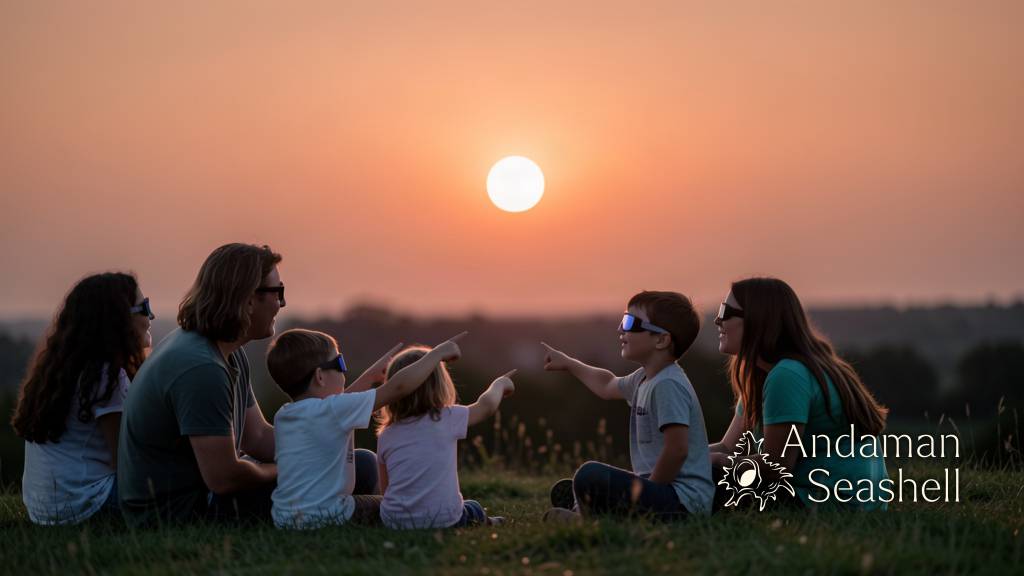
The safety guidance was refreshingly practical too. During any partial phase, viewers were told to use certified eclipse glasses that meet ISO 12312-2 or ISO 12312-2:2015 standards, because regular sunglasses are not safe for watching the Sun [ref:3][ref:4]. That simple rule helped keep the event welcoming for families, schools, and first-time skywatchers.
The happiest sky events are often the ones that combine exact numbers with a sense of togetherness. This eclipse offered both: a schedule down to the minute, a path drawn across maps, aircraft and balloons turning shadow into data, and millions of people pausing to look up. For a few minutes in August, the Moon made the Sun easier to study—and the universe easier to share.


No comments yet. Be the first to share a thought.