



The nicest thing about August 2026 is that the sky does not ask you to choose just one beautiful moment. One night brings the Perseids under dark New Moon skies, a few evenings later Venus reaches its widest apparent separation from the Sun, and the month closes with a partial lunar eclipse that will slide 93% of the Moon’s diameter into Earth’s umbra [ref:1]. That is not just a busy calendar. It is a wonderfully paced one.
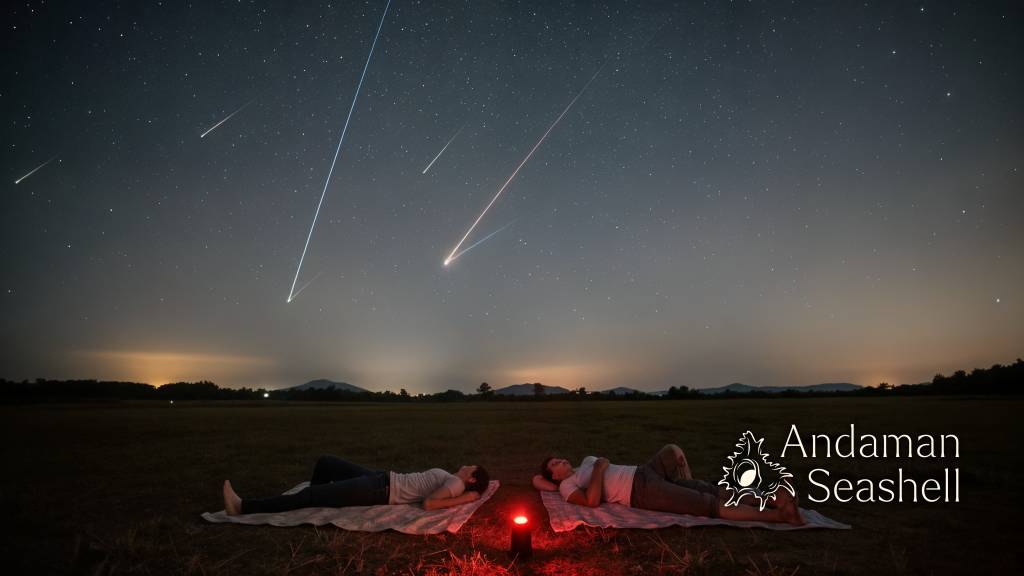
NASA’s August skywatching guide places the first big highlight on the night of Aug. 12 into the early hours of Aug. 13, when the Perseid meteor shower peaks [ref:1]. This year’s timing is especially kind because the New Moon also falls on Aug. 12, which means much darker skies and a better chance to catch fainter meteors that moonlight would usually wash away [ref:1][ref:4]. NASA also lists the Perseids as active through Aug. 24, 2026, so the shower has a long tail even after peak night [ref:2].
Why the Perseids always feel fast and exciting
The Perseids are not just plentiful; they are speedy. NASA’s fact sheet gives them a meteor velocity of 37 miles, or 59 kilometres, per second [ref:2]. That speed helps create the bright streaks and lingering wakes that make the shower feel so theatrical. Under dark skies, NASA says observers can expect about 25 meteors per hour, while the broader shower can sometimes produce roughly 50 to 100 meteors per hour around peak conditions [ref:2].
The source of all that motion is Comet 109P/Swift-Tuttle [ref:1][ref:2]. Earth passes through the dusty debris stream left behind by the comet, and those tiny fragments burn in our atmosphere as meteors. Swift-Tuttle itself takes 133 years to orbit the Sun once, was identified as the Perseids’ source by Giovanni Schiaparelli in 1865, and last visited the inner solar system in 1992 [ref:2]. NASA also notes that the comet’s nucleus is about 16 miles, or 26 kilometres, across — impressively large for an object best known to most of us through streaks of light that vanish in a second [ref:2].
If you want the best chance of a good show, NASA recommends looking toward the northeast once the sky is fully dark and waiting for the constellation Perseus to rise higher [ref:1]. The shower is generally best in the pre-dawn hours, though some meteors can appear as early as 10 p.m. [ref:2]. A dark, open spot and about 30 minutes for your eyes to adjust are still the simplest upgrades any skywatcher can make [ref:1].
Venus takes the evening shift
A few nights after the Perseids, the mood changes completely. From Aug. 14 to 16, Venus reaches greatest eastern elongation, which means its widest apparent separation from the Sun during this evening appearance [ref:1]. In practical terms, that gives you a bright, easy target low in the western sky shortly after sunset.
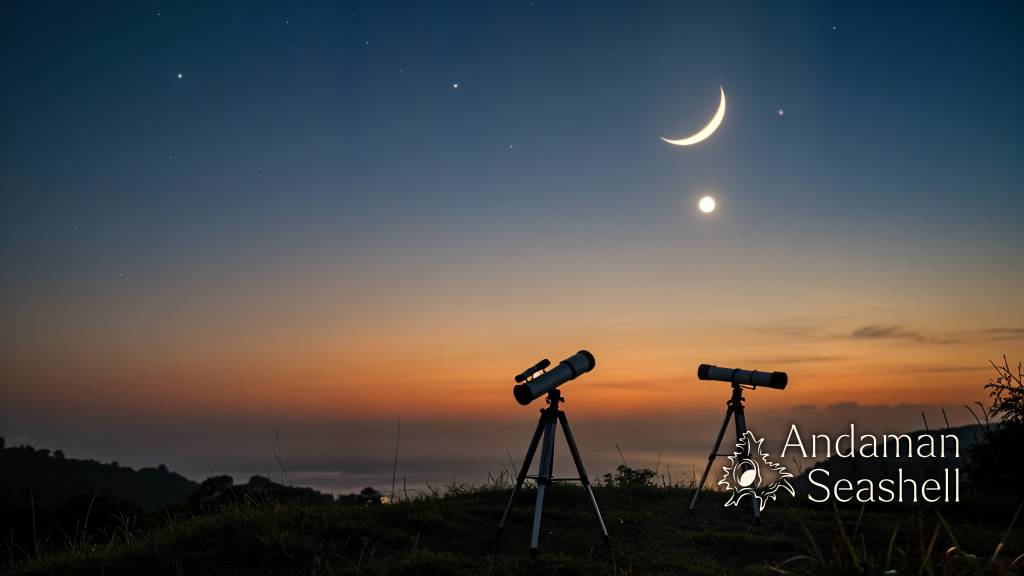
NASA’s description here is lovely because it is so usable: look low in the west after sunset for the object that will outshine the stars around it [ref:1]. If you have a small telescope, Venus should look close to half lit, almost like a tiny lunar phase [ref:1]. It is the kind of sight that makes the solar system feel less abstract and much more like a set of neighbors keeping a very elegant schedule.
The month ends with a dramatic Moon
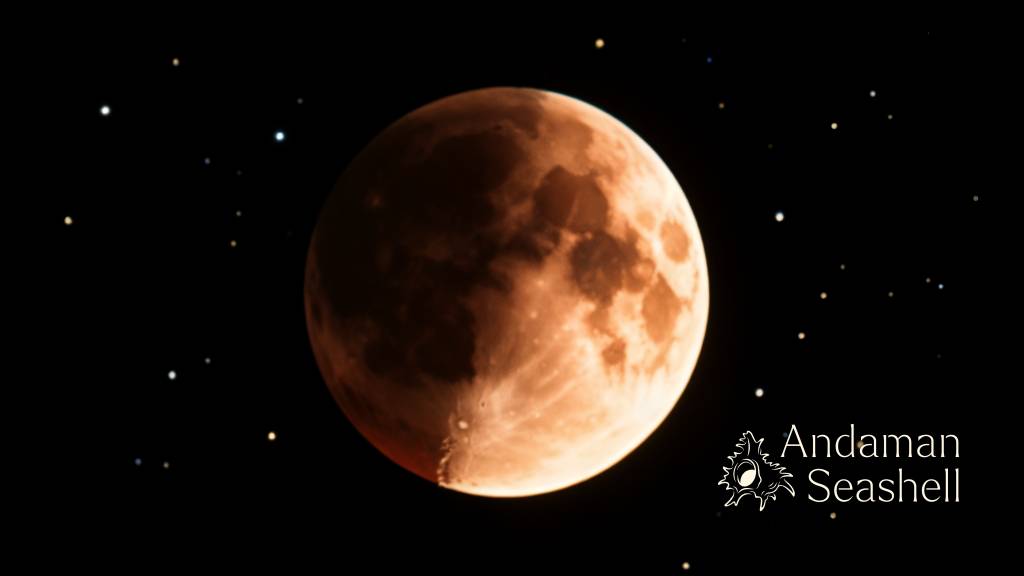
Then comes the final act. On the night of Aug. 27, continuing into Aug. 28 for some time zones, the Full Moon passes through Earth’s shadow in a deep partial lunar eclipse [ref:1]. NASA says the event will be visible from much of North and South America, along with parts of Europe and Africa [ref:1]. At maximum eclipse, about 93% of the Moon’s diameter will be inside the dark central shadow called the umbra [ref:1]. The Moon will not disappear entirely, but it can look dramatically dimmed with a coppery tint along the shadowed edge [ref:1].
That color shift matters because it turns the eclipse into a slow, easy spectacle rather than a blink-and-you-miss-it event. Unlike a solar eclipse, a lunar eclipse is safe to watch with your eyes alone, and binoculars or a small telescope simply add texture to the view [ref:1].
Near the beginning of the month, Aug. 12 also delivered a total solar eclipse that crossed northern Russia, Greenland, Iceland, northern Spain, and a small corner of Portugal, which is one reason NASA included August in its list of 2026’s standout skywatching periods [ref:3][ref:4]. Put together, the month feels almost curated: fast meteors, a bright evening planet, and a shadowed Moon arriving in sequence.
If you only make three appointments with the sky this month, make them simple: Aug. 12–13 for the Perseids, Aug. 14–16 for Venus in the west, and Aug. 27–28 for the lunar eclipse. August 2026 is not asking for expert equipment or complicated planning. It is simply offering a very generous reminder that the universe can still keep excellent timing.


No comments yet. Be the first to share a thought.