



The Camper Who Found a 390-Million-Year-Old Secret: Meet Uhackatik, Earth's Newest Giant Crater
Some discoveries begin with a telescope. This one began with a camping trip.
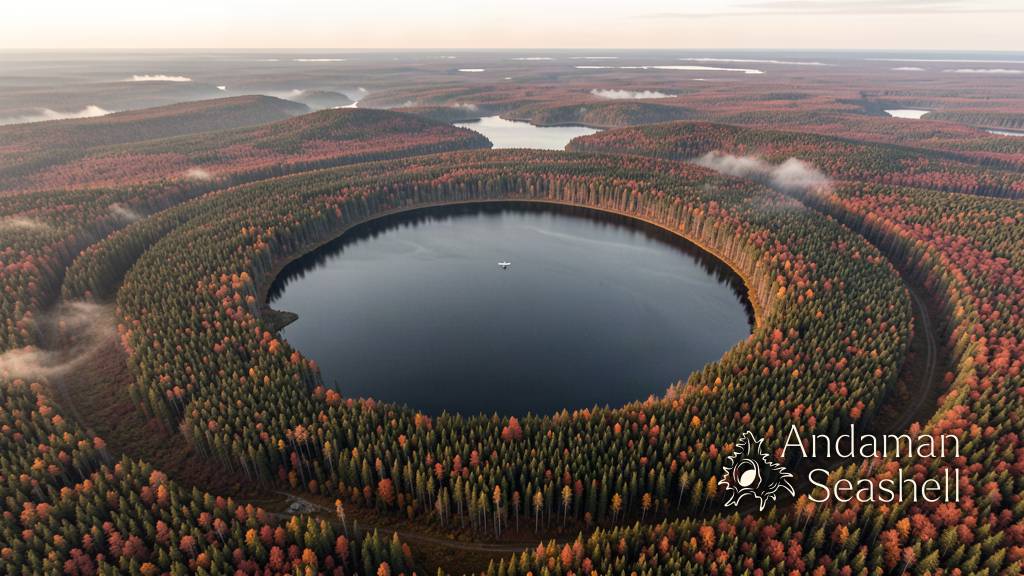
In 2024, amateur astronomer Joël Lapointe was scrolling through online satellite maps of Quebec's remote Côte-Nord region, quietly plotting hiking routes and promising places to pitch a tent. Then his cursor drifted over something extraordinary: a vast, near-perfect circle in the wilderness, wrapped around a dark lake called Lake Marsal, about 100 kilometres north of the village of Magpie. To an eye trained by years of stargazing, the shape looked suspiciously like something from another world — the ring of an ancient meteorite impact [ref:1].
A circle too perfect for chance
Most people would have zoomed past. Lapointe did the opposite: he wrote to impact-crater specialists in Europe and North America and asked the question out loud. His message travelled fast. At the 2024 meeting of the Meteoritical Society, a French research team presented the Lake Marsal area as the possible centre of Quebec's 11th known impact structure, anchored at coordinates 51.2°N, 64.7°W [ref:2][ref:3].
The structure itself is enormous — roughly 25 kilometres (16 miles) across, large enough to swallow a small mountain range. And yet maps had shrugged at it for decades. Earlier geological surveys had explained the strange broken rocks of the region as a diatreme — a funnel-shaped pipe of fragmented rock left by an ancient volcanic explosion. A perfectly reasonable answer. Just, as it turned out, the wrong one [ref:1].
The skeptic and the floatplane
The tip eventually reached Gordon Osinski, a planetary geologist at Western University who directs the Impact Earth database — the world's catalogue of confirmed craters. Osinski is professionally skeptical; nine out of ten reported 'craters' turn out to be ordinary geology wearing a costume. But this circle was too interesting to ignore, so in October 2025 he and a four-person team set out to see it for themselves [ref:1][ref:3].
Getting there was its own small expedition. The team flew in by floatplane, but the aircraft could not even reach the shoreline — the researchers waded about 50 metres (165 feet) through cold lake water carrying their equipment, then pushed through swampy, densely vegetated terrain that Osinski cheerfully described as deep, twisty and gnarly [ref:1].
The rocks told the truth
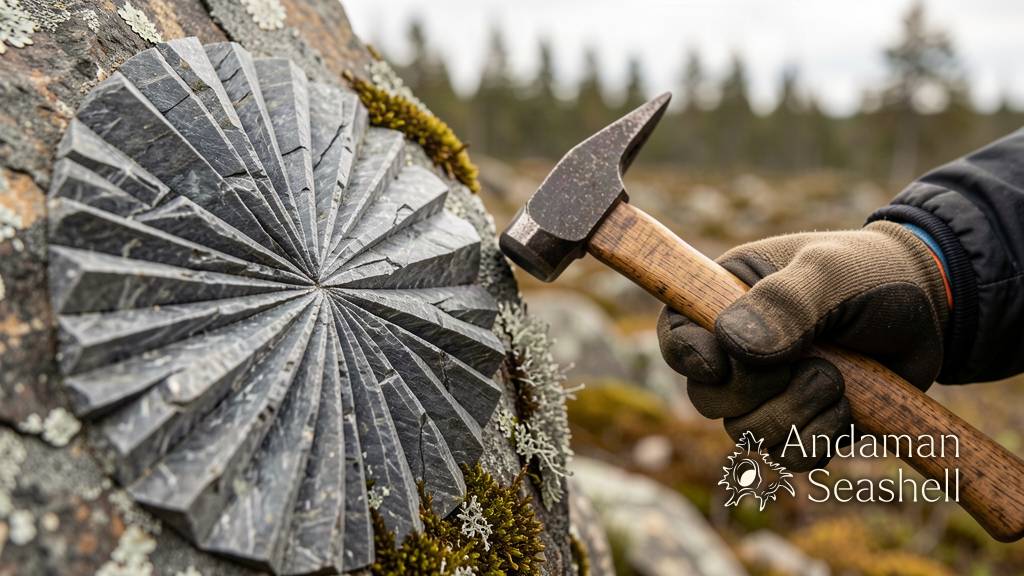
On the second day, the mystery broke open. In outcrop after outcrop, the team found shatter cones — cone-shaped fractures etched into bedrock by shock waves that only a meteorite impact (or a nuclear test) can produce. 'It's the only unequivocal evidence of an impact event that you can see in the field with the naked eye,' Osinski told NASA [ref:1].
The cliffs sealed the case. What earlier maps had called the Marsal Breccia Formation is now reinterpreted as impact melt rock — rock the collision flash-melted, up to 50 metres thick, with dramatic columnar jointing and fused boulders up to half a metre across, surrounding a central uplift where the ground rebounded after the strike [ref:2].
Back in the lab, two independent clocks agreed: magnetic minerals in the cooled rock and tiny zircon crystals both pointed to an age of roughly 390 million years — the Devonian Period, long before the first dinosaur. That makes Uhackatik the largest impact crater discovered anywhere on Earth since Greenland's 31-kilometre Hiawatha structure in 2018, at a time when only about 200 craters are confirmed worldwide and just one or two are added each year [ref:1][ref:2][ref:4].
A name from the land
The most graceful detail came last. Following consultation with the Innu Council of Ekuanitshit, on whose traditional territory the crater rests, the researchers named the structure Uhackatik — a name drawn from the language and stewardship of the people who have known this land longest. In September 2026, NASA's Earth Observatory featured Uhackatik as its Image of the Day, and formal recognition by the Meteoritical Society is expected when its committee next meets [ref:1][ref:2].
Remarkably, Canada already hosts more known impact craters than any country on Earth — not because it receives more space rocks, but because its ancient, stable bedrock preserves them patiently, like a museum with excellent lighting [ref:4].
The invitation
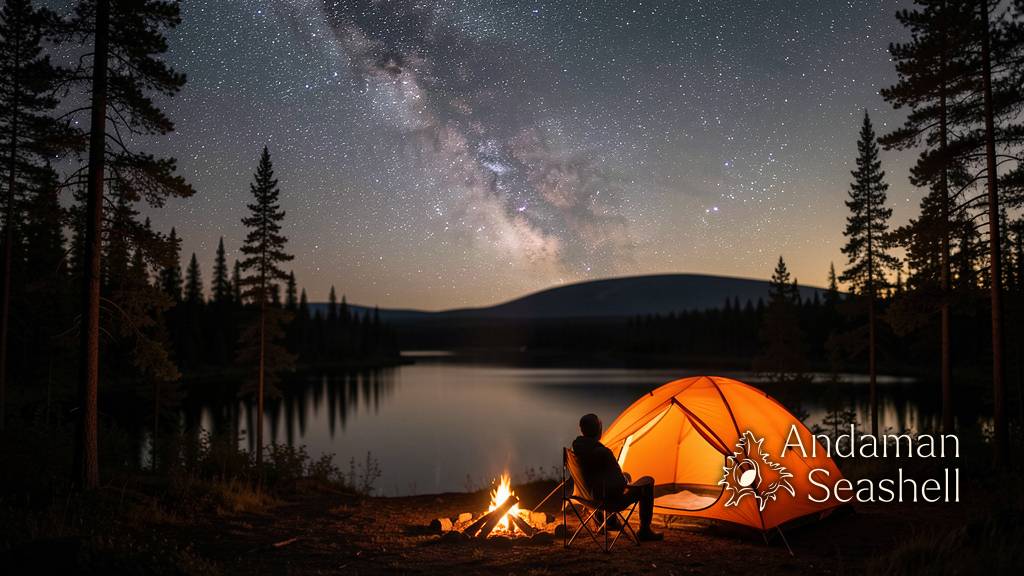
Lapointe later admitted he was, in his own words, over the Moon. And that may be the most wonderful part of the story: no telescope, no expedition budget, no laboratory — just one curious person who looked at a map and refused to unsee a circle.
Earth is still keeping secrets in plain sight. Geologists estimate that hundreds of craters remain undiscovered, hiding under forest, ice and quiet water, visible to anyone with satellite imagery and a patient eye. Somewhere out there, the next Uhackatik is waiting on a map — perhaps for someone planning nothing more ambitious than a camping trip [ref:1][ref:4].
References
- NASA Earth Observatory — An Accidental Impact Crater Discovery
- Meteoritical Society 2026 — Uhackatik: A New 25-km Diameter ~390 Ma Impact Structure in Quebec
- CBC News — He saw a pit on Google Maps. It turned out to be a 390-million-year-old crater
- Smithsonian Magazine — Amateur Astronomer Using Google Maps Spotted a Meteorite Crater


No comments yet. Be the first to share a thought.