



About ten years ago, a family living beside Bolivia's Yungas cloud forest took in a small spotted cat they assumed was an ordinary stray. He was gentle, endlessly curious — and, as the world learned on September 17, 2026, an entirely new species. In a study published that day in the journal Current Biology, researchers announced that the little cat, known locally as the tilcayo, is the first new living feline species to be formally named and described in more than a century [ref:1]. His scientific name keeps the local word: Leopardus tilcayo [ref:1].

A cat that didn't match the book
The detective story begins at the Senda Verde Wildlife Sanctuary, where the cat — nicknamed Tigrino — arrived after his rescue family realised he wasn't suited to indoor life [ref:4]. Sanctuary staff assumed he was an oncilla, one of South America's small tiger cats. But when Dr Paola Nogales-Ascarrunz, a National Geographic explorer and co-author of the study, examined him, the details refused to line up. "I couldn't believe how small it was," she said [ref:4].
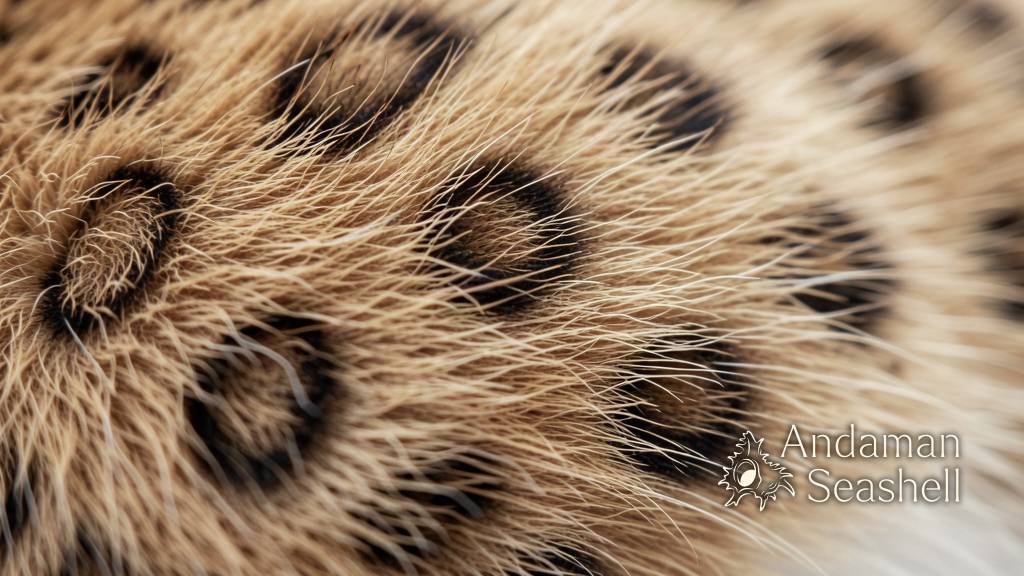
Small is right: the tilcayo measures about 46 centimetres long and weighs roughly 1.4 kilograms — smaller than the average domestic cat — with light-brown fur marked by irregular rosettes that run larger than an oncilla's [ref:1][ref:4].
Tiger cats are what biologists call cryptic species: lineages that look so alike that appearance alone cannot separate them [ref:1]. For decades scientists debated whether there were one, two, or four species. So the team did what modern naturalists do — they read the cat's DNA.
Thirty-eight cats, five species
Led by evolutionary biologist Jonas Lescroart of the University of Antwerp, the researchers analysed DNA from 38 tiger cats sampled across several South American countries, including eight museum specimens [ref:1]. The verdict was bigger than anyone expected: South America's tiger cats are not one, two, or four species, but five genetically distinct species [ref:1][ref:4]. The tilcayo is one of them — a lineage that separated from its cousins roughly 1.4 million years ago [ref:1].
"We never expected this Bolivian tiger cat to be a separate species, and no one had ever proposed it as a different animal, subspecies or otherwise," Lescroart said [ref:1].
The same study added one more treasure: a new tiger-cat subspecies in Peru's Yungas, named Leopardus tigrinus antisuyo after Antisuyu, the region of the old Inca empire that included its home [ref:1].
What we know — and what comes next
The tilcayo's daily life is still mostly mystery to be solved. Remains of small rodents found in scat samples suggest they may be its main prey, and camera-trap records hint it is more active at night [ref:1]. The researchers have shared their findings with the IUCN, whose upcoming review will assess the five tiger-cat lineages separately for the first time — likely giving conservationists a much sharper picture of each cat's true range and needs [ref:1].
There is also a hopeful signal for anyone who loves discovery: senior author Eduardo Eizirik of the Pontifical Catholic University of Rio Grande do Sul points out that even in a flagship group like cats, new species are still waiting to be found [ref:1]. BBC reporting agrees — researchers say more new wild cats could be out there [ref:3].
Tigrino, now about ten years old, still lives at Senda Verde — the best-known ambassador of a species the world only just met [ref:1]. One rescued house-guest, one sharp-eyed scientist, and a decade of patient questions later, the cloud forest has given up one of its sweetest secrets.


No comments yet. Be the first to share a thought.