



At Osaka Tenmangu Shrine on a July morning, a taiko drumbeat can make the whole street feel awake. Red-hatted drummers gather, yukata sleeves brighten the crowd, and a gilded mikoshi — a portable shrine carried for a deity during festival time — waits like a small piece of sunlight ready to move through the city.
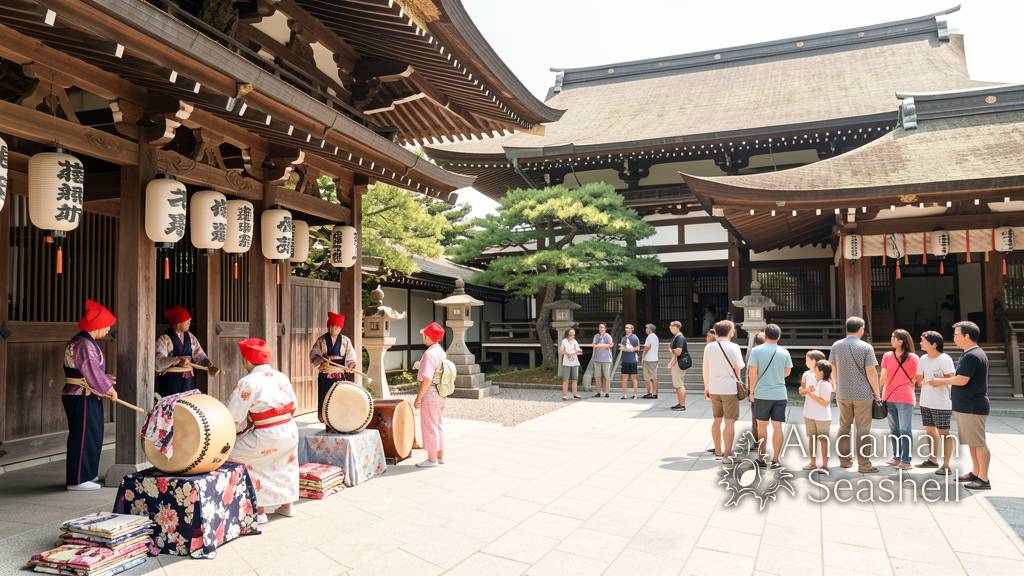
That is the beautiful first doorway into Tenjin Matsuri, Osaka’s water-and-light festival for 2026. Japan Travel lists the event in Osaka from 23–25 July, while Japan Guide notes that the traditional festival takes place on 24–25 July each year, with the main celebration on 25 July [ref:1][ref:2]. For Andaman Seashell readers, the dates matter because they sit right in the season when both Japan and southern Thailand understand warm rain, family evenings, and the pleasure of gathering near water.
A festival for scholarship, summer, and the river
Tenjin Matsuri belongs to Osaka Tenmangu Shrine and honours Sugawara Michizane, remembered in Japan as a deity of scholarship [ref:2]. That gives the festival a generous heart: it is not only spectacle, but a public wish for learning, safety, prosperity, and a lively city.
The Japanese word matsuri means festival, and Tenjin refers here to Tenmangu’s enshrined deity. Like many Japanese seasonal traditions, the celebration begins with ritual care before it becomes visual delight. On 24 July, shrine observances and prayers by the river mark the opening. The next day, the city becomes a moving stage: a land procession leaves the shrine, followed by the river procession on the Okawa River.
This rhythm may feel familiar on the Andaman coast. In Phang Nga and Phuket, community events often begin with a respectful gesture — a blessing, a shared meal, a temple moment, a careful opening — before music, food, and handmade souvenirs fill the evening. Different cultures, different details, but a similar human instinct: beauty becomes stronger when it is shared.
The craft you can see in motion
Look closely and Tenjin Matsuri is full of shokunin spirit — shokunin means a craftsperson whose skill is shaped by patience and responsibility. The festival’s craft is not only in objects; it is in timing, costume, boat handling, drum rhythm, and the polished surfaces of ritual pieces.
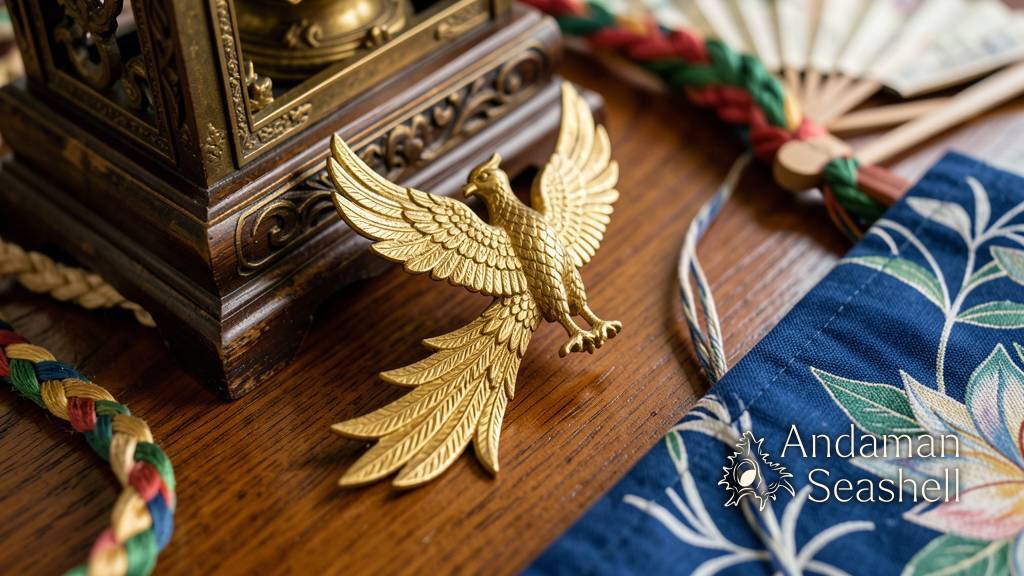
Japan Guide describes the 25 July land procession with costumed figures, lion dancers, umbrella dancers, drummers in tall red hats, and an ornate mikoshi with a gilded phoenix [ref:2]. Later, after the procession reaches the Okawa River around early evening, portable shrines and performers move onto boats. Some boats become stages for traditional performance, while smaller Dondoko boats dart along the water with energetic rowers [ref:2].
For a souvenir-minded eye, these details are a joy. A braided cord, a lacquered panel, a fan tucked into a sash, the clean fold of a yukata: each one is a tiny lesson in how a community turns materials into meaning. It is close to the feeling of choosing a shell keepsake on the Andaman coast. The object matters, but the memory around it matters even more.
Water and light as a shared language
Osaka is often called a city of water, and Tenjin Matsuri lets the river carry the story. Japan’s official tourism site describes the festival beginning with shrine and river rituals, then building toward the July 25 boat parade on the Okawa River [ref:3]. Japan Guide adds that fireworks begin around 19:30 and continue until about 21:00, with illuminated boats reflected on the river [ref:2].
There is a lovely Andaman parallel here. Our coast also knows how light changes water: gold on Phang Nga Bay at evening, silver on green-season puddles after rain, lanterns near temples, a pearl surface glowing softly in a shop window. Tenjin Matsuri is distinctly Osaka, but the emotion is easy to understand from the Andaman Sea.
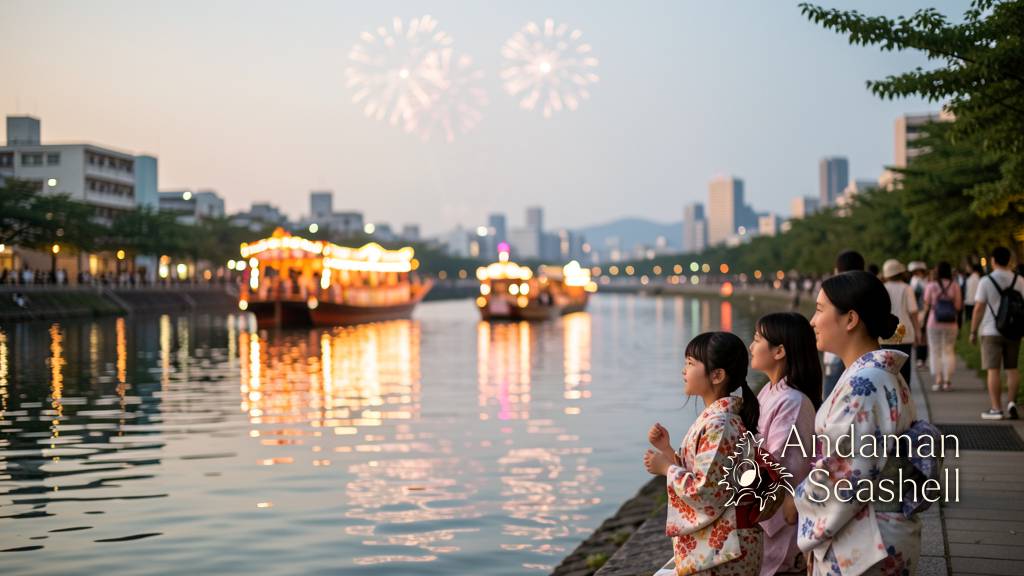
For travellers, the practical lesson is simple: respect the flow of the festival. Japan Guide notes that riverside viewing areas can be crowded and that some bridges have movement rules during the procession [ref:2]. The most rewarding way to experience it is with omotenashi in mind — omotenashi means thoughtful hospitality, including the guest’s responsibility to move gently, notice others, and enjoy without taking over the space.
A keepsake made of rhythm
The best souvenirs are not always objects. Sometimes they are rhythms: the drumbeat before a procession, the hush before fireworks, the moment a boat reflection breaks into ripples. Tenjin Matsuri offers all of that in a form that feels both grand and handmade.
For Andaman readers, this is why Japan’s summer festivals belong naturally in our curious coastal world. They remind us that water communities everywhere keep memory alive through craft, light, gratitude, and gathering. Whether the river is Osaka’s Okawa or the sea is the Andaman, a summer evening can become something you carry home.


No comments yet. Be the first to share a thought.