



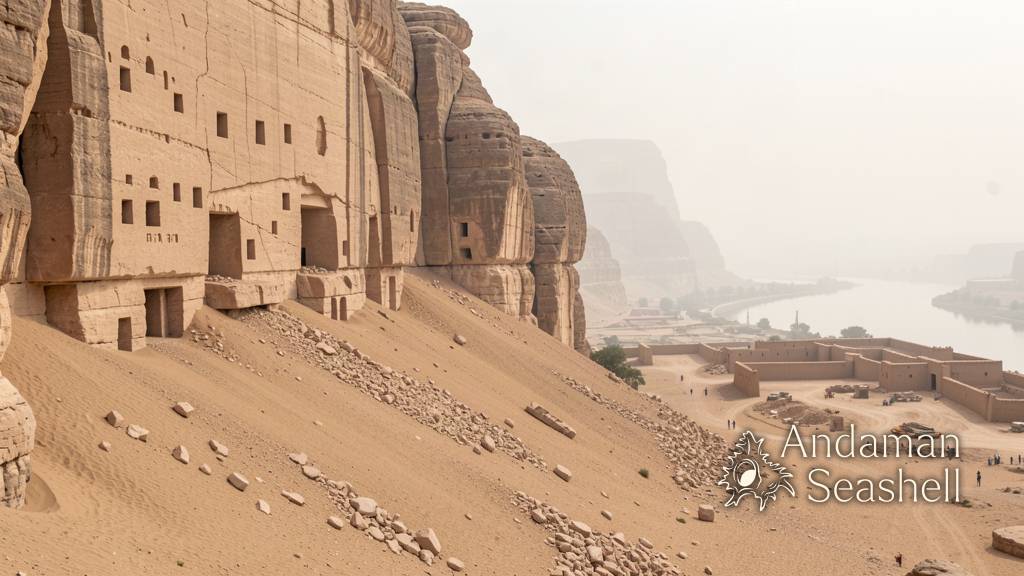
On a sun-baked slope at the foot of the Theban cliffs near Luxor, a team of archaeologists was doing something wonderfully unglamorous: shovelling away centuries of debris so that rainwater could flow safely past the old tombs. Then the earth answered. Beneath the rubble lay a doorway no modern record had ever listed — the entrance to a forgotten tomb, roughly 3,000 years old, its painted walls still glowing softly under a veil of ancient dust [ref:1].
A safety project that found treasure
The team, directed by Carina van den Hoven of the Netherlands Institute for the Near East (Leiden University), has worked in the Theban necropolis since 2018 in close collaboration with Egypt's Ministry of Tourism and Antiquities [ref:2]. Their mission at Lower Sheikh ʿAbd el-Qurna was preventive conservation — clearing debris and excavating carefully so flash floods could be diverted away from fragile monuments at the base of the Theban mountain.
That protective work is what cracked the tomb open. Because the tombs here sit at the foot of steep cliffs, sudden intense rainstorms can send water rushing straight into them; past floods have already damaged paintings and weakened rock. The safest kind of archaeology — caretaking — turned out to be the most productive kind, too [ref:1].
Whose tomb is it?
Stepping inside, the excavators found the classic layout of an elite Theban tomb of the New Kingdom (ca. 1550–1069 BC), when Thebes — today's Luxor — was Egypt's capital: an open outer courtyard, a rock-cut chapel, and burial chambers tucked underground [ref:1].
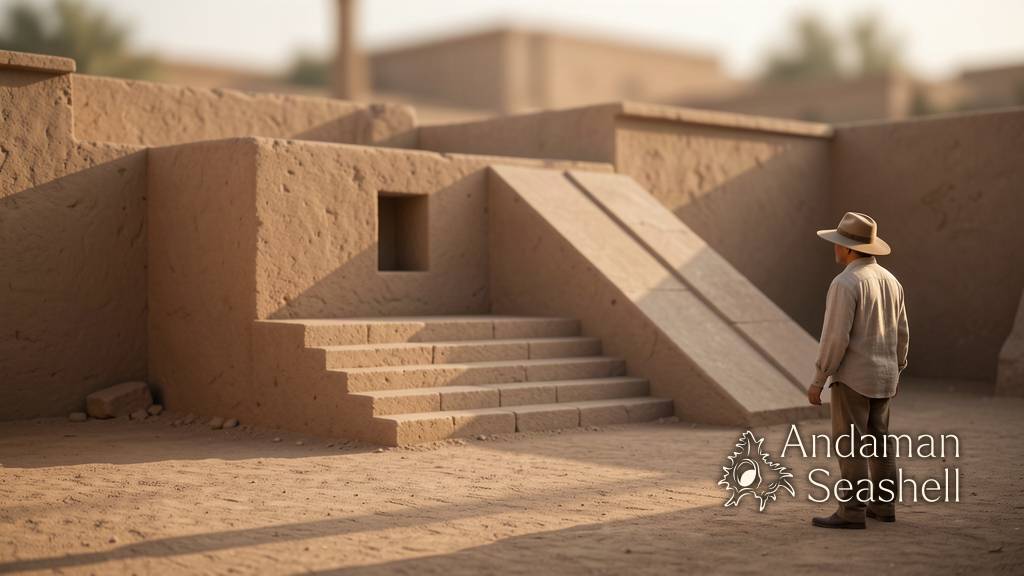
The courtyard survived astonishingly well. A mudbrick mastaba — a raised funerary platform — still stands, complete with a niche built to hold a stela, an upright stone marker. A staircase flanked by sloping ramps on either side still leads up to the tomb entrance, exactly as mourners would have walked it three millennia ago [ref:2].
The paintings: Paser, his wife, and a very full table
Inside the chapel, the walls came alive. Vivid paintings show the tomb's owner — a male official named Paser — adoring deities in their shrines, and seated beside his wife in front of an offering table laden with bread, beer, fruits, meat, and flowers [ref:2]. Based on the iconography and painting style, the team dated the tomb to the Ramesside period, ca. 1292–1069 BC, the era of the many pharaohs named Ramesses [ref:2].
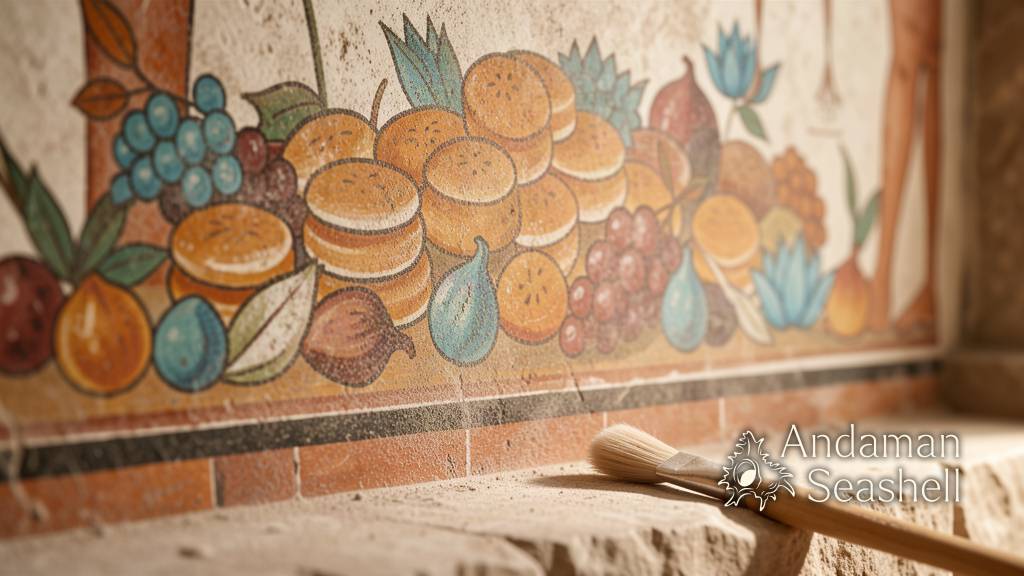
The most charming detail? The paintings are covered in a thin layer of dirt — which is precisely why they look so fresh. Conservators expect that a careful cleaning will reveal much more about Paser's position in the Ramesside hierarchy, the family members buried with him, and possibly later reuse of the tomb [ref:2].
One tomb in a city of them
Paser's resting place is a single room in a vast house of memory. The Theban necropolis spreads across roughly 10 square kilometres on the west bank of the Nile and served as Egypt's principal royal and elite cemetery for half a millennium from about 1550 BC. It is a UNESCO World Heritage Site that holds the Valley of the Kings — burial ground of pharaohs including Tutankhamun and Ramesses II — plus the Valley of the Queens, hundreds of private tombs, memorial temples, and royal palace remains [ref:2]. One of its monuments, the burial complex of the sons of Ramesses II, ranks among the largest tombs ever uncovered [ref:3].
Caretaking as discovery
The next chapters write themselves slowly, in the best way. Over coming field seasons the team plans structural repairs, conservation, and restoration — documenting every part of the tomb, identifying those buried within it, and piecing together how Lower Sheikh ʿAbd el-Qurna grew over the centuries [ref:3]. The same flood-diversion work that revealed Paser will keep protecting his neighbours, famous and anonymous alike.
There is a lesson in this for anyone who loves old things and old places. The discovery wasn't made by racing to dig; it was made by slowing down, protecting first, and recording everything. A man named Paser waited three thousand years behind a curtain of dust and debris — and was found not by treasure hunters, but by caretakers [ref:1].
References
- ScienceDaily / The Conversation — Archaeologists find a 3,000-year-old Egyptian tomb before it's too late
- SciTechDaily / Carina van den Hoven (Leiden University) — Archaeologists Discover a Forgotten 3,000-Year-Old Egyptian Tomb
- Discover Magazine — A Newly Discovered 3,000-Year-Old Egyptian Tomb Is Remarkably Preserved


No comments yet. Be the first to share a thought.