



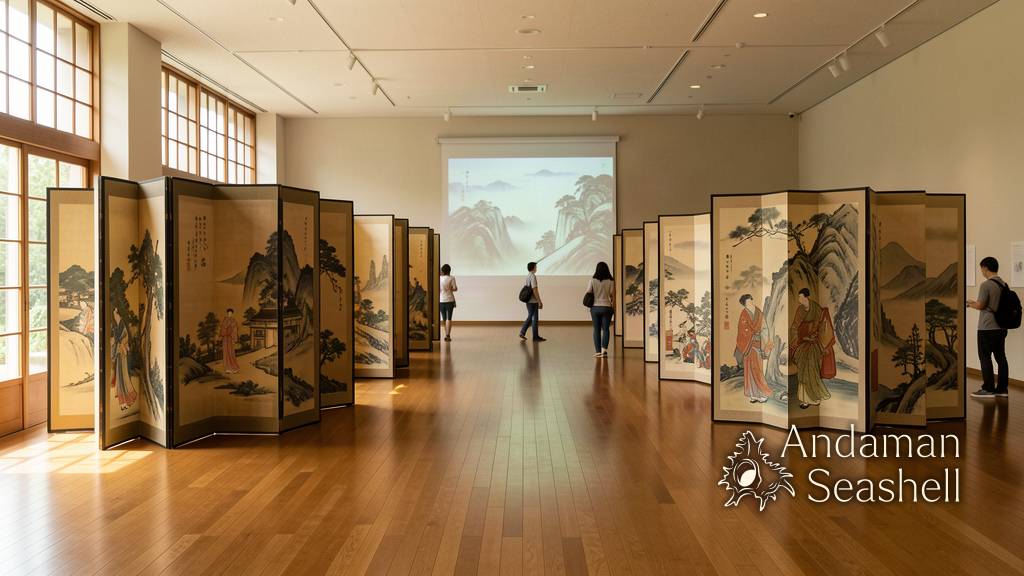
A gold lion seems to step forward in Oita before you even reach the next wall. A pine forest opens in ink. A thunder god flashes across a screen. The lovely surprise is that this summer’s exhibition at Oita City Art Museum is designed for closeness: no heavy barrier feeling, no sense that the work is too far away to really meet. National Treasures Reborn opened on 2026-07-17 and runs through 2026-09-23, turning one museum visit into a warm lesson in how Japanese art can travel through time with fresh intimacy.[ref:1]
Why this show feels different
The Oita exhibition brings together high-resolution facsimiles made through the Tsuzuri Project, a public-benefit initiative launched in 2007 by Canon and the Kyoto Culture Association.[ref:3][ref:4] Its idea is simple and generous: if a masterpiece is overseas, fragile, or rarely shown, make a facsimile so faithful that people can still encounter the work in a vivid, human way.
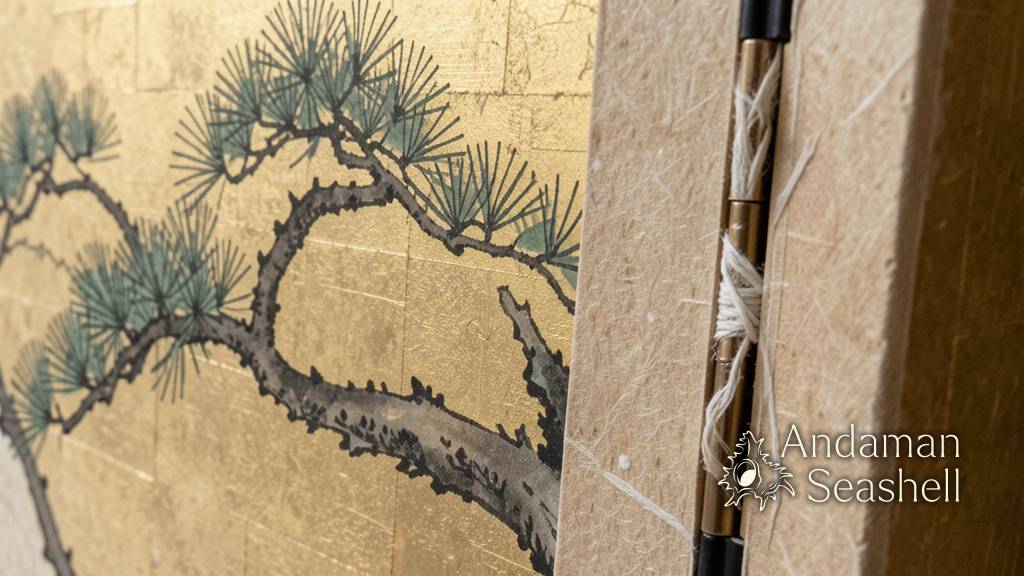
That matters because many Japanese cultural assets are delicate works on washi paper, silk, ink, and mineral pigments. Canon explains that facsimiles can be displayed with fewer conservation constraints, while viewers gain something precious in return: the chance to stand close, study the surface, and experience the work without the usual layer of glass.[ref:3] So far, the project has created more than 60 facsimiles for museums, shrines, temples, and public institutions across Japan.[ref:4]
Oita’s version of that idea feels especially inviting. The city’s official exhibition page highlights both glass-free display and video content, which means the visit is not only about looking politely from a distance. It is about entering the mood, rhythm, and scale of the screens themselves.[ref:1]
What you can see in Oita
The exhibition is on view in the planning exhibition room of Oita City Art Museum, 865 Ueno, Oita 870-0835.[ref:1] It runs 10:00-18:00, with last entry at 17:30, and the display changes partly from 2026-08-09 onward.[ref:1] The museum is closed on 2026-09-14, while the special exhibition itself still continues during the run.[ref:1]
Visitors will meet a lineup that reads almost like a conversation across centuries. The official list includes Pine Trees by Hasegawa Tohaku, Wind and Thunder Gods by Tawaraya Sotatsu, Chinese Lions associated with Kano Eitoku and Kano Tsunenobu, works from Ito Jakuchu’s Colorful Realm of Living Beings, Clouds and Dragon by Soga Shohaku, and Thunder God by Katsushika Hokusai.[ref:1][ref:2] Several originals are now in collections such as the Smithsonian National Museum of Asian Art and the Museum of Fine Arts, Boston, which makes this Oita gathering feel like a graceful homecoming in facsimile form.[ref:1]
Admission is also friendly: ¥1,000 for adults, ¥500 for high school students, and free for junior high students and younger.[ref:1] Better still, the same ticket also covers the museum’s collection exhibition.[ref:1] That is very much in the spirit of omotenashi—Japanese hospitality that makes culture feel welcoming rather than guarded.
The craft behind the closeness
What makes a facsimile convincing enough for this kind of exhibition? Canon’s 2026 project notes offer the most fascinating detail. For works such as Urakami Shunkin’s Spring and Autumn Landscapes, staff photograph the original with a full-frame mirrorless camera, process the image with a proprietary color-matching system, print it on materials such as silk or washi paper using a large-format Canon inkjet printer, and then hand the result to Kyoto artisans who mount it with traditional screen-making techniques.[ref:4] That combination—digital precision first, shokunin craftsmanship second—is exactly why the project feels so Japanese in spirit. Technology does not replace the hand here; it serves the hand.
Kyoto National Museum is showing the same generosity this season. From 2026-07-14 to 2026-09-06, it is displaying Tsuzuri facsimiles of Landscape of the Four Seasons by Shikibu Terutada and Tartars Playing Polo and Hunting, attributed to Kano Soshu, both based on originals preserved at the Asian Art Museum of San Francisco.[ref:2] Seen together with Oita’s exhibition, the message becomes wonderfully clear: facsimiles are not a second-best backup. They are a lively cultural bridge.
A summer invitation worth taking
If your idea of museum joy is slow looking, this Oita show offers exactly that. You can arrive in the afternoon, walk through screens that once lived far away or stayed carefully protected, and meet them at eye level. In a season full of festivals and quick snapshots, National Treasures Reborn offers another kind of brightness: patient seeing, beautiful surfaces, and the quiet thrill of getting closer to art than you expected.


No comments yet. Be the first to share a thought.